

The Aromatic World of Malabar Biryani
Forget what you know about biryani. In the northern Malabar region, particularly Thalassery, the iconic dish takes on a unique identity. Instead of long-grain basmati, Thalassery Biryani uses a short-grain, fragrant local rice called Kaima or Jeerakasala.
The rice is cooked separately from the meat masala and then layered together in a 'dum' process, where the pot is sealed and slow-cooked to allow the flavours to meld perfectly. Influenced by centuries of trade with Arab merchants, this biryani is less about fiery heat and more about a complex, aromatic blend of spices like fennel and pepper, garnished with fried onions, cashews, and raisins.
Syrian Christian Culinary Staples
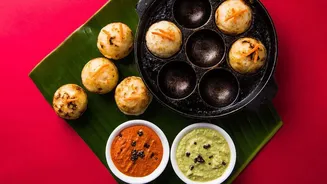
The Syrian Christian community, one of the oldest Christian communities in the world, has a culinary tradition that is distinctly its own. A classic combination is Appam and stew. Appams are soft, bowl-shaped pancakes made from fermented rice batter, with a fluffy, thick centre and crispy, lace-like edges. They are most often paired with a mild, fragrant stew, gently simmered with coconut milk, potatoes, carrots, and either chicken or vegetables, and lightly spiced with black pepper, cinnamon and cloves. Another star is Meen Moilee, a delicate fish curry where the fish is gently poached in creamy coconut milk with mild spices, turmeric, and green chillies, offering a subtle yet profound flavour that differs from spicier fish curries.
Breakfast of Champions: Puttu and Kadala Curry
A powerhouse breakfast beloved across the state, Puttu and Kadala Curry is a meal that will comfortably keep you full until lunchtime. Puttu consists of cylinders of steamed rice flour layered with grated coconut, traditionally cooked in a special cylindrical steamer. The result is a soft, crumbly cake that is the perfect vehicle for mopping up the accompanying Kadala Curry, a rich and hearty dish made from black chickpeas cooked in a roasted coconut gravy. It's a humble yet incredibly satisfying pairing that represents the heart of everyday Keralan food.
The Fieriness of Toddy Shop Fare
For the more adventurous palate, the rustic food served in Kerala's toddy shops (kallu shaap) is a must-try. These establishments, which traditionally serve palm wine, are famous for their incredibly spicy and flavourful dishes. The star attraction is often Karimeen Pollichathu, a delicacy where pearl spot fish, a local backwater fish, is marinated in a thick paste of spices, wrapped in a banana leaf, and then grilled or pan-fried. The banana leaf seals in the moisture and infuses the fish with a unique, smoky aroma. Other popular dishes include spicy beef fry (Erachi Ularthiyathu) and tapioca (kappa) served with fiery fish curry.
Mappila Cuisine: A Legacy of Spice and Sweet
The Mappila community of the Malabar coast has a cuisine that is a delicious fusion of local Kerala ingredients and culinary traditions from Arab and Persian traders. Beyond biryani, their snacks and layered breads are legendary. Chatti Pathiri, often called the 'Malabar Lasagna', is a layered pastry made with thin, crepe-like pancakes (pathiris) stacked with either a sweet coconut-cardamom filling or a savoury spiced meat filling. Another unique item is Unnakaya, a spindle-shaped dessert made from mashed plantain, stuffed with a sweet mixture of coconut, nuts, and raisins, and then deep-fried. These dishes are especially popular during festivals like Eid.