



A Cosmic First Responder in Peril
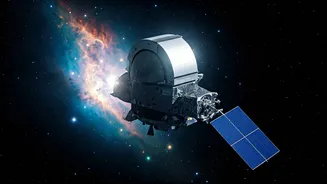
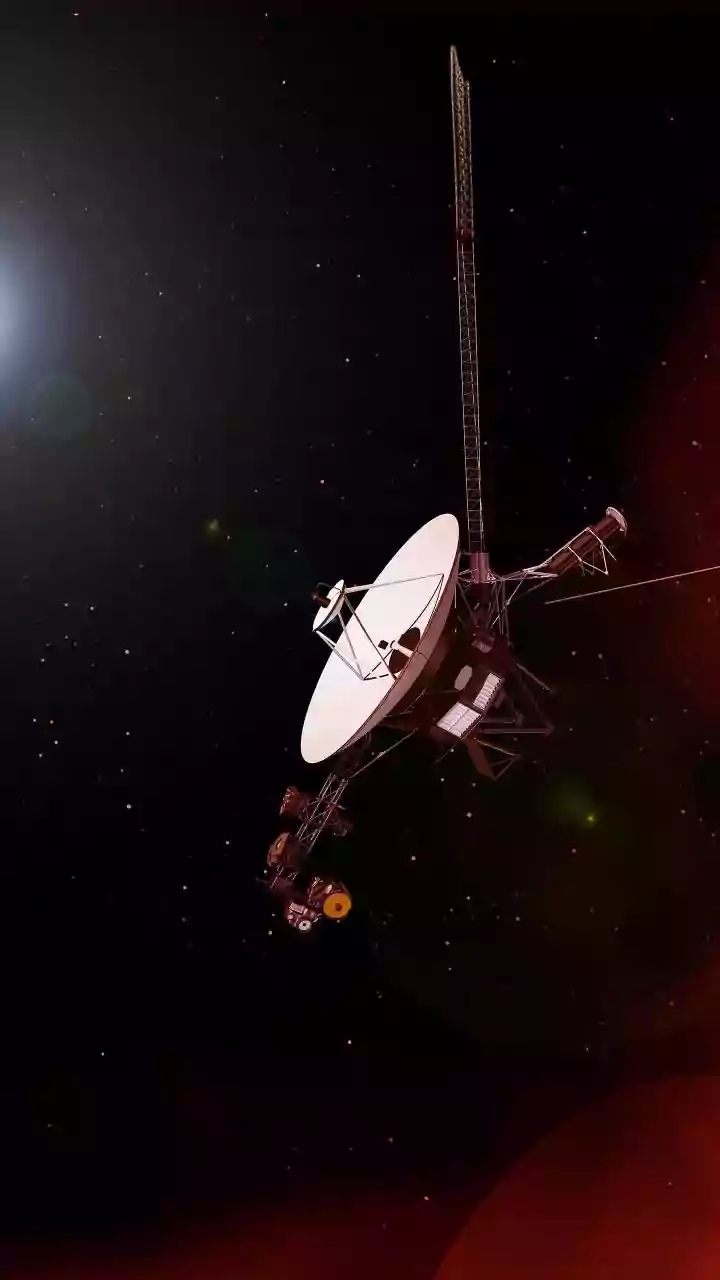
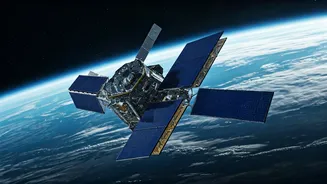
For over two decades, NASA's Neil Gehrels Swift Observatory has been humanity's premier cosmic first responder. Launched in 2004, its purpose is to detect gamma-ray bursts (GRBs)—the most powerful explosions in the universe—and rapidly swivel its X-ray
and optical telescopes to study their fleeting afterglows. This nimble ability, which gives the observatory its name, allows scientists worldwide to study cataclysmic events like colliding neutron stars and the birth of black holes within minutes of their occurrence. But after 22 years of service, Swift is in trouble. Increased solar activity has thickened Earth's upper atmosphere, accelerating the observatory's orbital decay. Without an onboard propulsion system, Swift is slowly but surely falling back to Earth, with its reentry predicted as early as this year.
The $30 Million Robotic Handshake
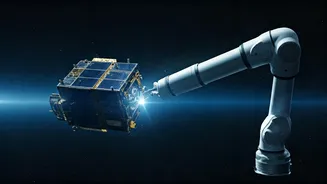
Instead of letting the multi-million dollar observatory burn up, NASA is attempting something new: a commercially led rescue. The agency awarded a $30 million contract to Arizona-based startup Katalyst Space Technologies to design, build, and launch a rescue vehicle in a record-breaking nine months. The plan involves launching a robotic servicing spacecraft named LINK aboard the final flight of a Northrop Grumman Pegasus XL rocket. The air-launched rocket will release LINK into orbit, where the refrigerator-sized robotic craft will begin a multi-week chase to rendezvous with Swift. The mission is a first for a U.S. commercial company and a major test for the burgeoning field of in-orbit servicing.
A Delicate Dance in Orbit
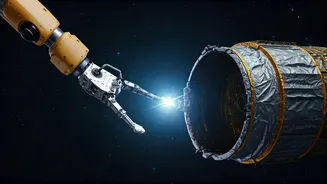
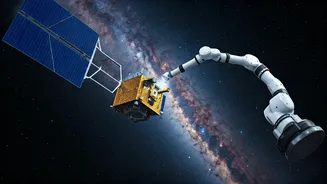
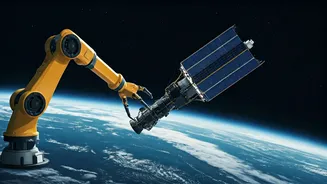
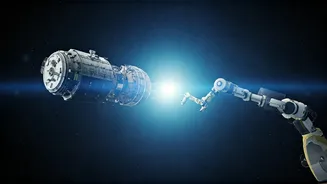
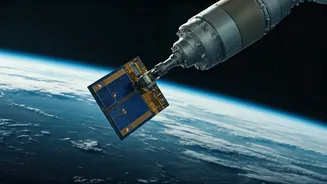
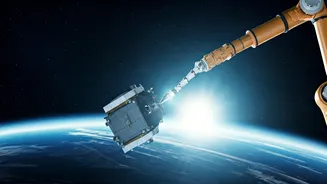
The rescue itself is a masterclass in orbital mechanics and robotics. Since Swift was never designed to be serviced or grappled, the LINK spacecraft must perform a delicate and autonomous operation. Outfitted with three robotic arms, LINK will approach and carefully latch onto the 1.5-ton observatory. Once a secure connection is made, the robotic servicer will fire its own gentle ion thrusters. Over the course of several months, it will slowly boost Swift from its current decaying altitude of around 360 kilometers to a more stable orbit of 600 kilometers. If successful, the maneuver is expected to extend Swift's operational life by at least a decade, allowing its crucial scientific mission to continue.
More Than Just One Telescope
While saving Swift is the immediate goal, the mission's implications are far broader. A successful rescue would serve as a powerful proof-of-concept for the commercial satellite servicing industry. The ability to repair, refuel, upgrade, and reposition satellites that were never designed for it could transform the economics of space. This capability could save governments and companies billions of dollars by extending the lives of valuable assets, from communications satellites to other vital scientific observatories like the Hubble Space Telescope. It represents a pivotal shift from a disposable model of space hardware to a more sustainable and serviceable one, potentially reducing the growing problem of space debris.
A Bargain for Breakthrough Science
In the context of space missions, which often cost billions, the $30 million price tag for this rescue is a remarkable bargain. The cost to design and launch a replacement for Swift would be hundreds of millions of dollars. By opting for a life-extension mission, NASA not only preserves the unique and rapid-response capabilities of a proven scientific asset but also invests in a game-changing commercial technology. This mission demonstrates a new, more agile partnership between the public and private sectors, leveraging commercial innovation to solve complex challenges in space. The science from Swift is invaluable, and this bold plan ensures its watch for cosmic explosions will continue for years to come.