






The Promise of Agentic AI
First, it helps to understand what we mean by 'AI agents'. Unlike the generative AI that simply creates text or images, agentic AI is designed to be autonomous. It acts on your behalf to achieve a goal, like ordering dinner or booking a ride, with minimal
human input. For companies like Uber, DoorDash, and Airbnb, this technology promises unprecedented efficiency and personalization, moving beyond simple automation to create systems that can think, learn, and act. The goal is to build an experience so seamless that the AI anticipates your needs and handles the logistics, leaving you to enjoy the service. However, the reality on the ground is proving more complex.
Uber and DoorDash: AI for Convenience
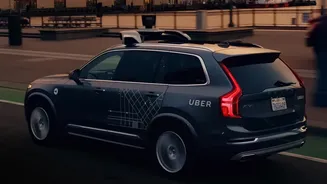
Uber and DoorDash are embedding AI to make routine tasks faster. For DoorDash, this includes conversational AI assistants like 'DashAI' to help you discover restaurants and a text-to-order agent that can place your usual Friday night order without you ever opening the app. Uber is developing similar tools, like a Cart Assistant for grocery orders, alongside a massive internal platform of thousands of AI agents that manage the complex logistics of its global operations. The focus for both is clear: reduce the friction of ordering. Yet, recent earnings calls have revealed a surprising gap between hype and reality. Uber reported that during Halloween week, AI agents booked only four rides and 500 Uber Eats orders out of 320 million total transactions. DoorDash reported similarly low numbers, with just a few hundred orders placed by third-party agents cumulatively.
Airbnb's Vision for the AI Trip Planner
Airbnb has even grander ambitions, aiming to build an AI-powered travel agent that can plan entire trips. The company has already rolled out AI features for U.S. users, including natural-language search, AI-generated listing summaries, and side-by-side comparisons. For hosts, AI tools are helping to set dynamic pricing and streamline communication. CEO Brian Chesky envisions an AI that doesn't just respond with text, but builds a visual, interactive itinerary with maps, photos, and calendars. This reflects an understanding that travel planning is an experience in itself. Yet, the company has also acknowledged that this comprehensive AI agent is a future goal, slated for a 2027 launch, suggesting the technology required is not quite ready for prime time.
The Human Factor: Why Users Hesitate
The low adoption numbers for Uber and DoorDash, and Airbnb's cautious timeline, point to the second half of the headline: users still do their own research, especially for travel. The reasons are rooted in trust and enjoyment. Multiple surveys show that while travelers are happy to use AI for inspiration and research, they remain hesitant to let it book on their behalf. A recent study found that 60% of travelers prefer to book trips themselves, and nearly half of those who have used AI for planning encountered incorrect or outdated information. Concerns over a loss of control and data privacy are significant barriers. When it comes to an important or expensive trip, 82% of people say they would trust a human agent more than an AI assistant. Booking a ride takes less than a minute on the Uber app, a process AI struggles to beat for convenience.
Enjoying the Journey of Planning
Beyond trust, there's the simple fact that many people enjoy the process of planning a trip. As Airbnb's own CEO noted, people often derive more pleasure from anticipating travel than from the trip itself. The process of discovering a unique rental, finding a hidden gem of a restaurant, or mapping out a day of activities is part of the fun. Handing that entire process over to an AI, no matter how efficient, can feel like outsourcing the enjoyment. For now, the most effective approach for many travelers is a hybrid one: using AI as a powerful research assistant to generate ideas and narrow down options, but keeping the final decisions and the thrill of discovery in human hands.