








The New Face of the Monsoon
The monsoon is no longer the steady, season-long affair it once was. Scientists observe that climate change is causing a fundamental shift in its behaviour. Instead of evenly distributed showers, the trend is towards long dry spells punctuated by short,
intense bursts of extreme rainfall. This means the same amount of rain that might have fallen over a week now often arrives in just a few hours. This volatility, with its cycle of too little water followed by far too much, is disrupting everything from agriculture to water storage. Studies show that the frequency of these extreme rain events has significantly increased since the 1950s, a trend driven by human-induced climate change. The result is a 'new normal' where predictability has been replaced by chaos, creating unprecedented challenges across the subcontinent.
A Fragile Existence in the Hills
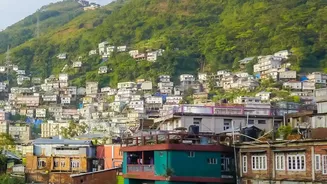
In India's mountainous regions, particularly the Himalayas, the consequences of a volatile monsoon are severe. The combination of intense rainfall on slopes already destabilised by unplanned construction and deforestation is a recipe for disaster. This has led to a marked increase in devastating landslides and flash floods. Events that were once rare are becoming an annual reality, claiming lives and destroying infrastructure in states like Himachal Pradesh and Uttarakhand. Furthermore, this erratic rainfall impacts the delicate Himalayan ecosystem. It disrupts agriculture, which forms the backbone of local livelihoods, and threatens water security for communities both in the mountains and downstream. The interaction between more intense rain and melting glaciers adds another layer of complexity, altering river flows and increasing flood risks for millions.
An Unsettled Coastline
India's extensive coastline is facing a dual threat from rising sea levels and a more ferocious monsoon. Around a third of the nation's coast is already experiencing erosion, a problem intensified by climate change. More powerful storm surges during cyclones, which are increasing in frequency and intensity, push saltwater further inland. This contaminates freshwater sources, rendering them unusable for drinking and agriculture, and damages coastal infrastructure. Regions like the Sundarbans are losing land at an alarming rate, displacing communities whose lives are tied to the coast. Projections indicate that sea levels could rise significantly by 2050, putting major economic hubs and densely populated areas at even greater risk of flooding and permanent inundation.
Cities Under Water, and Out of It
For India's sprawling urban centres, the new monsoon pattern creates a paradox: devastating floods during the rains and severe water scarcity during the extended dry spells. Cities like Mumbai, Bengaluru, and Delhi are increasingly paralysed by annual flooding. Ageing drainage systems, designed for gentler rains, are simply overwhelmed by the modern deluges. Unplanned urbanisation has compounded the problem, with concrete surfaces replacing soil that once absorbed rainwater and natural water bodies being encroached upon. This leads to runoff that has nowhere to go, submerging roads and homes. Yet, when the intense rains stop, these same cities often face water shortages as reservoirs fail to replenish steadily, highlighting a critical breakdown in the traditional water cycle that urban planning has yet to address.