



What is Surya Namaskar?
Surya Namaskar, or Sun Salutation, is a sequence of 12 yoga poses performed in a continuous, flowing motion, with each movement synchronized to the breath. Traditionally practiced in the morning to greet the rising sun, it's more than just physical exercise;
it's a form of moving meditation that connects the body, breath, and mind. The practice is designed to awaken the body's energy, improve circulation, and build internal heat to detoxify the system. Its power lies in how it seamlessly blends strength training, flexibility, cardiovascular conditioning, and mindfulness into a brief, efficient routine.
The Morning Advantage
There's a reason Sun Salutations are traditionally performed at dawn. Practicing in the morning helps activate the body and sharpen focus for the day ahead. The air is believed to be rich in 'prana', or life-force energy, which enhances the benefits of the practice. A morning routine helps stimulate your digestive system for the day, boosts your metabolism, and energizes your cells with an increased supply of oxygen. Furthermore, starting your day with this mindful movement can calm the nervous system, reduce stress and anxiety, and promote emotional stability before daily demands take over.
The Opening Sequence: Poses 1-3
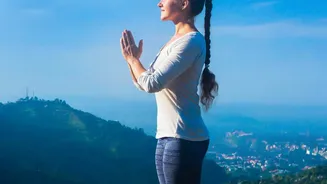
The sequence begins with Pranamasana (Prayer Pose), standing with feet together and palms joined at the chest. This centres the mind and prepares the body. From there, you inhale into Hasta Uttanasana (Raised Arms Pose), stretching the entire body upward and arching back slightly. This pose lengthens the spine, opens the chest for better oxygen intake, and stretches the abdominal muscles. As you exhale, you flow into Padahastasana (Hand to Foot Pose), folding forward from the hips. This provides a deep stretch to the hamstrings and spine while improving digestion by massaging abdominal organs.
Building Strength: Poses 4-7
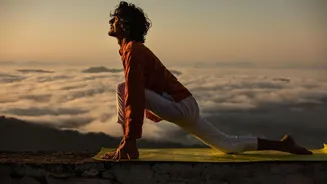
This phase builds strength and stability. Inhaling, you move into Ashwa Sanchalanasana (Equestrian Pose), a low lunge that stretches the hips and strengthens the legs. You then transition to Dandasana (Plank Pose), holding the body in a straight line to engage the core, arms, and shoulders. The sequence continues with Ashtanga Namaskara (Eight-Limbed Pose), where the knees, chest, and chin touch the floor, building strength in the chest, arms, and back. Finally, you inhale and slide forward into Bhujangasana (Cobra Pose), a backbend that increases spinal flexibility, strengthens back muscles, and can help alleviate stress and fatigue.
Deepening the Stretch: Poses 8-9
From Cobra, you exhale and lift your hips into Adho Mukha Svanasana (Downward-Facing Dog). This iconic pose strengthens the arms and legs, stretches the entire back of the body, including hamstrings and calves, and improves blood circulation to the brain. It acts as a moment of reset within the sequence. Following this, you inhale and step forward again into Ashwa Schanchalanasana (Equestrian Pose), this time with the opposite leg forward. This symmetrical repetition ensures that both sides of the body are worked and stretched equally, promoting balance.
The Closing Sequence: Poses 10-12
The final three steps mirror the beginning of the sequence, bringing the body back to a standing position. You exhale from the lunge back into Padahastasana (Hand to Foot Pose), reinforcing the hamstring stretch. Then, you inhale, sweeping your arms up and back into Hasta Uttanasana (Raised Arms Pose), once again lengthening the spine. Finally, you exhale and return to the starting Pranamasana (Prayer Pose). This full circle provides a sense of completion, leaving you feeling balanced, energized, and centred.