
Item 1: The Dish Name (Be Specific!)
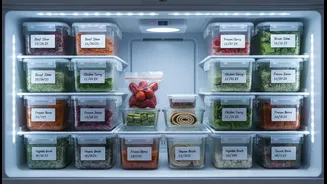
Simply writing “Chicken” on a container is a recipe for future confusion. Is it raw chicken breasts, leftover roast chicken, or a ready-to-eat chicken curry? Being specific is the most important part of any label. Write the full name of the dish, such
as “Spicy Lentil Soup” or “Grandma’s Mutton Korma.” This clarity prevents you from defrosting the wrong meal and helps you plan your weekly menu at a glance. If you’ve made a component, like a gravy or a paste, label it just as clearly. This simple step transforms your freezer from a box of mysteries into an organised library of meals, ready when you are.
Item 2: The All-Important Date
Your memory is not a reliable tool for tracking how long something has been frozen. Every label must include the date the food was prepared and frozen. This is critical for practicing the “First-In, First-Out” (FIFO) method of freezer management, where you use up older items before newer ones. This systematic rotation ensures food is eaten while its quality is still high and significantly reduces the chance of it being forgotten and eventually thrown away. For an extra layer of organisation, you can also add a “use by” date, typically three to four months for most cooked dishes, to signal when an item should be prioritised.
Item 3: Portion Size and Servings
Knowing the portion size is a small detail with a big impact on convenience. Note down whether the container holds a single serving, a family-sized meal for four, or a specific quantity like “8 Meatballs” or “500g Keema.” This information helps you pull out exactly what you need, preventing unnecessary food waste from thawing too large a portion. It streamlines meal prep, especially on busy weeknights when you need to quickly find a meal that fits your family’s needs. For even greater efficiency, consider freezing meals in the specific portion sizes you use most often.
Bonus: Reheating or Cooking Instructions
While not part of the basic checklist, adding brief reheating instructions is a gift to your future self. You don't need the full recipe, just a quick note like, “Thaw overnight, microwave for 5 mins” or “Bake at 180°C for 20 mins from frozen.” This eliminates guesswork and ensures that the meal is prepared correctly for the best taste and texture. It also makes it easy for other family members to help with dinner. Taking an extra 10 seconds to jot this down when you freeze the item can save you from searching for recipes or making a mistake later on.
Choosing the Right Tools for the Job
A great label is useless if it falls off or the ink smudges. Standard labels and pens often fail in the cold, moist environment of a freezer. For best results, use labels specifically designed for freezer use, which have an adhesive that remains effective at low temperatures. Alternatively, many people find that simple masking tape works well and is an inexpensive option. Pair your label with a permanent marker, ideally an oil-based one, as its ink is less likely to fade or run with condensation. Always try to write on the label before applying it to a cold or frozen container for the best results.