



The Sun’s Unseen Power
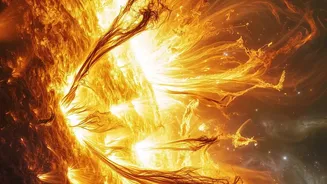
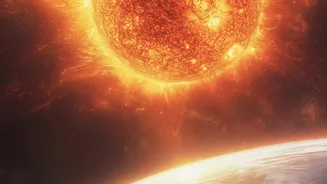
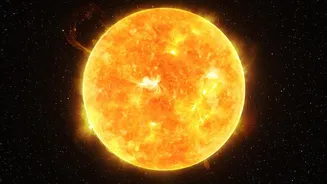
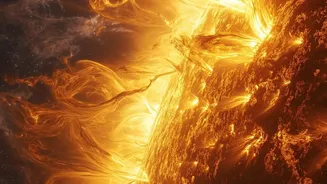
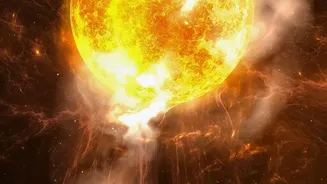
The sun is a dynamic star, constantly buzzing with activity. Its powerful magnetic fields can twist and snap, releasing tremendous energy in two main forms: solar flares and coronal mass ejections (CMEs). A solar flare is an intense burst of radiation
that can reach Earth in just eight minutes, capable of causing radio blackouts. A CME is even more powerful—a colossal bubble of plasma and magnetic fields flung into space, sometimes carrying billions of tons of material. While slower, these CMEs can cause significant disturbances if they hit Earth, arriving anywhere from 15 hours to several days after the eruption. These phenomena are collectively known as space weather.
Our Fragile Digital World
In the 21st century, our reliance on technology makes us more vulnerable than ever to a major solar storm. A powerful CME can interact with Earth's magnetic field, creating what is known as a geomagnetic storm. These storms can induce powerful electrical currents in long conductors on the ground, such as power lines and pipelines. A severe storm could overwhelm electrical grids, damaging high-voltage transformers and leading to widespread, long-lasting blackouts. The 1989 Quebec blackout, which left millions without power for nine hours, was caused by a much smaller storm than the historic Carrington Event of 1859, which set telegraph offices on fire. Today, the impact could be far more devastating, affecting everything from banking and water supply to transportation.
Satellites in the Firing Line
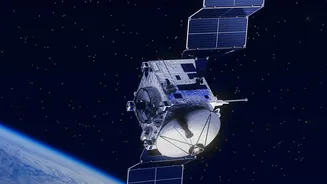
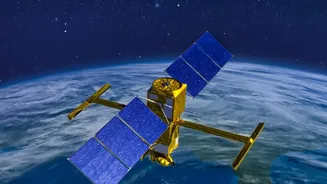
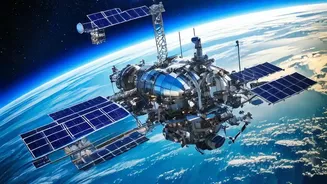
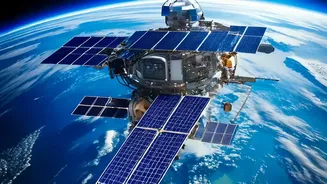
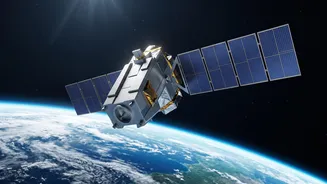
Beyond the ground, our assets in space are on the front line. The thousands of satellites orbiting Earth—which we depend on for GPS, communication, weather forecasting, and internet services—are highly susceptible. The energetic particles from a solar storm can fry sensitive electronics and degrade solar panels. The storm can also heat and expand Earth's upper atmosphere, increasing drag on low-orbit satellites, causing them to lose altitude and potentially fall out of orbit. A single powerful storm has the potential to disable or destroy numerous satellites, disrupting global systems we take for granted.
The Global Watchtowers
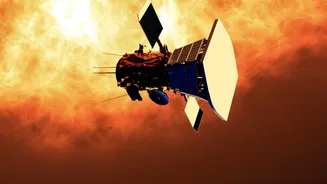
To protect against this threat, a global network of observatories and agencies constantly monitors the sun. Key players include the U.S. National Oceanic and Atmospheric Administration's (NOAA) Space Weather Prediction Center (SWPC) and the European Space Agency (ESA). These organizations use a fleet of ground-based telescopes and space-based satellites to watch for signs of trouble, like the formation of complex sunspot groups, which often precede flares and CMEs. Satellites stationed at a special point in space called Lagrange Point 1 (L1), about 1.5 million kilometres towards the sun, act as an early-warning system. These include missions like NOAA's SOLAR-1 and DSCOVR, and ISRO's Aditya-L1, which measure the solar wind in real-time.
From Warning to Action
When a potentially hazardous CME is detected, forecasters spring into action. They analyze its size, speed, and direction to predict if and when it will hit Earth and how intense the impact might be. This process gives governments and critical industries a crucial warning period—from hours to a few days. With this lead time, power grid operators can take preventative measures to protect their systems from surges. Satellite operators can put their spacecraft into a protective 'safe mode' to shield sensitive electronics from the incoming radiation. Airlines can also reroute flights that would otherwise travel over the poles, where the effects of space weather are strongest. This coordination is a vital, but largely invisible, part of our global infrastructure resilience.
The Future of Solar Forecasting
As our world becomes even more connected, the need for better space weather forecasting is growing. Scientists and engineers are constantly working to improve prediction models, even using artificial intelligence to analyze vast amounts of solar data more quickly. New missions are also in development. ESA's upcoming Vigil mission, for example, will be positioned at a unique vantage point (Lagrange Point 5) to monitor the side of the sun before it rotates to face Earth, potentially extending warning times for major solar events from days to nearly a week. Continued investment in these monitoring networks is our best defense against the sun's inevitable fury, ensuring our electrified, satellite-dependent society remains safe and functional.