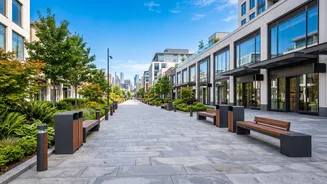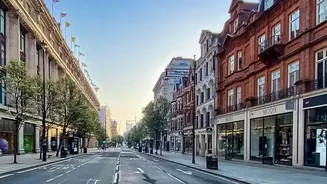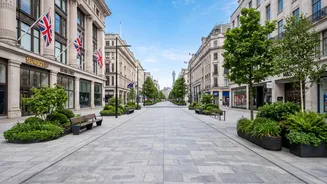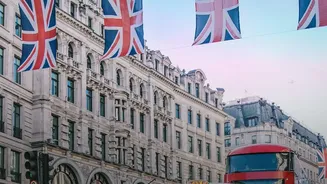




Cities globally are reclaiming their streets for people, transforming traffic-choked arteries into vibrant public spaces. The latest major example is London's Oxford Street, which went traffic-free in a landmark move in late October 2026.
London's Oxford Street: A New Era
After decades
of debate, one of the world's most famous shopping thoroughfares underwent a dramatic change on October 26, 2026. A nearly one-kilometre stretch of Oxford Street, from Orchard Street to Great Portland Street, was permanently closed to buses, taxis, private cars, and even bicycles. The move, championed by London's Mayor Sadiq Khan, is the first phase of a £150 million project to revitalise an area that had seen its lustre fade. The goal is to create a safer, more pleasant environment for the half-million daily visitors and reverse the street's decline. Initial reports have been positive, with transport officials calling the public response 'phenomenal' and some shops noting increased footfall. A sample of 40 stores reported that transactions were up 19% in the first week compared to the previous year, with total spending value up 28%. However, the transition has not been without challenges. Some local residents and shoppers have expressed concerns about the loss of direct bus routes, while officials are working to manage cyclists attempting to use the pedestrianised zone. The current layout is temporary, with plans for more trees, seating, and public squares to be added by 2027.
Copenhagen's Strøget: The Pioneer
Long before London's move, Copenhagen set the global standard with Strøget in 1962. At a time when cities were being redesigned around the car, the decision to pedestrianise this 1.1-kilometre central street was radical. Critics claimed it would never work in the Scandinavian climate and that businesses would suffer. Initially a temporary trial, the closure was made permanent in 1964 due to its overwhelming success. The project was championed by architect Jan Gehl, whose research on how people used the newly car-free space became influential worldwide. Far from failing, businesses saw revenues improve, and Strøget transformed into one of the city's top tourist attractions and a vibrant cultural hub. From an initial 15,800 square metres, Copenhagen's central pedestrian network has since expanded to cover about 100,000 square metres, proving that when you make more space for people, you get more people.
Barcelona's La Rambla: A Cultural Artery
Stretching 1.2 kilometres to the sea, La Rambla in Barcelona has been the city's social and cultural heart since the 18th century. Originally a sandy riverbed (ramla in Arabic), it evolved into a grand promenade lined with trees, theatres, and markets. While not fully pedestrianised in the same way as Strøget, its wide central promenade has always prioritised people on foot, creating what many call the 'emotional hub' of the city. However, in recent years, the pressures of mass tourism led the city to act. In 2022, an ambitious transformation project began, scheduled for completion in 2027. The plan reduces traffic to a single lane on each side for public transport and local access only, significantly expanding the space for pedestrians. By creating three large plaza-like spaces and improving connectivity with the adjoining Gothic and El Raval neighbourhoods, Barcelona aims to help residents reclaim the iconic boulevard while better managing its tourist crowds.
Melbourne's Laneways: A Fine-Grain Network
Melbourne offers a different model of pedestrianisation, focused not on one grand boulevard but on a sprawling network of small, narrow laneways. Beginning in the 1990s, the city started a program to revitalise these underused and often neglected service alleys. By cleaning them up, encouraging small cafes and boutiques to move in, and commissioning public art, the city transformed them into one of its defining features. This 'fine-grain' network provides a human-scale alternative to the city's grand grid, offering shortcuts and spaces for discovery. The success of this approach is now being expanded with 'pedestrian-first' upgrades to larger 'little' streets like Flinders Lane, where the road is being raised to footpath level to slow cars and encourage walking. This focus on a '20-minute neighbourhood', where daily needs are within a short walk or cycle, shows how prioritising pedestrians can reshape an entire urban fabric.