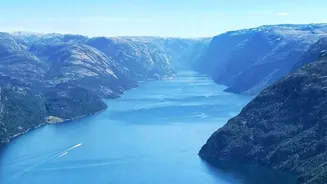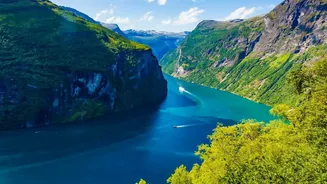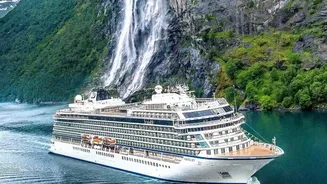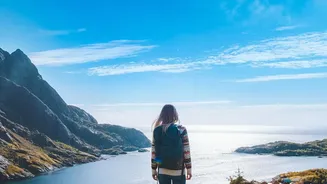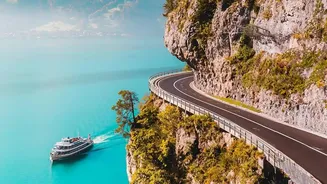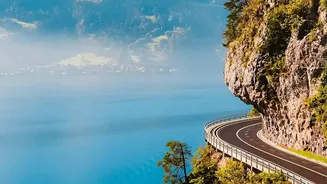




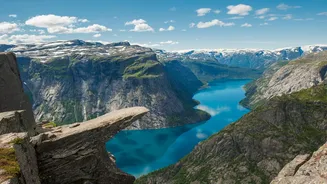
Carved by ancient glaciers, Europe's fjords offer some of the most dramatic landscapes on Earth. These deep, sheltered inlets are defined by towering cliffs and tranquil waters, creating a sense of unparalleled scale and serenity for travellers.
The UNESCO Gem: Geirangerfjord, Norway
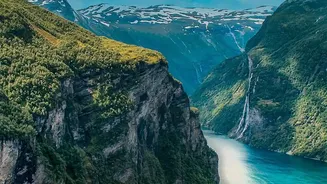
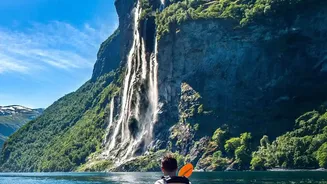
Often
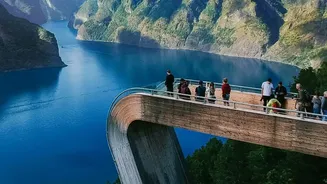
hailed as the world's most famous fjord, the Geirangerfjord is a 15-kilometre branch of the larger Storfjord and a UNESCO World Heritage site. Its deep blue waters are framed by majestic, snow-covered peaks that rise over 1,500 metres from the shoreline. A boat trip here is essential, offering postcard-perfect views of its iconic waterfalls, including the 'Seven Sisters' and 'The Suitor'. For a different perspective, several viewpoints are accessible from the village of Geiranger. The Geiranger Skywalk at Dalsnibba provides a stunning panorama from 1,500 metres above the water, while the Ørnesvingen (Eagle's Bend) viewing platform offers a classic vista of the fjord and the waterfalls. Kayaking and hiking are also popular ways to immerse yourself in the landscape, with trails leading to abandoned mountain farms like Skageflå, which clings to a cliffside 250 metres above the fjord.
The King of the Fjords: Sognefjord, Norway
Stretching an incredible 204 kilometres inland, the Sognefjord is Norway's longest and deepest fjord, earning it the nickname 'The King of the Fjords'. Its immense scale is breathtaking, with cliffs plunging 1,308 metres to the water's depths and surrounding mountains reaching heights of 2,000 metres. The Sognefjord is so vast that its many arms are destinations in their own right, including the Nærøyfjord and Aurlandsfjord, which are also part of a UNESCO World Heritage site. A classic way to experience it is via a fjord cruise, which often connects charming villages like Flåm, Balestrand, and Gudvangen. Visitors can combine a leisurely boat trip with a journey on the famous Flåm Railway for a comprehensive mountain-to-fjord experience. The region is also a gateway to two national parks, Jostedalsbreen—home to continental Europe's largest glacier—and Jotunheimen, offering fantastic opportunities for hiking and glacier walks.
The Edge of Iceland: The Westfjords
For those seeking a more remote and wild experience, Iceland’s Westfjords region is an unforgettable destination. This vast, sparsely populated peninsula in the country's northwest corner is known for its dramatic, deeply carved fjords, quiet roads, and abundant wildlife. Only about 10% of Iceland's tourists venture here, which adds to its pristine and untouched appeal. Driving the winding coastal roads provides stunning views at every turn, though some routes can be challenging. The region's main draws include the spectacular Dynjandi waterfall, a tiered cascade of water, and the Látrabjarg cliffs, which are packed with seabirds like puffins during the summer months. The main town, Ísafjörður, serves as a base for kayaking, hiking, and exploring the uninhabited Hornstrandir Nature Reserve, a haven for the Arctic fox. You can reach the Westfjords by car, a domestic flight from Reykjavík, or a ferry that connects to the Snæfellsnes Peninsula.
The Adriatic Surprise: Bay of Kotor, Montenegro
Often referred to as Europe's southernmost fjord, the Bay of Kotor is technically a submerged river canyon, but its dramatic, fjord-like beauty is undeniable. Surrounded by towering limestone cliffs, this UNESCO World Heritage site blends breathtaking natural scenery with rich history. The bay is a winding network of sheltered waterways connecting ancient, fortified towns like Kotor and Perast. A boat tour is the best way to explore, with popular stops including the man-made island of Our Lady of the Rocks, a tiny islet with a 17th century church, and former submarine tunnels hidden in the cliffs. Speedboat and leisurely bay tours are widely available, offering opportunities for swimming in tranquil spots like the Blue Cave. Unlike the wilder Nordic fjords, the Bay of Kotor's shores are dotted with Venetian era villages,
palaces, churches, making it a unique fusion of Mediterranean culture and dramatic coastal landscapes.