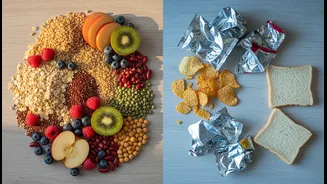









The Great Sugar Debate
Health advice in recent years has rightfully warned against the dangers of consuming too much added sugar. These are the sugars put into foods during processing, like high-fructose corn syrup in soft drinks or sucrose in cakes and candies. They contribute
calories with little to no nutritional benefit. In this broad anti-sugar wave, whole fruits have sometimes been unfairly caught in the crossfire. Because fruits contain natural sugar, primarily fructose, some people fear them just as they would a packaged dessert. However, this view overlooks a crucial distinction: the context in which we consume the sugar. The sugar in a whole apple comes bundled with other components that completely change how our bodies handle it.
Nature’s Packaging: The Fibre Factor
The most significant difference between the sugar in fruit and added sugars is the presence of fibre. Whole fruits are rich in both soluble and insoluble fibre. This fibre forms a gel-like substance in your digestive system, which slows down the absorption of fructose into your bloodstream. Instead of the rapid spike in blood sugar you get from a sugary drink, the energy from fruit is released slowly and steadily. This prevents the dreaded sugar crash and subsequent cravings. Fibre also makes you feel fuller for longer, which can help with weight management by preventing overeating. Added sugars in sweets and drinks lack this essential fibrous buffer, leading to quick absorption and potential health risks.
More Than Just Sugar
When you eat a piece of fruit, you're getting far more than just natural sweetness. Whole fruits are nutritional powerhouses, packed with essential vitamins, minerals, antioxidants, and water. For instance, citrus fruits are famous for their high Vitamin C content, bananas are a great source of potassium, and berries are loaded with antioxidants. These nutrients work together to support everything from your immune system to your heart health. Processed sweets and sugary drinks, on the other hand, offer what nutritionists call "empty calories"—they provide energy from sugar but are devoid of these beneficial micronutrients. The complete nutritional package of a whole fruit is something a candy bar simply cannot replicate.
How Your Body Knows the Difference
The way your body metabolizes sugar depends heavily on its source. The fructose from whole fruit, absorbed slowly due to fibre, gives your liver ample time to process it without being overwhelmed. In contrast, the large, rapid dose of fructose from a sweetened beverage can overload the liver, which may contribute to health issues like non-alcoholic fatty liver disease over time. While chemically the same, the fructose in fruit is part of a complex food matrix that promotes health. The fructose in high-fructose corn syrup is a highly processed, concentrated ingredient that your body experiences very differently.
A Note on Juices and Dried Fruits
It's important to distinguish whole fruit from other fruit-based products. When fruit is juiced, most of its beneficial fibre is removed. This turns the juice into a source of concentrated, free-flowing sugar, much more similar to a sugary drink in how it impacts blood sugar. While 100% fruit juice retains some vitamins, it is less filling and makes it easier to consume a lot of sugar quickly. Similarly, dried fruits are a concentrated source of sugar and calories because their water has been removed, making portion control key. For the most health benefits, choosing a whole apple over apple juice is the superior choice.