







For over 35 years, the Hubble Space Telescope has been humanity’s eye into the cosmos. But its legendary mission is at risk as its orbit slowly decays. Now, NASA is turning to the private sector for a heroic solution.
An Icon in a Slow Decline
Since its launch in 1990, the Hubble
Space Telescope has fundamentally changed our understanding of the universe. It was designed to be serviced by astronauts, and five Space Shuttle missions repaired and upgraded the observatory, allowing it to far outlive its initial 15-year lifespan. However, since the final servicing mission in 2009 and the shuttle's retirement in 2011, Hubble has been on its own. The problem is simple physics: constant, faint drag from Earth's upper atmosphere is slowly pulling the telescope down. Currently orbiting at about 470 kilometers, it has lost significant altitude since its last boost. NASA predicts that without intervention, Hubble will likely make an uncontrolled reentry into the atmosphere sometime between 2033 and 2034.
The Call for Commercial Heroes
Recognizing the ticking clock, NASA issued a formal Request for Information (RFI) on October 29, 2026, asking the commercial space industry for ideas. This isn't a contract offer but a market study to see what's possible. The agency has set no money aside for a mission yet, instead seeking to understand the capabilities, costs, and timelines the private sector can offer. The RFI outlines three potential missions: a 'reboost' to push Hubble into a higher, more stable orbit; a servicing mission to upgrade its systems; or a controlled de-orbit to ensure it comes down safely. Responses are due by November 30, 2026, giving companies a month to present their concepts. A company taking on the task would likely be responsible for the entire operation, including the rocket, spacecraft, and mission control.
What Would a Rescue Mission Look Like?
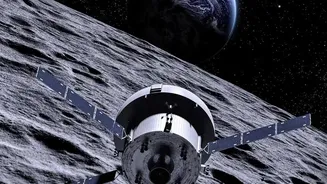
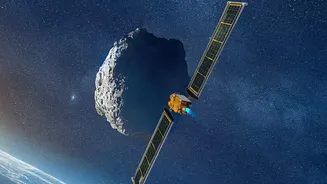
The primary goal is to push Hubble into an orbit of at least 600 kilometers, which could add years, or even decades, to its operational life. This isn't the first time a commercial solution has been considered. In 2022, NASA and SpaceX signed an unfunded agreement to study the feasibility of using a Dragon spacecraft for a reboost, a project associated with the Polaris Program. While that specific study didn't lead to a mission, it opened the door for this broader inquiry. A future mission could be robotic, using a space tug to dock with and propel the telescope, or it could potentially involve a crewed spacecraft. The challenge is significant, as Hubble was never designed for docking with modern commercial vehicles, making any rendezvous and capture a delicate and risky operation.
The Business of Saving a Legend
For private space companies, saving Hubble offers more than just a potential government contract. A successful mission would be a landmark achievement, demonstrating advanced capabilities in in-space servicing—a market long predicted to grow but which has lacked a major anchor customer. The prestige of rescuing one of science's most beloved instruments is immense. As NASA Administrator Jared Isaacman stated, the agency owes it to taxpayers and the scientific community to explore innovative, cost_effective ways to extend the life of an existing asset. Companies like SpaceX and others in the satellite_servicing industry now have a high_profile opportunity to prove their technology on a global stage, potentially unlocking future business in satellite life extension, repair, and de_orbiting services.