





Why Stepwells Are Your Next Favourite Destination
Imagine descending into the earth through a mesmerising maze of symmetrical staircases, each step leading you deeper into a cool, subterranean sanctuary. This isn't a fantasy film set; it's the reality of India's stepwells. These marvels of architecture
and engineering were once vital community hubs, providing water in arid regions while also serving as social gathering spots, spiritual centres, and shaded retreats from the scorching sun. Today, these forgotten wonders are being rediscovered by travellers seeking destinations that are both historically rich and visually spectacular. They are architectural poetry, geometric puzzles carved into the ground, and quite possibly the most unique backdrops you’ll ever find for your travel photos.
Chand Baori, Abhaneri: The Geometric Masterpiece
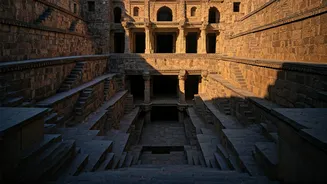
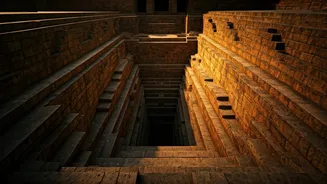
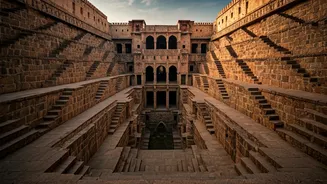
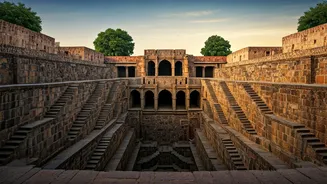
Located in the small village of Abhaneri in Rajasthan, Chand Baori is the poster child for Indian stepwells, and for good reason. It’s one of the deepest and largest in India, plunging 13 stories (over 100 feet) into the ground. What makes it so hypnotic is its stunning geometry: 3,500 narrow steps arranged in a perfect, dizzying pattern on three sides, leading down to the water. The fourth side features a multi-storeyed pavilion with ornate carvings and royal viewing rooms. Standing at the top and looking down feels like staring into an M.C. Escher drawing brought to life. Its sheer scale and perfect symmetry make it a photographer's dream. It’s easily accessible on a road trip between Jaipur and Agra, making it a perfect detour off the popular Golden Triangle tourist circuit.
Rani ki Vav, Patan: The UNESCO World Heritage Queen
If Chand Baori is about stark, geometric beauty, then Rani ki Vav (The Queen’s Stepwell) in Gujarat is about opulent, sculptural grandeur. This isn’t just a well; it’s an inverted temple honouring water. Built in the 11th century, it was flooded and silted over for centuries, which perfectly preserved its intricate carvings. Rediscovered in the 1940s, it’s now a UNESCO World Heritage site. Every surface of its seven levels is covered in over 500 major sculptures and a thousand minor ones depicting deities, celestial beings, and scenes from mythology. The central theme is the Dasavataras, or the ten incarnations of Vishnu. Walking down its wide staircases feels like flipping through a stone encyclopedia of Hindu mythology. It's a testament to the Solanki dynasty's devotion and artistic prowess.
Adalaj ni Vav, Near Ahmedabad: The Five-Storey Social Club
Just a short drive from Ahmedabad, the Adalaj ni Vav is one of the most beautiful and well-preserved stepwells in Gujarat. This five-storey deep structure is famous for its intricate Indo-Islamic architecture, a fusion of styles evident in its floral motifs and detailed carvings. Unlike other stepwells, Adalaj has three entrance staircases, which meet at a large square platform on the first level. The genius of its design lies in its ventilation system; it’s said that the temperature inside is always a few degrees cooler than the outside. Historically, it was more than a water source; it was a bustling hub where locals, travellers, and traders would gather to socialise, conduct business, and seek refuge from the heat. Its ornate balconies and carved pillars create stunning frames for photos, capturing layers of history in a single shot.
Agrasen ki Baoli, Delhi: The Urban Relic
You don't always need to venture into the countryside to find these gems. Tucked away amidst the skyscrapers and bustling streets of central Delhi is Agrasen ki Baoli. This 60-metre-long and 15-metre-wide stepwell offers a sudden, dramatic escape from the city's noise. Comprising 108 steps, the structure becomes progressively narrower as you descend. While its exact origins are debated, its architectural style suggests it was rebuilt during the Tughlaq or Lodi period of the Delhi Sultanate. The experience here is unique; the echoes of city traffic fade, replaced by the cooing of pigeons and the quiet awe of visitors. Its stone archways and shadowed alcoves have made it a popular spot for city dwellers and have even been featured in several Bollywood films, proving that even in the heart of a modern metropolis, ancient wonders provide an unbeatable scenic backdrop.