







Decoding the New FSSAI Stars
FSSAI has introduced a Front-of-Pack Nutrition Labelling (FoPNL) system called the Indian Nutrition Rating (INR). You will see this on the front of packaged foods as a simple star rating, from a half-star (least healthy) to five stars (healthiest). The
goal is to give you a quick, visual summary of a product's nutritional quality without having to decipher the complex panel on the back. This rating is based on an evaluation of energy, saturated fat, total sugar, and sodium content per 100g or 100ml. The system also accounts for positive nutrients like fruits, vegetables, nuts, legumes, millets, fibre, and protein. Essentially, more stars suggest the product is a better nutritional choice.
How the Star System Works
The INR system calculates a baseline score based on energy and nutrients of concern—fat, sugar, and salt—which are linked to non-communicable diseases like diabetes and heart conditions. Points are then added for the inclusion of positive ingredients. A final score is generated, which translates into the star rating. A product with a score of less than -11 gets a full 5 stars, while a product with a score over 25 gets just 0.5 stars. This system applies to most processed and packaged foods, though some items like milk, ghee, fresh vegetables, and single-ingredient products are exempt.
The 'Health Halo' and Other Marketing Traps
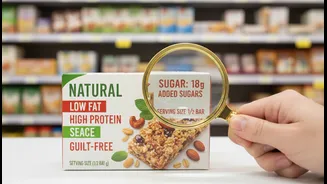
While the INR is a major step forward, the front of a package is also prime real estate for marketing. Brands often use buzzwords to create a 'health halo,' making a product seem healthier than it is. FSSAI has recently flagged several companies for using misleading claims like "100% natural," "organic" (without certification), and "no added sugar." A "no added sugar" claim, for example, can be misleading if the product is packed with naturally occurring sugars from fruit concentrates. Similarly, a "low-fat" product might have a high sugar content to improve its taste. These claims can distract from the overall nutritional reality, which the star rating tries to capture.
Why You Still Need to Read the Fine Print
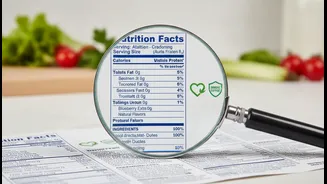
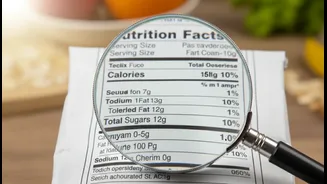
The star rating is a helpful guide, but it shouldn't be the only thing you look at. One of the main criticisms of such systems is that they can oversimplify complex nutritional profiles. For instance, the positive points from adding a small amount of fruit or nuts could potentially offset high levels of sugar or fat, leading to a higher star rating than the product might deserve on its own merits. This makes it crucial to look beyond the stars and the marketing claims. The detailed nutrition panel and the ingredients list on the back of the pack are your best source of truth. Ingredients are listed in descending order by weight, so the first few items make up the bulk of the product.
Your Smart Shopper Checklist
To make the most informed choices, combine the new FSSAI tool with some good old-fashioned label reading. First, use the star rating as a quick filter to compare similar products. When choosing between two brands of biscuits, a higher star rating is a good starting point. Second, ignore the flashy claims on the front. Words like 'real,' 'healthy,' or 'superfood' are marketing terms, not scientific facts. Third, flip the pack over. Spend a few seconds scanning the full nutrition facts. Pay attention to the serving size and the amounts of total sugar, sodium, and saturated fat. A simple rule is to be wary of products where sugar is one of the first three ingredients. This three-step process—check the stars, ignore the hype, and read the back—empowers you to see past the marketing and truly understand what you're eating.