




Master the Art of Booking Early
The golden rule of festival travel is to book your tickets the moment the window opens, which is typically 120 days in advance on Indian Railways. Set a calendar reminder. If you miss this initial window, don't despair. Your next best bet is the Tatkal
quota, which opens one day before the journey at 10 AM for AC classes and 11 AM for non-AC classes. Be logged into the IRCTC website or app with a 'master list' of passengers pre-filled to save crucial seconds. For those willing to pay a premium for a higher chance of confirmation, the Premium Tatkal option uses dynamic pricing and often has better availability.
Demystify the Waitlist
Seeing 'WL' (Waitlisted) on your ticket can be stressful, but it's not the end of the road. Understanding the different types is key. GNWL (General Waiting List) has the highest chance of confirmation, as it's for tickets from the train's origin station. RLWL (Remote Location Waiting List) and PQWL (Pooled Quota Waiting List) have lower confirmation probabilities. Use PNR prediction apps to check confirmation chances. If your ticket is RAC (Reservation Against Cancellation), you are guaranteed a seat to share, and it often gets upgraded to a full berth. Remember, a fully waitlisted e-ticket is automatically cancelled if it doesn't get confirmed after the chart is prepared, and you cannot legally board the train with it.
Keep an Eye Out for Special Trains
To manage the immense festival demand, Indian Railways announces numerous 'Special' trains on high-traffic routes. These services are often announced a few weeks before the festival. For Raksha Bandhan 2026, dozens of special services were announced to connect major hubs like Delhi, Lucknow, Bhopal, Kota, and Jabalpur. Actively monitor press releases from zonal railways and check the NTES app or the IRCTC website for these announcements. These trains provide a crucial lifeline for last-minute travellers.
Think Outside the Main Route
If a direct train to your destination is fully booked, get creative. Consider booking a ticket to a major station nearby and completing the rest of the journey by bus or a local train. This strategy, known as breaking the journey, can sometimes open up new ticket availabilities. Another trick is to change your boarding point. Booking from the train's starting station might give you a better chance under the General Waitlist quota (GNWL) than booking from an intermediate station.
Pack Smart and Travel Safe
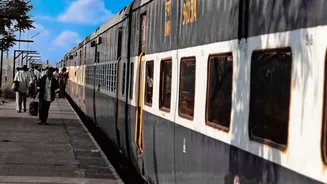
Crowded trains require extra vigilance. Pack light to make it easier to navigate packed platforms and coaches. Always secure your luggage with a chain and lock, preferably fastening it to the bars under the lower berth. Keep your valuables, phone, and wallet in a small, secure bag that stays with you at all times. If you have an upper berth, it can offer more security and personal space. Carry your own water bottle and consider packing some food to avoid reliance on platform vendors. Arrive at the station well in advance, at least 60-75 minutes before departure, as crowd management systems may be in place at major terminals.
Have a Reliable Plan B
Sometimes, despite all efforts, a confirmed train ticket is simply not possible. It's essential to have a backup plan. Inter-state bus services, including those run by state transport corporations like UPSRTC, often deploy extra buses during festival periods. Carpooling with friends or using ride-sharing apps for outstation travel can also be a viable, albeit more expensive, option. In some cases, for longer distances, last-minute flights can be surprisingly competitive, especially if you can be flexible with your travel dates by a day or two.