




The Psychology of a Rainy Day
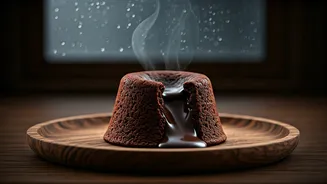
There's a scientific reason we crave certain foods when it rains. The cool, damp weather and reduced sunlight can lead to a dip in serotonin, the body's 'happy chemical'. This drop can make us feel tired or a little low, prompting our brains to seek a quick
mood lift. Enter comfort food. Warm, carbohydrate-rich treats can help boost serotonin production, providing a temporary feeling of well-being and satisfaction. On a rainy day, when we're often indoors and feeling cosy or perhaps a bit trapped, our minds naturally turn to foods that offer security and pleasure. The act of eating a warm dessert becomes a small, grounding ritual that makes us feel safe, happy, and cared for.
A Symphony of Contrasts
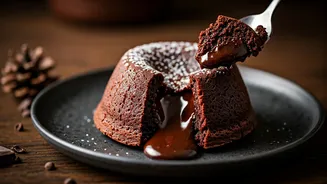
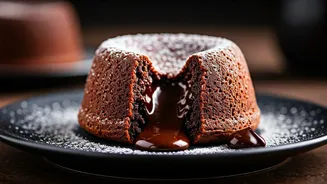
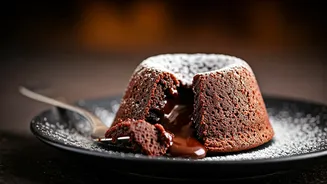
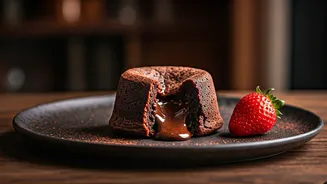
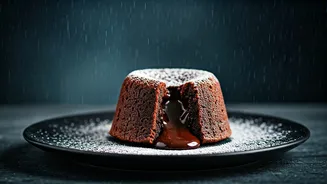
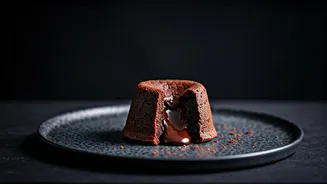
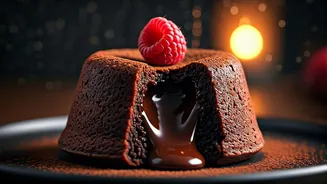
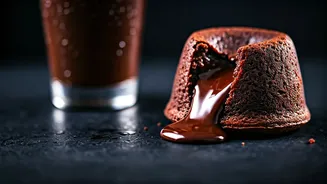
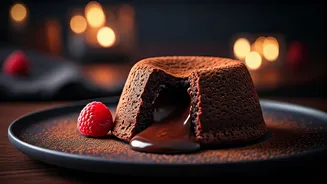
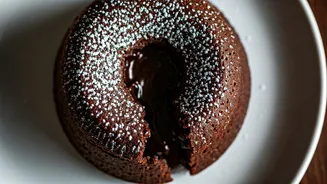
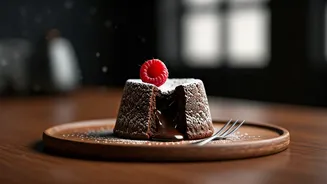
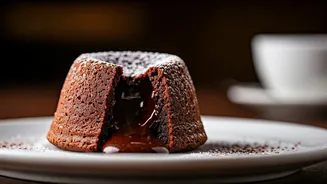
The lava cake's enduring power lies in its brilliant construction—it's a masterclass in sensory excitement. The experience begins with breaking through the firm, cakey exterior to release the main event: a river of warm, molten chocolate. This contrast between the solid cake and the gooey, liquid centre is what defines the dessert. But it doesn't stop there. Most often, lava cake is served with a scoop of cold vanilla ice cream. This introduces another layer of contrast—hot and cold, rich chocolate and clean vanilla. This combination of textures and temperatures creates a sensory journey in every spoonful, making it far more than just a simple cake; it becomes an event.
The Magic of Molten Chocolate
Chocolate itself is a powerful comfort ingredient. Indulging in it can activate the reward centres in our brain, releasing dopamine and creating feelings of pleasure. The lava cake delivers this in its most potent form. The 'lava' isn't just a gimmick; it's the heart of the experience, delivering an intense, unadulterated chocolate hit. This theatrical moment of cutting into the cake and watching the chocolate flow is visually satisfying and builds anticipation. It’s a dessert that’s as fun to look at as it is to eat, making it a star on both the plate and social media feeds.
A Global Star on the Indian Menu
Though it feels like a timeless classic, the molten chocolate cake is a relatively modern invention with a disputed origin story. French chef Michel Bras claims to have created his 'coulant' in 1981, inspired by a family drinking hot chocolate after skiing. Meanwhile, French-American chef Jean-Georges Vongerichten claims he accidentally invented it in New York in 1987 when he underbaked a chocolate cake. Vongerichten is largely credited with popularising it in the West, where it became a fine-dining staple in the 1990s before making its way to chain restaurants and home kitchens. Its arrival in India saw it quickly adopted by cafes and restaurants, offering a touch of global, accessible luxury that perfectly suited the nation's evolving palate.
Endless Reinvention
Part of the lava cake's staying power is its adaptability. While the classic dark chocolate version remains a bestseller, chefs constantly find new ways to keep it interesting. Variations now include salted caramel, red velvet, and white chocolate lava cakes. Some Indian chefs are even incorporating local flavours, creating fusion versions with jaggery, coffee, or spices. This ability to evolve prevents it from becoming stale. It’s a familiar canvas that still allows for creativity, ensuring that even as other dessert trends come and go—from the rise of stone fruit tarts in summer to seasonal mithai—the lava cake remains a comforting, reliable, and utterly irresistible fixture.