





What Exactly Is Gold Wastage?
Wastage, in the simplest terms, is the portion of gold that is 'lost' or becomes unrecoverable during the jewellery-making process. When a goldsmith takes a piece of raw gold to craft an ornament, processes like cutting, filing, melting, soldering, and
polishing cause minuscule particles of gold to be lost as dust or tiny shavings. Jewellers pass the cost of this lost gold onto the customer in the form of a 'wastage charge', typically calculated as a percentage of the ornament's weight. Think of it as compensation for the material that doesn't end up in the final piece you wear.
The Difference Between Wastage and Making Charges
This is where most confusion arises. While often discussed together, wastage and making charges are technically separate. Wastage covers the cost of the lost raw material (gold), while making charges cover the labour and skill of the artisan who crafts the piece. Making charges are the wages for the craftsmanship, design complexity, and overheads involved in turning gold into a beautiful design. However, some jewellers simplify their billing by combining these two into a single 'value addition' or 'VA' charge. It's crucial to ask for a clear breakdown to understand precisely what you are paying for, as one is for the material and the other is for the service.
How Are These Charges Calculated?
Making charges can be calculated in two ways: either as a flat rate per gram of gold or as a percentage of the total gold value. Wastage, on the other hand, is almost always applied as a percentage of the item's weight. For instance, if you are buying a 10-gram chain and the jeweller quotes a 10% wastage, you are effectively paying for 11 grams of gold. The final bill is typically calculated as: (Price of gold x [Weight + Wastage]) + Making Charges + GST. This shows how wastage directly inflates the base cost of the gold before any other charges are even applied.
What's a 'Normal' Wastage Percentage?
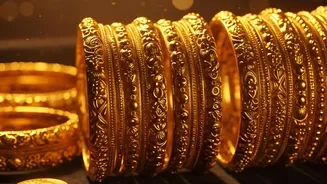
There is no official, government-mandated standard for wastage, which is why it can be a major point of negotiation. The percentage can vary dramatically, from as low as 3% to as high as 25% or more, depending on the jeweller and the item. Generally, machine-made items like simple chains or bangles have lower wastage (around 3-8%), as the process is more efficient. In contrast, intricate, handcrafted jewellery, like detailed necklaces or temple jewellery, involves more cutting and shaping, leading to higher wastage percentages, often in the 10-25% range. Jewellery with intricate stone settings can also command higher wastage charges.
Tips for the Smart Gold Buyer
Knowledge is power when you walk into a jewellery store. Always ask the salesperson to specify the wastage and making charges separately for any piece you like. Don't hesitate to negotiate, especially on wastage charges. For bigger purchases, even a 2–3% reduction can result in significant savings. Compare the charges for similar items across different jewellers before making a decision. While a special discount on the gold rate might sound tempting, your real savings often come from negotiating a lower wastage percentage. Finally, always insist on a detailed bill that clearly breaks down the gold weight, its purity (karat), wastage charge, making charge, and GST.