





From Splashdown to Teardown
When the Orion capsule, named Integrity, splashed down in the Pacific Ocean in April 2026, it marked the successful conclusion of humanity’s first crewed journey to the vicinity of the Moon in over 50 years. For the four astronauts aboard, it was the end
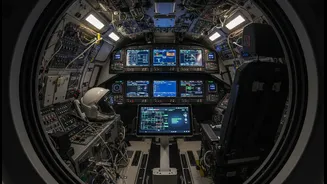
of a historic 10-day flight. But for the Artemis program, the work was just beginning. Soon after recovery, the capsule was transported back to NASA's Kennedy Space Center, not for a museum display, but for a complete and painstaking teardown. Every component, from crew seats and control units to the all-important heat shield, is being removed, cataloged, and scrutinized. This meticulous process is less about celebrating a past success and more about building a blueprint for the future.
The All-Important Heat Shield
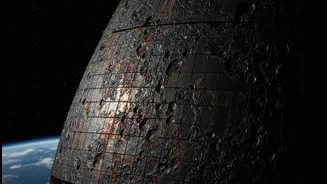
A major focus of the post-flight analysis is Orion's heat shield. After the uncrewed Artemis I mission showed unexpected charring and material loss, engineers were intensely focused on its performance. The 16.5-foot-wide shield is the only thing protecting the crew from temperatures reaching 5,000 degrees Fahrenheit during a 25,000-mph reentry. Initial inspections after the Artemis II splashdown brought a wave of relief; the heat shield performed significantly better than on Artemis I, with much less char loss. This success was no accident. NASA had altered the reentry trajectory to reduce thermal stress, and the real-world results validated the ground testing and modeling. Now, the daily work of engineers involves a deeper dive. The shield will be sent to NASA's Marshall Space Flight Center for extensive analysis, including sample extraction and X-ray scans, to understand its performance at a microscopic level.
Altering the Plans for Artemis III
The findings from Artemis II directly impact the 'everyday planning' for subsequent missions. The successful performance of the heat shield, for example, gives planners confidence in the current design and reentry profile for Artemis III and IV. However, other discoveries are actively changing to-do lists. During the flight, a minor issue was detected with a urine vent line and a small helium leak in the service module. Consequently, teams of engineers are now tasked daily with identifying the root cause of these issues and implementing corrective actions to ensure they don't appear on future spacecraft. Every piece of data, from the performance of life support systems to the wear on specific components, is fed back into the design and manufacturing process for the next Orion capsules. This iterative process of test, analyze, and refine is the foundation of turning a one-off mission into a sustainable program.
Beyond Hardware: A Mountain of Data
The post-flight analysis isn't limited to physical hardware. The Artemis II mission generated an enormous volume of data on everything from radiation levels beyond Earth's protective magnetosphere to the crew's physiological and psychological response to deep space travel. Scientists are now poring over this information. Data from personal radiation sensors worn by the astronauts will help refine shielding requirements and activity planning for future, longer-duration lunar missions. Information from crew health monitoring, which tracked everything from sleep to stress levels, provides a baseline for what to expect and how to prepare for keeping astronauts healthy and effective on their way to a lunar base. This daily work of data analysis is crucial for developing the procedures and technologies that will make a permanent human presence on the Moon possible.