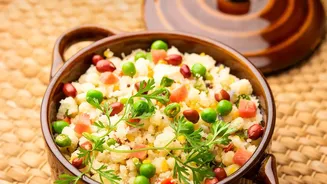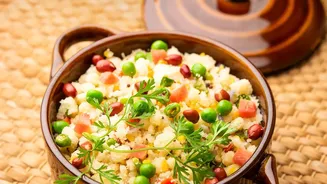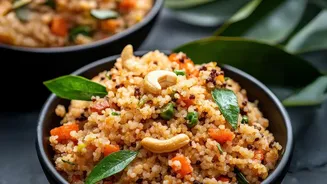


A staple in countless Indian households, upma is more than just a simple breakfast porridge. This versatile dish transforms across regions, showcasing a delightful spectrum of textures and flavours. Here are five variations you need to know.
The Foundation: Classic Rava Upma
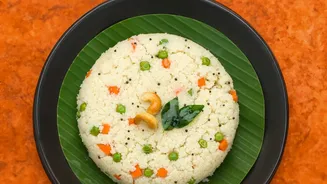
This is the
version most people recognise as upma. Hailing from South India, its name comes from 'uppu' (salt) and 'mavu' (flour). It's made by dry-roasting semolina (rava or sooji) until fragrant, which is key to a fluffy, non-sticky texture. The base is a simple tempering of mustard seeds, urad dal, chana dal, curry leaves, and ginger in hot oil or ghee. Onions and green chillies are sautéed before adding hot water. The roasted rava is then slowly stirred in and cooked until soft. Served plain or with a side of coconut chutney, it's a comforting and quick meal that forms the foundation for many other creative interpretations.
The Spicy Cousin: Karnataka's Khara Bath
Often mistaken for a simple vegetable upma, Khara Bath is a beloved breakfast in Karnataka, known for its distinct spicy and savoury profile. What sets it apart is the addition of a special spice blend, often a 'vangi bath' powder, which includes ingredients like coriander, cumin, cinnamon, and cloves. It's richer and more complex than the standard upma, loaded with finely chopped vegetables like carrots, beans, and capsicum. In Bengaluru eateries, Khara Bath is famously served alongside its sweet counterpart, Kesari Bath (a sweet semolina dish), a combination celebrated as 'Chow Chow Bath'.
The Noodle Twist: Semiya Upma
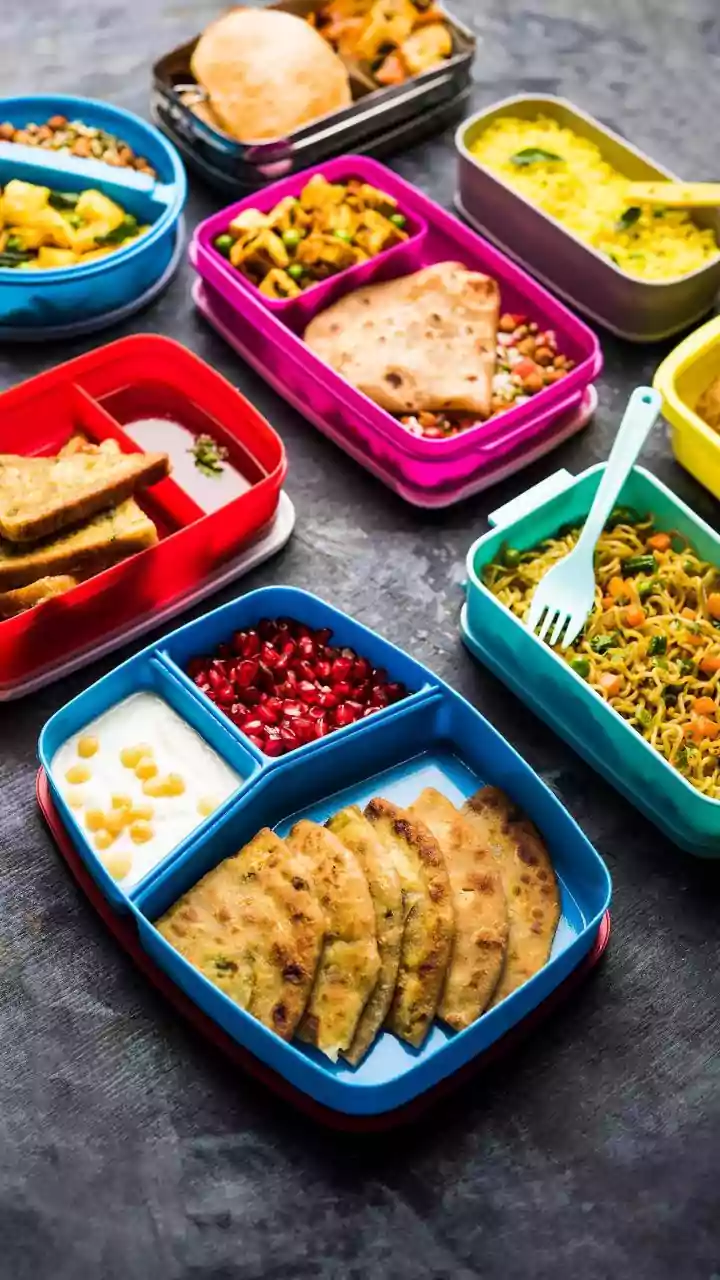
Swapping semolina for wheat vermicelli (semiya) creates an entirely different breakfast experience. Popular across South India, Semiya Upma has a texture reminiscent of savoury noodles. The preparation starts similarly, with a tempering of spices and lentils. Vegetables like peas and carrots are often added for colour and nutrition. The vermicelli is typically roasted to a golden-brown hue before being cooked in water until tender but not mushy. The key to a perfect Semiya Upma is getting the water-to-vermicelli ratio just right to ensure the strands remain separate and fluffy. It's a quick one-pan meal that’s also a popular choice for lunchboxes.
The Quick Alternative: Aval Upma
When you're short on time, Aval Upma is the answer. This version uses flattened rice flakes (known as 'aval' in Tamil and 'poha' elsewhere) instead of semolina, which require no extensive cooking. The flakes are simply rinsed in water to soften them. The flavour comes from a South Indian-style tempering of mustard seeds, lentils, curry leaves, and green chillies. In Tamil Nadu, it is often prepared with onions, turmeric, and a garnish of fresh coconut. Because the flattened rice cooks in minutes, it’s a go-to dish for a speedy and satisfying breakfast.
The Modern Makeover: Bread Upma
A brilliant way to use up leftover bread, Bread Upma is a modern, resourceful take on the classic. Bite-sized pieces of bread are tossed in a flavourful onion-tomato masala. The bread can be toasted beforehand for a crispier texture. The base masala includes typical upma spices like mustard seeds and curry leaves, but often adds tomatoes, turmeric, and sometimes a pinch of chilli powder for extra zing. It comes together in under 25 minutes, making it a popular choice for a quick snack or a fun breakfast for those who enjoy a savoury, carb-heavy start to their day.