





A 2,843-Kilometre Game-Changer
For years, freight and passenger trains in India have shared the same congested tracks. Because passenger services always get priority, goods trains were often delayed, leading to slow transit times and higher business costs. The Dedicated Freight Corridor
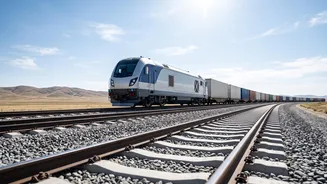
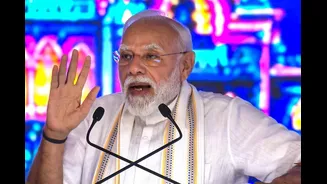
(DFC) project was conceived to solve this very problem by creating a separate, exclusive highway for goods trains. On September 8, 2026, Prime Minister Narendra Modi inaugurated the final sections of the Western DFC, officially completing the entire 2,843-km network. This network consists of the Western DFC, running from Dadri in Uttar Pradesh to Jawaharlal Nehru Port (JNPT) in Mumbai, and the Eastern DFC, linking Ludhiana in Punjab to Sonnagar in Bihar. Built at a massive scale, these corridors are designed for higher speeds and double-stack container trains, fundamentally changing how goods move across the country.
How Separating Trains Helps Everyone
The core benefit of the DFCs is simple: segregation. By shifting freight traffic onto its own dedicated network, the existing conventional railway lines are freed up. This immediately tackles the primary cause of delays for goods transport, allowing freight trains to run faster and more reliably. Containers that once took over a day and a half to get from western India to Delhi now arrive in less than half that time. But the ripple effect on the passenger network is just as significant. With goods trains no longer competing for space, there is now more available capacity on the tracks that millions of people use every day. According to the Ministry of Railways, this has already allowed for the operation of more passenger services across the network. This newfound capacity is particularly crucial for overcrowded urban rail systems.
A Glimmer of Hope for Mumbai Commuters
Nowhere is the strain on the railway network more palpable than in Mumbai, where over six million people use the suburban local trains daily. The completion of the Western DFC, which terminates at JNPT near Mumbai, is a particularly momentous development for the city. It is expected to ease congestion on Mumbai's railway network by diverting heavy freight traffic that previously had to fight for space with local trains. This opens up the tantalising possibility of introducing more suburban services, increasing frequency, and ultimately reducing the dangerous overcrowding that defines the Mumbai commute. Railway Minister Ashwini Vaishnaw has noted that even a 10 percent increase in suburban services could significantly improve passenger movement in the city.
The Path to More Local Trains
While the DFC's completion creates the opportunity, turning it into more local train services requires a concerted effort. The good news is that plans are already in motion. Indian Railways is undertaking projects worth around ₹18,000 crore to augment Mumbai's suburban network, with a goal to increase daily services from 3,200 to 3,500 by 2030. This includes building new platforms, extending existing ones to accommodate longer 15-coach trains, and improving signalling systems. Furthermore, a massive procurement of 238 new air-conditioned local train rakes is underway, with the first trains expected to arrive in 2027 and the full fleet by 2030. These new trains, coupled with the track capacity freed up by the DFC, form the twin pillars of Mumbai's suburban rail expansion.