








The Problem with Publishing
Scientific progress is built on trust. Each new discovery stands on the shoulders of previous work, cited in the references section of a research paper. But this system is under immense strain. The sheer volume of new studies makes it nearly impossible
for human peer reviewers to manually check every citation for accuracy and relevance. This pressure has led to a growing 'reproducibility crisis,' where findings can't be verified. Worse, issues like fabricated references, incorrect data, and even outright plagiarism can slip through the cracks, undermining the credibility of the entire scientific enterprise. Sometimes these are honest mistakes, but with the rise of AI-generated text, some papers now include 'hallucinated' references—citations to papers that don’t even exist.
Enter the AI Auditor
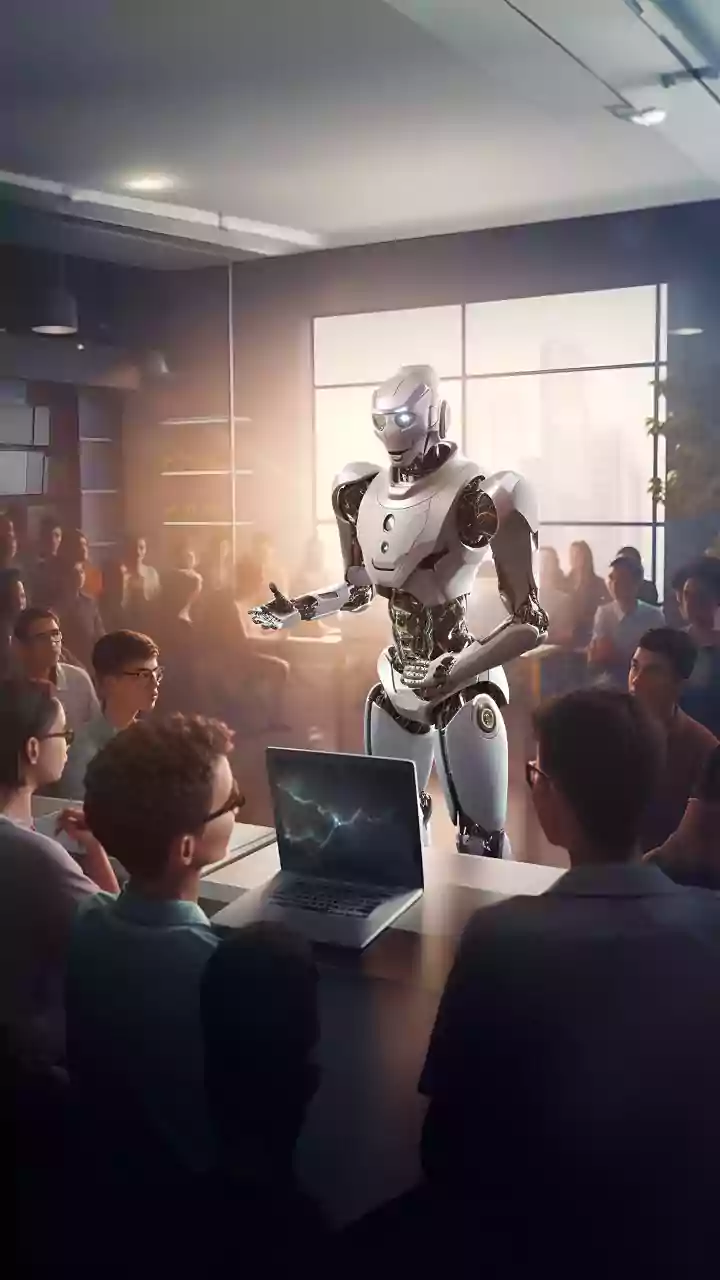
This is where AI agents come in. Think of them not as general-purpose chatbots, but as specialized automated assistants designed for a very specific task: auditing scientific papers. These tools are built to read a manuscript, extract its list of references, and then perform a rigorous, large-scale verification process that would take a human researcher months to complete. Tools with names like RefCheckAI, Citely, and ScholarPeer are designed to function like a tireless, ultra-fast research assistant, cross-referencing millions of records in moments. They represent a new layer of defense for academic integrity, helping to catch errors before a paper is published and creating a digital audit trail for transparency.
How AI Agents Check References
The process is more complex than a simple keyword search. First, the AI agent parses the paper to identify every single citation and extract its key details: authors, title, journal, and year. It then queries massive academic databases like CrossRef, PubMed, and Semantic Scholar to verify that the reference is real. This initial step catches fabricated citations and broken links. But the more advanced agents go deeper. Using semantic analysis, they can actually assess whether the content of the cited paper supports the claim being made in the new manuscript. For example, if a paper claims a source proves a certain point, the AI can analyze the source text to confirm if that's an accurate representation or a misinterpretation.
The Promise of Speed and Scale
The most significant advantage of using AI for reference checking is the incredible efficiency. An AI agent can perform a comprehensive audit of a paper with hundreds of references in minutes or hours, a task that could take a human days or weeks. This allows journals and research institutions to move from spot-checking a few submissions to systematically auditing every single one. It also empowers individual researchers to pre-check their own work before submission, catching embarrassing errors early. By automating these repetitive and time-consuming checks, AI frees up human peer reviewers to focus on what they do best: evaluating the originality, methodology, and critical thinking behind the research itself.
The Hurdles and Human Element
Despite their power, AI auditors are not a perfect solution. A major concern is confidentiality; uploading unpublished research to an AI platform raises serious data privacy and security questions. There's also the risk of 'over-reliance' on these tools, which could dull the critical thinking skills of human researchers. AI agents can still make mistakes, generate false positives, or fail to grasp the nuance of a groundbreaking but unconventional idea. This raises a crucial question of accountability: who is responsible when an AI makes an error? For these reasons, experts agree that these agents should be seen as powerful assistants, not replacements for human judgment. The final call on a paper's validity must remain with human experts who can interpret context and validate the AI's findings.