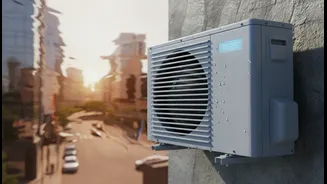









When Comfort Became a Necessity
Not long ago, an air conditioner was a symbol of affluence. Today, for millions across India, it has become a necessity. Driven by rising disposable incomes, rapid urbanisation, and increasingly intense heatwaves, the AC is no longer a luxury but a core
part of household comfort and well-being. The numbers tell the story: India's AC market is one of the fastest-growing in the world, with sales hitting record highs during recent summers. With household AC ownership still relatively low, this trend is set to accelerate, fundamentally changing how we live and consume energy. This shift from 'want' to 'need' marks a significant moment in the story of the modern Indian home.
The True Cost of Cool
While an AC brings immediate relief from the heat, it also brings a surge in electricity consumption that can strain both your wallet and the nation's power grid. Cooling already accounts for a significant portion of India’s annual electricity use, and on hot summer nights, ACs can be responsible for up to a third of the power consumed in cities. This immense demand, concentrated in the hottest months, puts the entire energy infrastructure under pressure, increasing the risk of power shortages. The consequence for homeowners is a summer electricity bill that can be several times higher than in cooler months, creating a direct conflict between the desire for comfort and the need for budget control.
Your Best Friend: The BEE Star Rating
Navigating the trade-off between comfort and cost doesn't have to be a guessing game. The most powerful tool at your disposal is the Bureau of Energy Efficiency (BEE) star rating label, found on all major appliances. This label uses a 1 to 5-star scale to indicate an appliance's energy efficiency. A 5-star AC consumes significantly less electricity than a 3-star or 1-star model of the same capacity, translating directly into lower bills. The key metric is the Indian Seasonal Energy Efficiency Ratio (ISEER)—a higher ISEER value means a more efficient AC. It’s also important to know that the BEE tightens these standards every few years. This means a new 3-star AC bought in 2026 might be as efficient as a 4-star model from a year or two prior, making it crucial to check the label's manufacturing year.
Beyond the AC: A Smarter Home
While choosing an efficient air conditioner is a huge step, it’s not the only way to manage your home's energy use. A holistic approach can yield even greater savings and comfort. Passive cooling techniques, for instance, can reduce your reliance on the AC altogether. Simple measures like using light-coloured, reflective paint on the roof, ensuring good cross-ventilation, and planting shade trees can significantly lower indoor temperatures. Inside, switching to LED bulbs, unplugging devices on standby to avoid 'phantom load', and using thick curtains or blinds to block midday sun are all effective strategies. These habits, combined with an efficient AC, create a multi-layered defence against both the heat and high energy costs.
Our Homes, Our Collective Impact
The choices we make within our four walls have a ripple effect across the country. With the residential sector being India's second-largest consumer of electricity, our collective energy use has national consequences. The projected boom in AC ownership is a major focus of national policy, including the India Cooling Action Plan (ICAP), which aims to reduce future cooling demand through efficiency. By opting for a 5-star AC instead of a less efficient one, millions of households can collectively reduce the strain on the power grid, cut national carbon emissions, and support India's climate goals. Every energy-conscious decision contributes to a more sustainable future for everyone, proving that personal choices can have powerful, collective outcomes.