



The Sun's Final Act
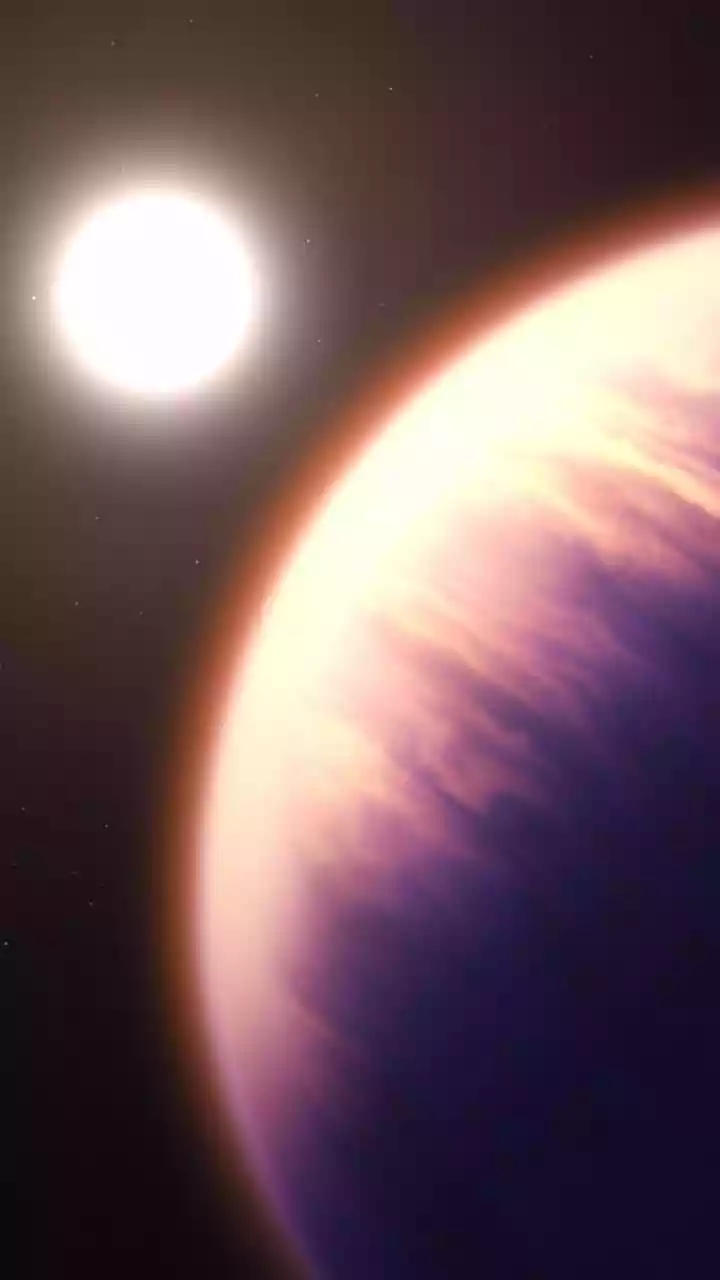
Like all stars, our Sun has a finite lifespan. In approximately five billion years, it will exhaust the hydrogen fuel in its core and begin to die. This process will see it swell into a red giant, a phase where it will expand to engulf Mercury, Venus,
and almost certainly Earth. After this dramatic expansion, the Sun will shed its outer layers, losing nearly half of its total mass. What remains will be a white dwarf: a hot, dense stellar core that will slowly cool over trillions of years. For a long time, scientists believed this mass loss would be a smooth, gentle process. However, recent studies suggest a much more violent and erratic end.
A System Shaken Apart
A new study published in 'The Astrophysical Journal Letters' challenges the long-held view of a peaceful end for the outer solar system. Using hundreds of advanced simulations, researchers from Caltech and the University of Michigan modeled what would happen if the Sun sheds its mass not smoothly, but in violent, random bursts. These 'stochastic kicks' would act like cosmic nudges to the dying star, and their cumulative effect would profoundly disrupt the gravitational balance of the entire system. Previous models predicted the outer planets could remain in stable, albeit wider, orbits for as long as a quintillion (a billion billion) years. The new research slashes that estimate by a factor of a billion, suggesting the outer planets will descend into chaos within just one billion years of the Sun becoming a white dwarf.
Uranus and Neptune's Unstable Dance
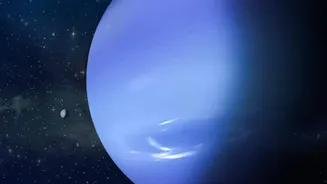
In this newly envisioned future, Uranus and Neptune are particularly susceptible to the chaos. As the Sun's gravitational grip weakens, the outer planets will drift farther away. The random kicks from the Sun's mass loss will jostle their orbits, making them unstable. The simulations showed a range of dramatic outcomes. In some scenarios, entire planets were flung out of the solar system altogether. In others, the gravitational mayhem caused Uranus and Neptune to completely swap their orbital positions. This paints a picture of a dynamic and destructive end, where the familiar order of our solar system is completely rewritten. The study found that in many simulations, the instability begins even before the Sun fully becomes a white dwarf, during its red giant phase.
A New Cosmic Configuration
While many of the simulated outcomes were destructive, not all of them ended in complete disarray. In some instances, the gravitational jolts pushed planets into new, stable arrangements called 'mean-motion resonances'. This is an orbital configuration where the periods of two planets are a simple ratio of whole numbers, creating a synchronized dance. However, even these resonant configurations did not guarantee long-term safety, with many of those systems also disassembling over billions of years. The key finding is that the Sun's death is not a passive event for the outer worlds; it is the direct cause of their eventual undoing. Isaac Newton himself suspected the solar system was mortal, and this new research suggests he was right, but for a reason he couldn't have predicted: the Sun itself is the perpetrator.