





The End of an Era for the ISS
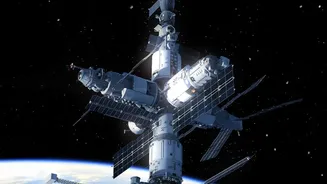
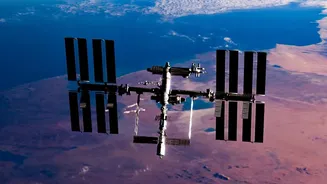
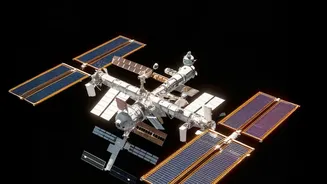
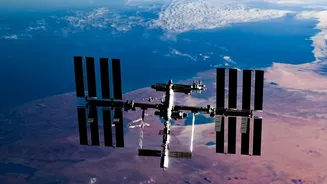
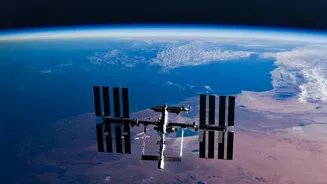
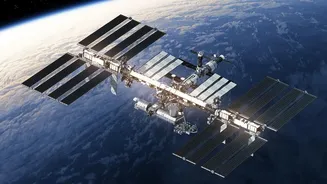
The International Space Station (ISS) stands as one of humanity's greatest collaborative achievements. Since November 2000, it has hosted a continuous human presence in low-Earth orbit (LEO), serving as a premier laboratory for scientific research. However,
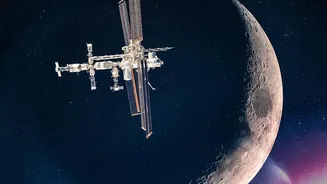
after more than three decades of service, the station is aging. The harsh environment of space, with its extreme temperature swings and radiation, has taken a toll on the station's structure, leading to issues like persistent air leaks and rising maintenance costs. Recognizing these challenges, NASA and its international partners have planned for the ISS to be honorably retired. Around 2030, it will be carefully deorbited, guided to a controlled splashdown in a remote area of the Pacific Ocean known as Point Nemo, the farthest point from any land. This decision marks the end of a remarkable chapter but also signals a fundamental shift in how humanity will live and work in space.
NASA’s Pivot to Commercial Customers
Instead of building another government-owned station, NASA is embracing a new role: that of a customer. The agency's strategy is to foster a vibrant commercial marketplace in LEO, where it can purchase services like astronaut time and research capacity from private companies. This approach allows NASA to focus its resources on deep-space exploration, such as the Artemis missions to the Moon and Mars, while ensuring an uninterrupted US presence in LEO. The cornerstone of this strategy is the Commercial LEO Destinations (CLD) program. Through this initiative, NASA is providing funding and technical support to several American companies to accelerate the development of their private space stations. The goal is to have multiple commercial options available by the time the ISS is decommissioned, preventing a gap in America's orbital presence and creating a new economic frontier.
The Contenders: Building Our Future in Orbit
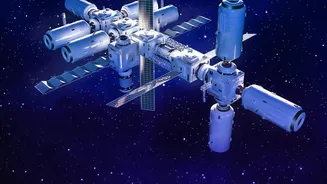
Several companies are in a race to build the successor to the ISS, each with a unique approach. Axiom Space is a prominent frontrunner, already conducting private astronaut missions to the ISS. Their plan involves first attaching their own modules to the ISS for testing, starting as early as 2027, and then detaching them to form a free-flying Axiom Station before the ISS is retired. The company recently updated its timeline to target an independent free-flying platform as early as 2028. Another key player is Vast, which is developing Haven-1, a smaller, single-module station intended to be the first free-flying commercial habitat. Initially targeting a 2026 launch, Vast is now aiming for the first quarter of 2027. Other major projects include Orbital Reef, a 'mixed-use business park' in space led by Blue Origin and Sierra Space, and Starlab, a venture from Voyager Space and Airbus. Each of these contenders is developing the hardware and business models that will define the post-ISS era.
A New Economy in the Stars
These new commercial space stations are not just science labs; they are envisioned as versatile platforms for a wide range of activities. This opens the door to a new LEO economy. The primary market remains government astronauts and publicly funded microgravity research, with NASA as the anchor tenant. However, the business model extends far beyond that. Space tourism, a market already being tested by companies like Axiom, is a major potential revenue stream. Furthermore, in-space manufacturing offers tantalizing possibilities, from creating flawless fiber-optic cables to 3D-printing human organs—processes that are impossible under Earth's gravity. Companies will also be able to lease space for proprietary research, data centers, and even media production. This diverse mix of clients and applications is crucial for creating a self-sustaining commercial ecosystem in orbit.
Implications for India and the World
The transition to commercial space stations will have global ripple effects. For a space-faring nation like India, this shift presents both opportunities and strategic considerations. With the retirement of the government-led ISS, access to a research platform in LEO will depend on commercial contracts. This could offer Indian researchers and the Indian Space Research Organisation (ISRO) more flexible and potentially cost-effective ways to conduct experiments and train astronauts without the massive investment of building their own station. As private companies like Vast have already signed agreements with other national agencies for seats on their first missions, it signals a new, more accessible model for countries to participate in human spaceflight. This new paradigm decentralizes LEO access, moving it from a club of a few powerful nations to a more open, competitive market. For India, it is a chance to accelerate its own ambitions in human spaceflight and microgravity research by leveraging this emerging commercial infrastructure.