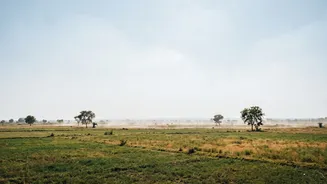








The Monsoon's Gradual Retreat
The end of the southwest monsoon is not like flipping a switch. It’s a gradual process known as withdrawal, which typically begins from the northwestern parts of India around the first week of September. The India Meteorological Department (IMD) declares
the withdrawal based on specific criteria, including five consecutive days of no rain and a change in wind patterns. This retreat is a slow, southeasterly march across the subcontinent, taking over six weeks to complete. This means that while Rajasthan might be experiencing dry, post-monsoon air in early September, Kerala in the south could still be in the midst of monsoon rains. This staggered exit is a crucial factor in the weather patterns that follow.
The Science of Post-Monsoon Heat
The phenomenon often dubbed 'September Heat' or 'October Heat' is a well-known, if unwelcome, climatic event. As the monsoon clouds clear, the sun’s rays beat down with renewed intensity on the subcontinent. This alone would raise temperatures, but the real issue is the combination of heat and humidity. The preceding months of rain leave the ground and lower atmosphere saturated with moisture. This residual humidity means the air is heavy and damp. High humidity severely hampers the body's natural cooling mechanism: sweating. Sweat doesn't evaporate efficiently from the skin, leading to a much higher 'feels-like' temperature that is more oppressive than the dry heat of May or June.
Why Cities Feel It Most
Urban centres are uniquely vulnerable to this post-monsoon heat spike. The 'Urban Heat Island' effect, where cities are significantly warmer than surrounding rural areas, amplifies the problem. Materials like concrete and asphalt, which make up our roads and buildings, are excellent at absorbing and retaining solar radiation. They soak up heat during the day and release it slowly at night, preventing cities from cooling down effectively. This trapped heat, combined with high ambient humidity and reduced green cover, can make temperatures within a city several degrees higher than in the countryside, exacerbating health risks and straining energy grids.
The Outlook for September 2026
Forecasts for September 2026 suggest that India could be facing a warmer and drier month than usual. The IMD has indicated that rainfall is likely to be below normal for the month. This suppressed rainfall, attributed partly to strong El Niño conditions, means more clear skies and direct sun. Consequently, day and night temperatures are expected to be above normal across most of the country. Regions such as Delhi, Haryana, Uttar Pradesh, Rajasthan, and large parts of central and southern India may experience maximum temperatures that are higher than average, making the combination of heat and any remaining humidity particularly challenging.
Navigating the Humid Heat
The impacts of this seasonal transition are felt in daily life. Increased reliance on air conditioning and fans can lead to a surge in electricity demand, putting pressure on power supplies. Health-wise, the risk of dehydration, heat exhaustion, and heatstroke rises significantly, especially for vulnerable populations like the elderly, children, and outdoor workers. The combination of high heat and humidity is a recognized health threat, sometimes referred to as a 'silent killer' because it can be dangerous even at temperatures that don't seem extreme. Staying hydrated, avoiding strenuous activity during peak sun hours, and being aware of the signs of heat-related illness are crucial during this period.