




The Sun’s Unseen Temper
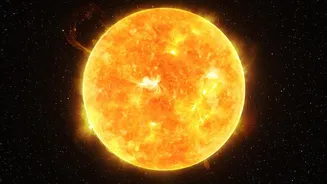
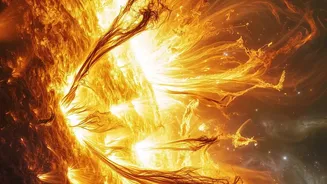
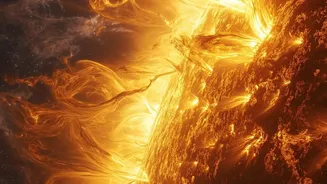
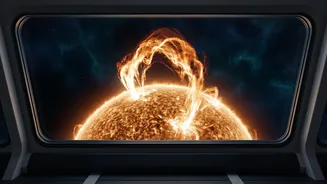
Space weather begins 93 million miles away with two main phenomena: solar flares and coronal mass ejections (CMEs). A solar flare is an immense explosion on the sun's surface, releasing a torrent of radiation that can reach Earth in minutes. CMEs are even
larger; they are colossal bubbles of plasma and magnetic fields that erupt from the sun, traveling through space at speeds that can exceed five million miles per hour. While most CMEs miss our planet entirely, the ones that are aimed at Earth pose a significant risk to our technological infrastructure. These events are becoming more frequent as we approach the peak of Solar Cycle 25, which is expected in 2025.
Vulnerability in Orbit
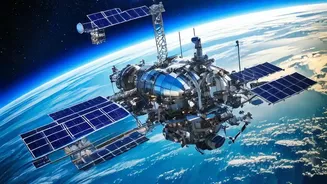
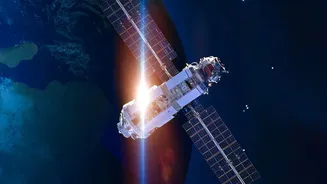
Thousands of satellites orbit our planet, forming the backbone of global communications, GPS navigation, weather forecasting, and financial transactions. These orbital assets are highly vulnerable to space weather. High-energy particles from solar storms can damage or destroy sensitive satellite electronics and degrade their solar panels, potentially shortening their operational lifespan by years. Furthermore, solar events heat and expand Earth's upper atmosphere. This increases atmospheric drag on satellites in low-Earth orbit, causing them to lose altitude. In severe cases, this can cause satellites to re-enter the atmosphere and burn up, as has happened with dozens of satellites in recent years.
The Threat on the Ground
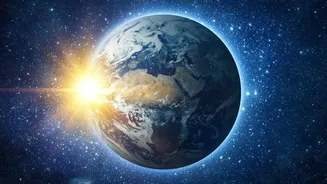
When a powerful CME interacts with Earth's magnetic field, it can create geomagnetic storms. These storms induce powerful, uncontrolled electrical currents in long conductors on the ground—a phenomenon known as geomagnetically induced currents (GICs). Power transmission lines act as giant antennas for these currents, which can flow into and overload high-voltage transformers, the heart of any electrical grid. This can lead to equipment damage, instability in the grid, and widespread, long-lasting power outages. A severe storm in 1989 knocked out power across Quebec, and scientists warn that our increasing reliance on technology makes us more vulnerable than ever.
Our Global Warning System
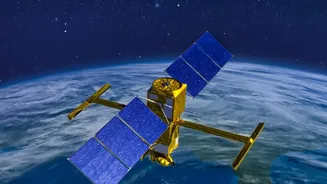
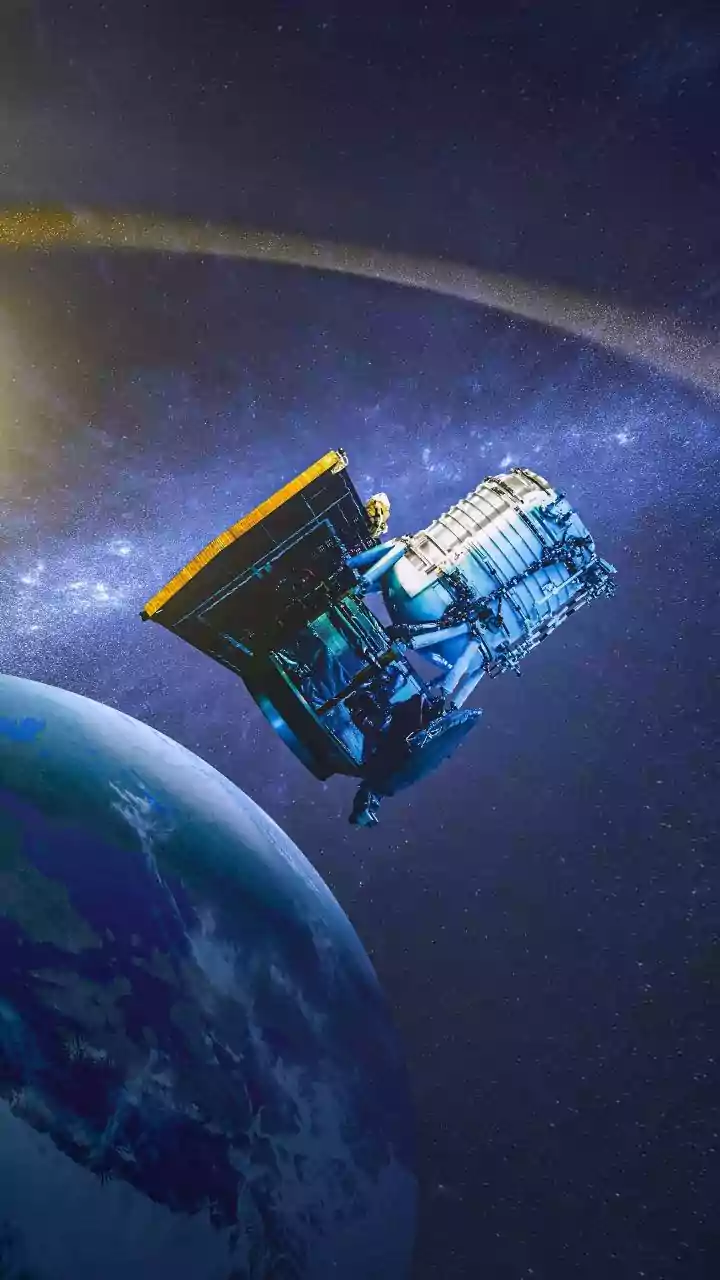
Defending against this invisible threat requires constant vigilance. The primary sentinel is NOAA's Space Weather Prediction Center (SWPC), the official source for space weather forecasts and warnings for the United States. Jointly operated by NOAA and the U.S. Air Force, the SWPC uses data from a fleet of space-based and ground-based observatories to monitor the sun 24/7. Satellites like the Solar & Heliospheric Observatory (SOHO) and the new SOLAR-1, positioned at a gravitationally stable point nearly a million miles from Earth, provide an early warning by observing CMEs as they leave the sun. This gives forecasters one to four days of advance notice for Earth-directed CMEs.
From Prediction to Protection
An accurate forecast is the first line of defense. When the SWPC issues a geomagnetic storm watch or warning, satellite operators, airlines, and power grid managers can take protective measures. For instance, satellite operators can put sensitive systems into a safe mode to protect electronics. Airlines may reroute flights away from polar regions where radio blackouts are more common during solar events. Power grid operators can adjust their systems to better withstand the induced currents, preventing transformer damage and potential blackouts. Specific technologies, such as systems that block GICs from entering transformers, are also being tested and deployed to harden the grid.
The Future of Solar Forecasting
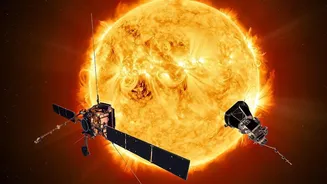
The science of space weather prediction is constantly evolving. NASA and its partners continue to launch new missions to study the sun, such as the Parker Solar Probe, which has flown closer to our star than any spacecraft in history. Newer missions like SWFO-L1 and SunRISE are designed to provide next-generation data, replacing and augmenting aging satellites to ensure continuous monitoring. Researchers are also leveraging artificial intelligence and machine learning to analyze the vast amounts of solar data, hoping to improve the accuracy and lead time of forecasts. These advancements are crucial for protecting not only terrestrial infrastructure but also future crewed missions to the Moon and beyond.