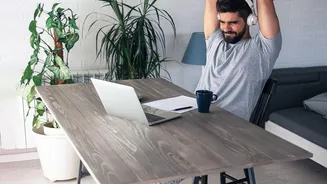







1. The Gentle Neck Tilt
Staring at a screen often leads to 'tech neck', causing strain in the neck and shoulders. This gentle tilt helps release that tension. While sitting tall with your feet flat on the floor, slowly tilt your right ear toward your right shoulder. Hold for
15 to 30 seconds, feeling a mild stretch along the left side of your neck. Return to the center and repeat on the other side. Avoid pulling your head down; let gravity do the work. Performing this several times a day can help alleviate neck stiffness.
2. The Seated Spinal Twist
Sitting in one position for hours can make your spine feel rigid. A gentle twist helps restore mobility and can ease lower back tightness. Sit upright in your chair with your feet firmly on the floor. While keeping your hips facing forward, slowly rotate your upper body to the right, using the armrest for a gentle pull. Look over your right shoulder and hold the stretch for 15-20 seconds, breathing deeply. Return to the starting position and repeat on the left side. This movement helps keep your spine flexible.
3. The Shoulder Blade Squeeze
Hunching over a keyboard encourages poor posture, weakening the muscles in your upper back. This exercise helps counteract that slump. Sit or stand tall and relax your shoulders. Gently squeeze your shoulder blades together, as if you are trying to hold a pencil between them. Hold this position for 5 to 10 seconds, then relax. This movement opens up the chest and strengthens the muscles that support good posture. Repeat this squeeze 5 to 10 times to combat shoulder rounding.
4. The Chest Opener
To counter the forward hunch of desk work, it's vital to open up the chest muscles. While seated or standing, clasp your hands behind your back. Straighten your arms and gently lift them away from your body until you feel a stretch across your chest and the front of your shoulders. Keep your chest lifted and your shoulders pulled back. Hold for 15 to 30 seconds, remembering to breathe deeply. This stretch provides immediate relief and helps improve your overall posture.
5. The Wrist and Forearm Stretch
Constant typing and mouse use can lead to strain in the wrists and forearms. To stretch them, extend one arm in front of you with your palm facing down. Use your other hand to gently press the back of your outstretched hand, bending the wrist downward. Hold for 15 seconds. Then, flip your hand so the palm faces up and gently pull your fingers back toward your body, holding for another 15 seconds. Repeat on the other arm to help prevent repetitive strain injuries.
6. The Seated Figure-Four Stretch
Your hips and glutes can become incredibly tight from prolonged sitting, which can contribute to lower back pain. This stretch targets those areas effectively. While seated, cross your right ankle over your left knee, creating a 'figure four' shape. Sit up straight and, if you can, gently lean forward from your hips until you feel a stretch in your right glute and hip. Hold for 20-30 seconds, then switch legs. This helps release deep tension and improves hip mobility.
7. The Seated Hamstring Stretch
Sitting shortens your hamstrings, the muscles along the back of your thighs. This can pull on your lower back and cause discomfort. To stretch them, sit toward the edge of your chair and extend one leg straight out in front of you, with your heel on the floor and your toes pointing up. Keeping your back straight, gently lean forward from your hips until you feel a stretch along the back of your extended leg. Hold for 20-30 seconds and then switch sides.