


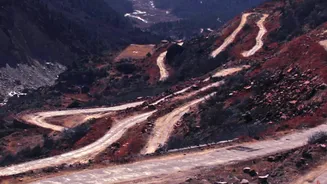
The Monsoon Paradox: Dry Valley, Deadly Approach
First, understand the core challenge. Spiti Valley is a rain-shadow region, meaning it receives very little rainfall itself. The mountains block most monsoon clouds, leaving the valley relatively dry and accessible. The problem isn't Spiti; it's getting
there. The approach roads, especially from Manali and through Kinnaur, are battered by the full force of the Indian monsoon from July to September. These regions are notorious for landslides, flash floods, and shooting stones, which can shut down highways for hours or even days. In late July 2026, the Himachal Pradesh government issued advisories urging tourists to avoid unnecessary travel due to these risks.
Route Selection: Why Shimla Is the Smarter Choice
You have two main paths to Kaza, Spiti's main town: via Manali or via Shimla. During monsoon, the choice is critical. The Manali-Kaza highway, while shorter, involves crossing the treacherous Gramphu-Batal stretch and the high-altitude Kunzum Pass. This section is infamous for violent water crossings (nallahs) that swell dangerously with rain, and the road quality is poor. Most experienced travellers and local operators strongly recommend the Shimla-Kinnaur route during August. It's a longer, more gradual ascent, which is better for acclimatization and generally more stable. However, even this route has landslide-prone areas like the stretch near Malling Nallah and parts of the NH-5 in Kinnaur, so staying updated is essential.
Flexibility Is Not Optional: Prepare for Delays
A rigid, back-to-back itinerary is a recipe for disaster during a monsoon trip to Spiti. Road closures are common and unpredictable. A single landslide can leave you stranded. The Border Roads Organisation (BRO) works tirelessly to clear blockages, but it can take time. The golden rule is to build buffer days into your schedule. Experts recommend adding at least two to three extra days to your plan, especially before a flight or train home. This flexibility allows you to wait out a road closure without stress. Never book non-refundable hotels or flights with a tight connection after a Spiti monsoon trip.
Packing for Every Possibility
Your packing list needs to be robust. While days can be pleasant, with temperatures between 15°C to 25°C, nights drop to 5°C or lower. Layering is crucial. Your essentials should include: a waterproof outer jacket, a warm fleece mid-layer, and thermal innerwear. Good quality, waterproof trekking shoes with a strong grip are non-negotiable. Also pack a power bank, as electricity can be unreliable, and download offline maps, as mobile connectivity is patchy at best. Carry essential medicines for headache, fever, and Acute Mountain Sickness (AMS), after consulting your doctor. Finally, carry more cash than you think you need; ATMs are scarce and often don't work.
Vehicle and Driver: Your Most Important Booking
If you're not an expert in high-altitude mountain driving, this is not the time for a self-drive adventure. The combination of slush, slippery roads, and water crossings requires immense skill. Hire an experienced local driver who knows the terrain and its warning signs. The ideal vehicle is a 4x4 or an SUV with high ground clearance to navigate rough patches and water crossings. Ensure the vehicle is in excellent condition and check with the driver that they are carrying basic spares. When vetting tour operators, specifically ask about their monsoon protocols and the experience of their drivers.