








Letting the AI Write and Run
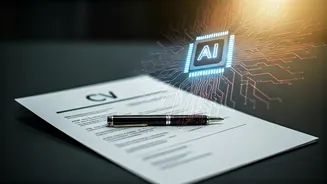
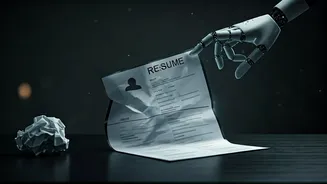
The most common and costly mistake is treating AI like a ghostwriter instead of an assistant. Pasting your job history with a simple prompt like "write me a CV" will produce a generic document that likely sounds robotic and impersonal. Recruiters are
becoming skilled at spotting the overly polished, buzzword-heavy language of an unedited AI draft. A 2024 survey revealed that 68% of hiring managers prefer a CV with a personal voice over a perfectly polished but generic one. An application that feels lazy or inauthentic can be rejected immediately, as it suggests a lack of genuine interest in the role.
Trusting AI to Tell the Truth
AI models are designed to generate plausible text, but they are not sources of fact. They can, and often do, "hallucinate" or invent details. This might mean exaggerating your responsibilities, fabricating metrics, or even listing skills you don't possess. While it might seem tempting to let the AI embellish your experience, these inaccuracies can destroy your credibility. Imagine being in an interview and unable to speak to a key achievement on your CV because an AI invented it. You must meticulously fact-check every single date, title, and accomplishment the AI suggests. The responsibility for accuracy is always yours.
Ignoring the Specific Job Role
A one-size-fits-all CV is one of the fastest routes to the rejection pile. A costly error is using AI to create a single, master CV and sending it everywhere. Recruiters want to see that you've tailored your application to their specific needs. Instead of asking AI to write a generic CV, use it to analyze a specific job description to identify key skills and language. You can then prompt the AI to help you rephrase your bullet points to align with that specific role. The goal is to show a clear match between your experience and what the employer is looking for, a task that requires a targeted approach for each application.
Focusing on Duties, Not Impact
Hiring managers care less about what you were responsible for and more about what you actually accomplished. A common AI pitfall is generating lists of duties rather than quantifiable achievements. For example, instead of "Managed social media accounts," a stronger, impact-focused statement would be "Grew social media engagement by 45% over six months by implementing a new content strategy." Use AI to help you brainstorm how to frame your duties as results. Ask it to suggest ways to add metrics, numbers, and strong action verbs to demonstrate the value you delivered in previous roles.
Forgetting the Human and ATS Readability
Your CV has two audiences: an Applicant Tracking System (ATS) and a human recruiter. AI-generated content can sometimes fail both. Complex formatting with tables, columns, or graphics can confuse ATS parsers, causing your CV to be rejected before a person ever sees it. At the same time, a document overloaded with keywords to please the ATS can appear unnatural and forced to a human reader. The key is balance. Use simple, clean formatting and integrate keywords naturally within accomplishment-driven bullet points. Always review the final document to ensure it's easy to read for both machine and human eyes.