



The Great Urban Fade-Out
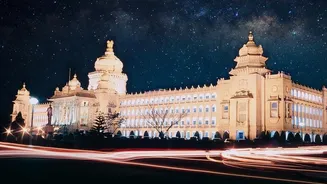
Rapid urbanisation across India has come with an often-overlooked consequence: light pollution. The constant glow from streetlights, buildings, and advertising blankets our cities, making it impossible to see more than a handful of the brightest stars.
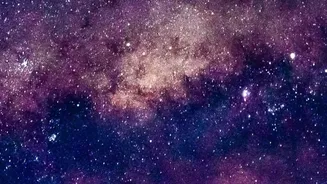
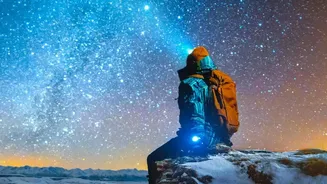
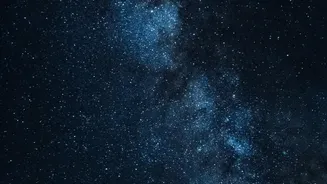
This loss isn't just aesthetic; it severs a connection to the universe that has inspired humanity for millennia. As a result, 'astrotourism' is surging in popularity. More and more people are willing to travel far from the city's glare for a chance to witness a truly dark sky, filled with thousands of stars, constellations, and the breathtaking arc of the Milky Way.
Winter's Crystal-Clear Advantage
Winter is primetime for stargazing in India for several key reasons. The period from October to March generally offers the clearest and most stable atmospheric conditions across the country. Following the monsoon, the air is often scrubbed clean of dust and particulates. Furthermore, the lower humidity of winter means there is less moisture in the atmosphere to scatter starlight, resulting in a sharper, more brilliant view of celestial objects. The nights are also significantly longer, providing an extended window for observation, and prominent winter constellations like Orion the Hunter and bright stars like Sirius dominate the heavens, offering a spectacular show for even naked-eye observers.
India's Premier Dark-Sky Havens
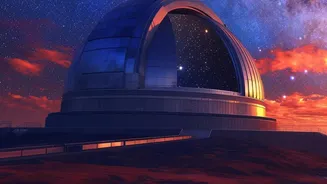
Fortunately, India is home to several world-class destinations for celestial observation. The undisputed champion is Hanle in Ladakh, the site of India's first official Dark Sky Reserve. Situated at a high altitude with minimal light pollution and over 300 clear nights a year, it offers some of the best stargazing conditions in the world. Another high-altitude desert, Spiti Valley in Himachal Pradesh, is a remote paradise for astronomers, with villages like Komic and Langza offering Bortle 1 skies—the darkest possible classification. For those seeking more accessible options, Coorg in Karnataka provides dark skies within its coffee estates, especially from October to February. The Rann of Kutch in Gujarat, with its vast, flat salt desert, also offers an unobstructed, panoramic view of the night sky, making it another popular choice.
Your First Cosmic Journey
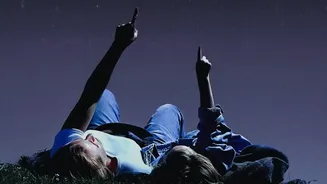
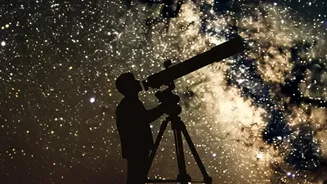
You don't need to be an expert to enjoy a stargazing trip. The most important step is to get away from city lights on a moonless night. A good pair of binoculars can dramatically enhance the view, revealing star clusters and details on the Moon. Your eyes need about 20-30 minutes to fully adapt to the darkness, so avoid looking at your bright phone screen; use a red-light torch if you need to see. Several smartphone apps can help you identify constellations and planets in real-time. Finally, remember to pack warm clothes, as even in warmer regions, winter nights in remote areas can be surprisingly cold. The goal is not just to see stars, but to experience a sense of wonder.