




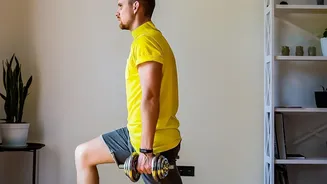


In the quest for an efficient, do-anywhere workout, the walking lunge stands out. This powerhouse move requires little more than a small patch of grass or a clear path, yet it recruits nearly every muscle from your hips down.
Why This Simple Move Is a Lower-Body Powerhouse
The magic of the walking lunge
lies in its dynamic, multi-joint nature. Unlike static exercises, it forces your body to move through space, challenging not only your strength but also your balance and coordination with every step. Each lunge is a unilateral movement, meaning it works one leg at a time. This is incredibly effective for exposing and correcting strength imbalances between your left and right sides, which can often hide in bilateral exercises like squats. Furthermore, this exercise provides a unique combination of strength training and low-intensity cardio, elevating your heart rate while you build muscle. It's considered a functional exercise, meaning it mimics and prepares your body for everyday activities like climbing stairs, running, or getting up from the ground.
The Muscles You'll Engage
A single walking lunge is a full-team effort for your lower body and core. The primary movers are the major muscles of the legs. Your quadriceps at the front of the thigh work to extend the knee as you push off, while the gluteus maximus, the largest muscle in your body, powers hip extension. The hamstrings at the back of the thigh assist with this movement and help control your descent. Your calves also get involved, providing stability and assisting with the final push-off. But it's not just about your legs. Your core muscles, including your abs and obliques, have to work overtime to keep your torso upright and prevent you from swaying side-to-side, making it a surprisingly effective core stabilizer.
Your Step-by-Step Guide to the Perfect Lunge
Proper form is crucial to maximize benefits and prevent injury. Stand tall with your feet about hip-width apart and engage your core. You can place your hands on your hips or let them hang by your sides. Take a controlled step forward with your right foot, about two feet in front of you. As you plant your foot, bend both knees and lower your hips until both legs form roughly 90-degree angles. Your front knee should be aligned over your ankle, not drifting past your toes, and your back knee should hover just above the ground without touching it. Drive through your right heel to push yourself up and forward, bringing your left foot through to step into the next lunge. Continue this 'walking' motion, alternating legs with each step.
Sidestep These Common Form Mistakes
Even a simple move can be done incorrectly. One of the most common errors is leaning your torso too far forward. This often happens when your core isn't engaged, and it shifts stress to your lower back instead of your glutes and quads. Another mistake is allowing the front knee to collapse inward, which can put strain on the knee joint. This is often a sign of weak glute medius muscles, so focus on keeping your knee tracking in line with your foot. Also, be mindful of your stride length. Stepping too far forward can destabilize you and stress the hamstring, while a step that's too short limits the range of motion and engagement of the glutes.
Ways to Increase the Challenge
Once you've mastered the bodyweight walking lunge, there are several ways to progress. The most straightforward method is to add resistance by holding dumbbells in each hand. This increases the demand on your leg muscles and further challenges your core stability. For a greater core and upperbody challenge, you can hold a single kettlebell in the 'goblet' position at your chest or try a front rack walking lunge with two kettlebells. Another variation is the walking lunge with a torso twist. As you lower into the lunge, you twist your upper body over your front leg, which intensely engages your obliques. For a plyometric challenge that boosts explosive power and heart rate, you can try jump lunges.