



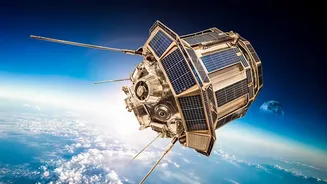
From Ground Control to Onboard Brains
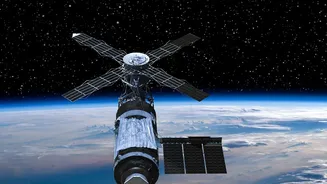
Traditionally, satellites have operated like puppets on a string, capturing vast amounts of raw data and beaming it back to Earth for analysis. This process is time-consuming and creates a significant bottleneck, especially when rapid information is critical.
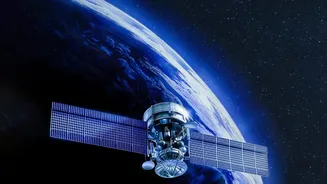
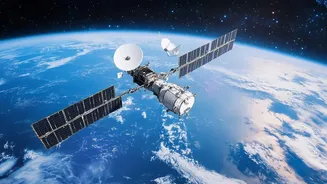
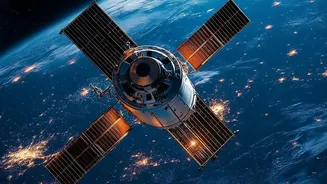
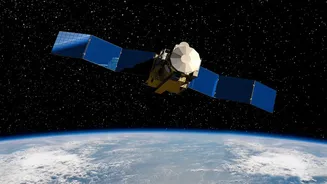
The future, however, lies in satellites that can think for themselves. ISRO experts have highlighted a major shift towards on-board processing and edge computing. This means that instead of just collecting data, new satellites will process and analyze it right there in orbit. This move from a ground-controlled model to an autonomous one is the cornerstone of India's next-gen satellite strategy, promising faster, more efficient decision-making.
How AI Becomes the Co-Pilot
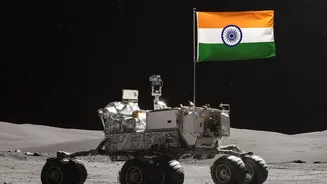
Artificial Intelligence (AI) and Machine Learning (ML) are the key technologies making this orbital intelligence possible. Instead of transmitting petabytes of raw imagery, an AI-powered satellite can be trained to identify what's important. For instance, it could autonomously detect the early signs of a forest fire, monitor crop health, or spot changes in infrastructure, and then send only the relevant, analyzed insights back to Earth. This capability dramatically reduces the data load and the time from observation to action. Furthermore, AI will enable autonomous satellite operations, where a satellite can independently detect a potential collision with space debris and manoeuvre to avoid it, ensuring the sustainability of our orbital assets. ISRO has already successfully used AI in its Chandrayaan missions for landing and navigation, demonstrating its capability in complex space operations.
The Need for Supercomputing in Orbit
Running sophisticated AI models requires immense processing power, which is why advanced computing is the second pillar of this transformation. Satellites will essentially need to carry their own mini-supercomputers. This is a significant engineering challenge, as the hardware must be robust enough to withstand the harsh environment of space, including extreme temperatures and radiation. The payoff, however, is huge. With powerful GPUs and computing hardware on board, satellites can perform complex tasks in real-time. This enables a host of applications that are currently impossible, from near real-time disaster mapping during a cyclone to providing secure, high-speed communication networks fortified by quantum technology.
Real-World Impact for a Billion People
This technological leap isn't just for scientific curiosity; it has profound implications for governance, the economy, and national security. For disaster management, it means getting real-time information to first responders, saving lives during floods or earthquakes. In agriculture, it can provide farmers with precise data on soil moisture and crop stress, revolutionizing food production. For national security, it offers enhanced surveillance and secure navigation capabilities, protecting against threats like signal spoofing. From a commercial perspective, it opens the door for Indian startups to develop innovative applications and services, positioning India as a leader in the global space economy. Private companies like Dhruva Space and Pixxel are already integrating AI for onboard processing and building advanced Earth observation platforms.
The Road Ahead and Its Hurdles
The path to a fully AI-driven satellite network is not without its challenges. Developing space-grade computing hardware, writing failsafe AI algorithms, and ensuring the cybersecurity of autonomous satellites are significant technical hurdles. The Government of India has recognized this and is fostering a robust ecosystem through initiatives like the IndiaAI mission and by encouraging private sector participation. Organizations like IN-SPACe are facilitating this collaboration, providing startups with access to ISRO's resources and expertise. This public-private partnership will be crucial in overcoming obstacles and accelerating the development and deployment of these next-generation systems, transforming India into a hub for space innovation.