


A New Member of the Uranian Family
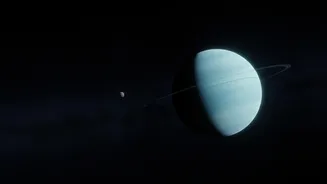
In late 2023, astronomer Scott S. Sheppard of the Carnegie Institution for Science spotted a faint object near Uranus using the powerful Magellan telescopes in Chile. After months of follow-up observations to confirm its path, the discovery was announced:
a new moon, provisionally named S/2023 U1. This brings the planet's total number of known moons to 28. At only about 8 kilometres in diameter, it is likely the smallest of Uranus's known satellites—a truly tiny world in the vastness of space. The discovery required special image processing techniques, layering multiple long-exposure photos to make the faint moon visible against the trail of background stars.
An Orbit That Tells a Story
What makes S/2023 U1 so interesting to scientists is not its size, but its journey. The moon has a wide, looping orbit that takes 680 days to complete. Its path is also highly inclined and eccentric, meaning it's tilted and elliptical rather than circular. These orbital characteristics strongly suggest that S/2023 U1 was not formed along with Uranus but was instead a passing object captured by the planet's immense gravity, likely billions of years ago during the chaotic early days of the solar system. This process is believed to be how many of the outer moons of the giant planets, including Jupiter and Saturn, came to be.
Part of a Cosmic Clan
The new moon’s orbit isn't just unusual; it's part of a pattern. S/2023 U1 belongs to a group of outer Uranian moons that includes Caliban and Stephano, which share similar orbital paths. Astronomers believe these groupings are evidence of ancient cosmic collisions. The theory is that a larger parent moon, originally captured by Uranus, was later shattered by a collision with a comet or asteroid. The fragments from this impact, including the newly discovered moon, would have then settled into similar orbits around the planet. Studying these orbital families helps scientists piece together the violent history of the outer solar system and understand how planetary moon systems evolve over time.
Unlocking the Secrets of an Ice Giant
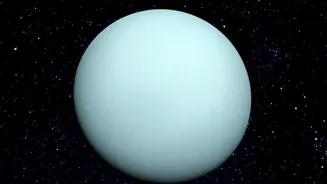
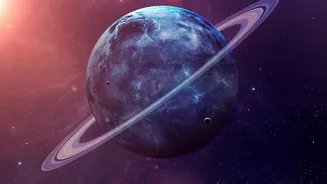
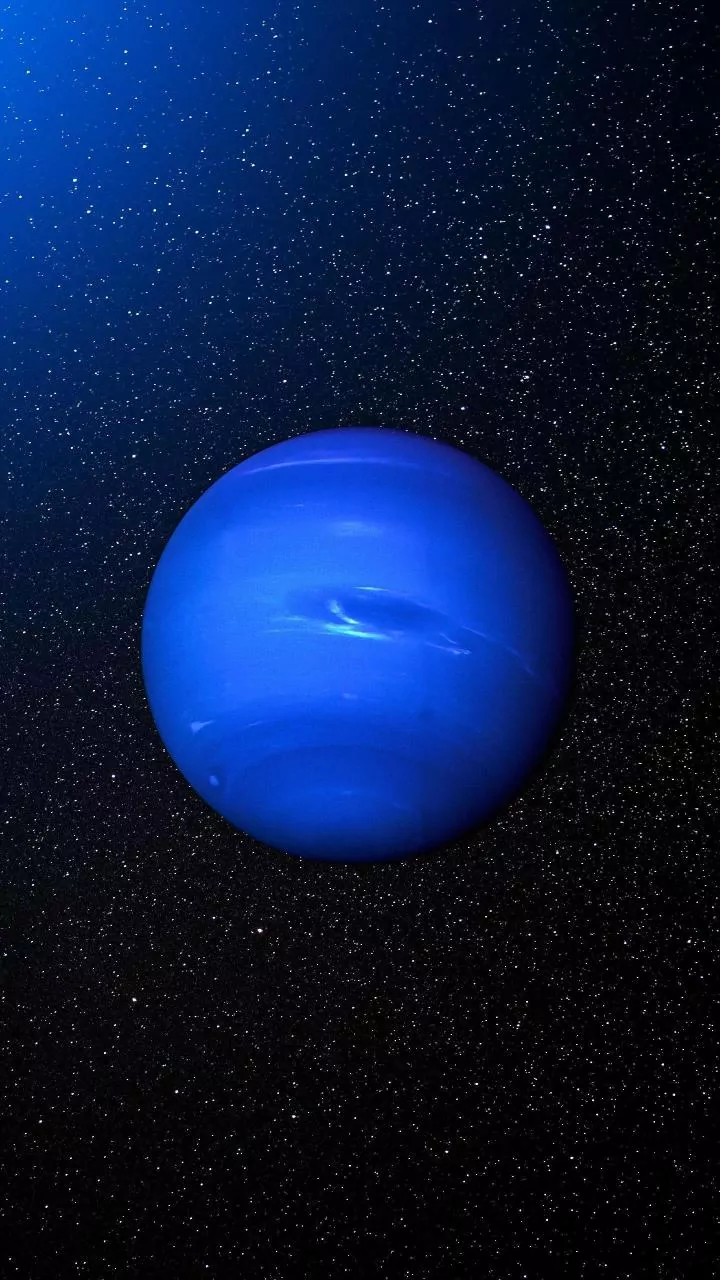
Uranus remains one of the most mysterious planets in our solar system. Visited only once by a spacecraft, NASA's Voyager 2 in 1986, much about its strange, tilted orientation and complex system of rings and moons is still unknown. Discoveries like S/2023 U1 are crucial because each new moon provides another data point for understanding the planet's gravitational influence and formation history. Even Uranus, which is tipped on its side, has a collection of outer moons similar to other gas giants, a surprising consistency that researchers are keen to explore. These small, captured worlds are remnants of the building blocks of the solar system, offering a window into a past that is otherwise lost to time.
Paving the Way for Future Exploration
The discovery of S/2023 U1 underscores just how much there is left to find, even in our own cosmic neighbourhood. It strengthens the case for a dedicated mission to the ice giant, which is the highest-priority flagship mission recommended by planetary scientists in the United States. A future Uranus Orbiter and Probe could study these tiny, distant moons up close, analyzing their composition and refining our understanding of their orbits. By investigating these celestial fragments, scientists hope to answer fundamental questions about how planets capture moons and how entire planetary systems are sculpted by gravity and ancient collisions. Until then, ground-based telescopes will continue to search the faint light from the edge of the solar system for more hidden worlds.