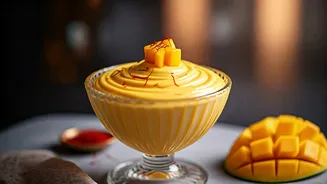








Why This Dessert Wins
In a world of endless recipes, calling one “the absolute best” is a bold claim. But this one earns its stripes. It’s not just about the ingredients; it’s about the harmony. We're taking two of India’s most treasured flavours—the floral, regal aroma of saffron
(kesar) and the unparalleled sweetness of a ripe mango—and bringing them together in a modern format that’s both luxurious and surprisingly light. The secret is in the texture. Without any dairy, we achieve a melt-in-your-mouth creaminess that lets the central flavours shine, rather than being muted by heavy cream. This isn’t a dense mithai or a simple fruit salad; it’s an elegant, chilled dessert that feels at home at a festive dinner party or as a sophisticated end to a simple meal. It’s inclusive, impressive, and celebrates the best of our culinary heritage.
The Three Pillars: Mango, Saffron, and Cream
The success of this dessert rests on three key components. First, the mango. You must use a sweet, non-fibrous mango pulp. For the most authentic flavour, Alphonso (Hapus) is the undisputed king, offering a perfect balance of sweetness and a rich, complex aroma. Kesar mangoes are also an excellent choice. If using fresh mangoes, puree them until silky smooth. Second, the saffron. Don't just sprinkle it in. To unlock its true potential, you must 'bloom' it. Gently warm a few tablespoons of your liquid base (in our case, coconut milk) and steep the saffron strands for at least 15-20 minutes. You’ll see the colour bleed into a gorgeous golden-orange, and the aroma will intensify beautifully. Finally, the dairy-free base. Full-fat coconut milk or cream is the hero here. Its natural richness and subtle sweetness complement the mango without overpowering it. To get that perfect, delicate set, we use agar-agar, a plant-based gelatin that creates a tender, clean-cutting texture.
The Recipe: Mango Saffron Golden Pudding
This recipe makes 4 individual servings. **Ingredients:** - 1 cup (240ml) thick, unsweetened mango pulp (preferably Alphonso) - 1 can (400ml) full-fat coconut milk, well-shaken - 1/4 to 1/3 cup (50-65g) sugar, adjust to mango sweetness - A generous pinch of high-quality saffron strands (about 15-20 strands) - 1.5 teaspoons agar-agar powder (not flakes) - 1/4 teaspoon cardamom powder (elaichi), optional - Pinch of salt **Instructions:** 1. **Bloom the Saffron:** In a small bowl, warm 2 tablespoons of the coconut milk (you can microwave it for 10 seconds). Add the saffron strands, stir gently, and set aside to infuse for at least 20 minutes. 2. **Combine Ingredients:** In a medium saucepan, combine the remaining coconut milk, sugar, agar-agar powder, and a pinch of salt. Whisk everything together thoroughly *before* turning on the heat to prevent lumps. 3. **Cook the Base:** Place the saucepan over medium heat. Bring the mixture to a gentle boil, whisking continuously. Once it boils, reduce the heat to a simmer and cook for 2-3 minutes, still whisking, to activate the agar-agar. The mixture will thicken slightly. 4. **Incorporate Flavours:** Remove the saucepan from the heat. Whisk in the mango pulp, the bloomed saffron-milk mixture, and the cardamom powder (if using). Stir until everything is uniformly combined into a beautiful, golden-orange liquid. 5. **Set the Dessert:** Immediately pour the mixture into four individual ramekins, bowls, or glasses. You can also lightly oil a single larger mould if you plan to unmould it. Let them cool at room temperature for 20-30 minutes before transferring them to the refrigerator. 6. **Chill:** Refrigerate for at least 3-4 hours, or until fully firm and chilled. The dessert will be jiggly but set.
Tips for Perfection and Presentation
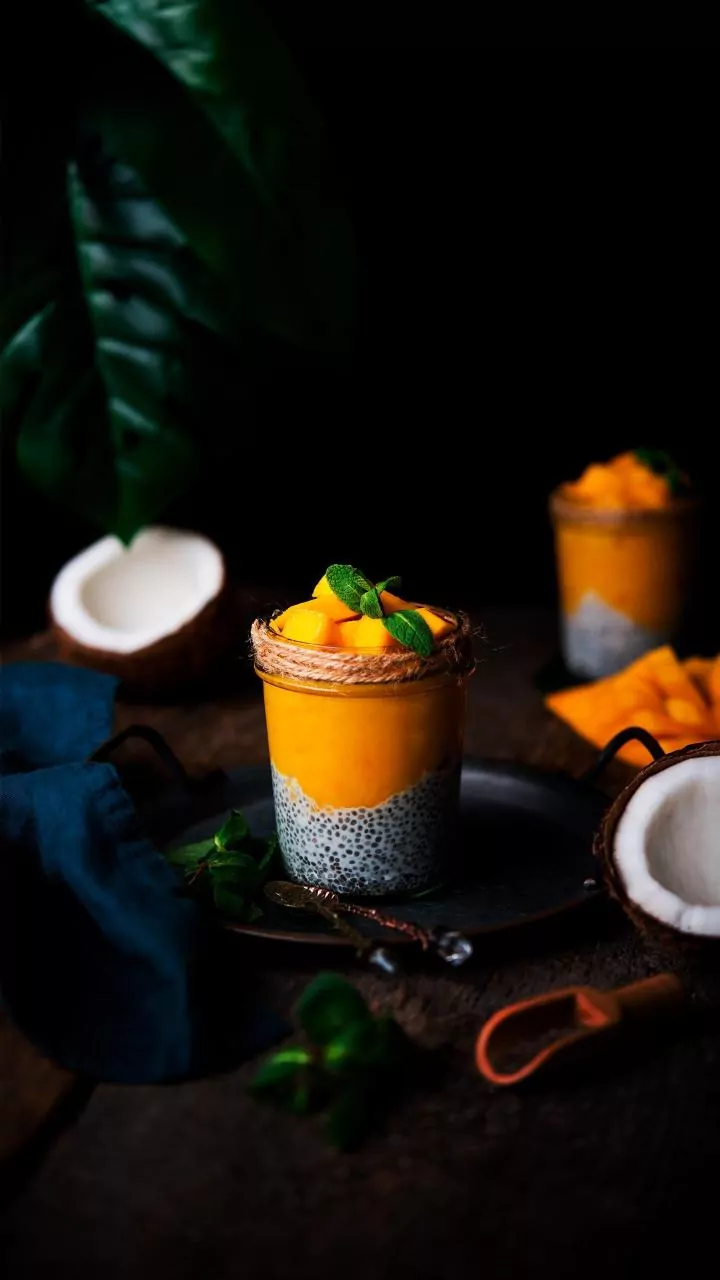
A great dessert deserves a beautiful presentation. To elevate this dish from delicious to stunning, consider these finishing touches. First, garnish just before serving to maintain freshness and texture. A sprinkle of finely chopped pistachios or almonds adds a wonderful colour contrast and a welcome crunch. A few reserved strands of saffron placed on top can signal the flavour within. For an extra touch of elegance, place a thin slice or a small, fanned dice of fresh mango on top. If you’ve set the dessert in a mould, you can unmould it by running a thin knife around the edge and inverting it onto a plate. A tiny, fresh mint leaf can also add a pop of green and a hint of freshness. The key is simplicity; the dessert’s vibrant colour is a star in itself, so your garnish should complement, not crowd.