






What Is a Conjunction?
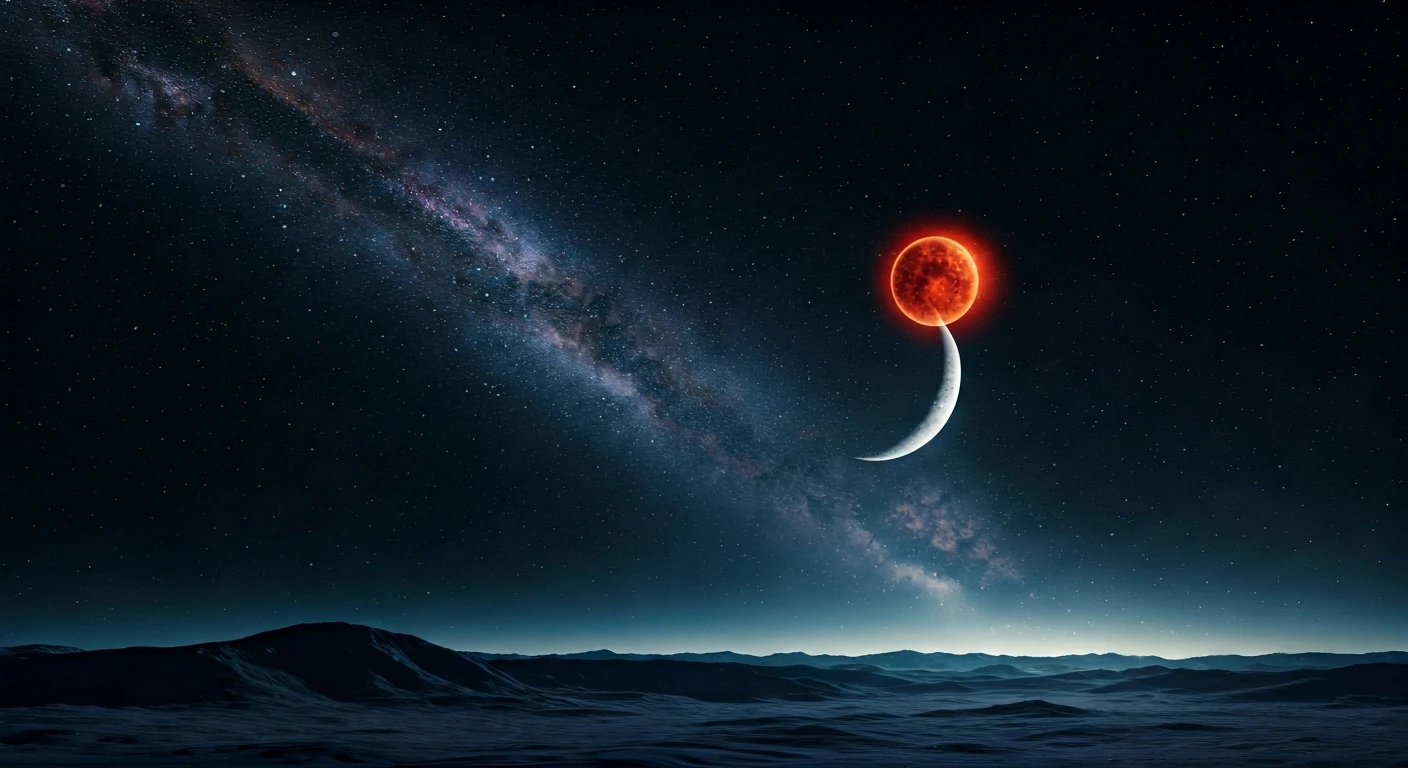
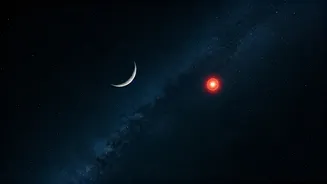
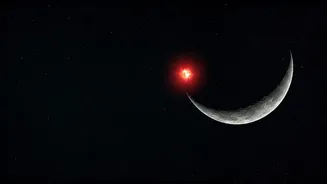
In simple terms, a conjunction is an astronomical event where two celestial bodies appear to be very close to each other in our sky. Think of it as a trick of perspective. The Moon and Antares are, of course, separated by an unimaginable distance—the
Moon is about 384,400 kilometres away, while Antares is nearly 550 light-years from Earth. Yet, from our vantage point, their paths across the sky will bring them into a tight, visually stunning pairing. While the Moon passes by bright stars and planets frequently, not all passes are this close or this photogenic. Tonight's event sees the Moon glide just past Antares, making the star's distinct reddish hue stand out brilliantly next to the lunar glow.
Meet the Star: Antares, the Rival of Mars
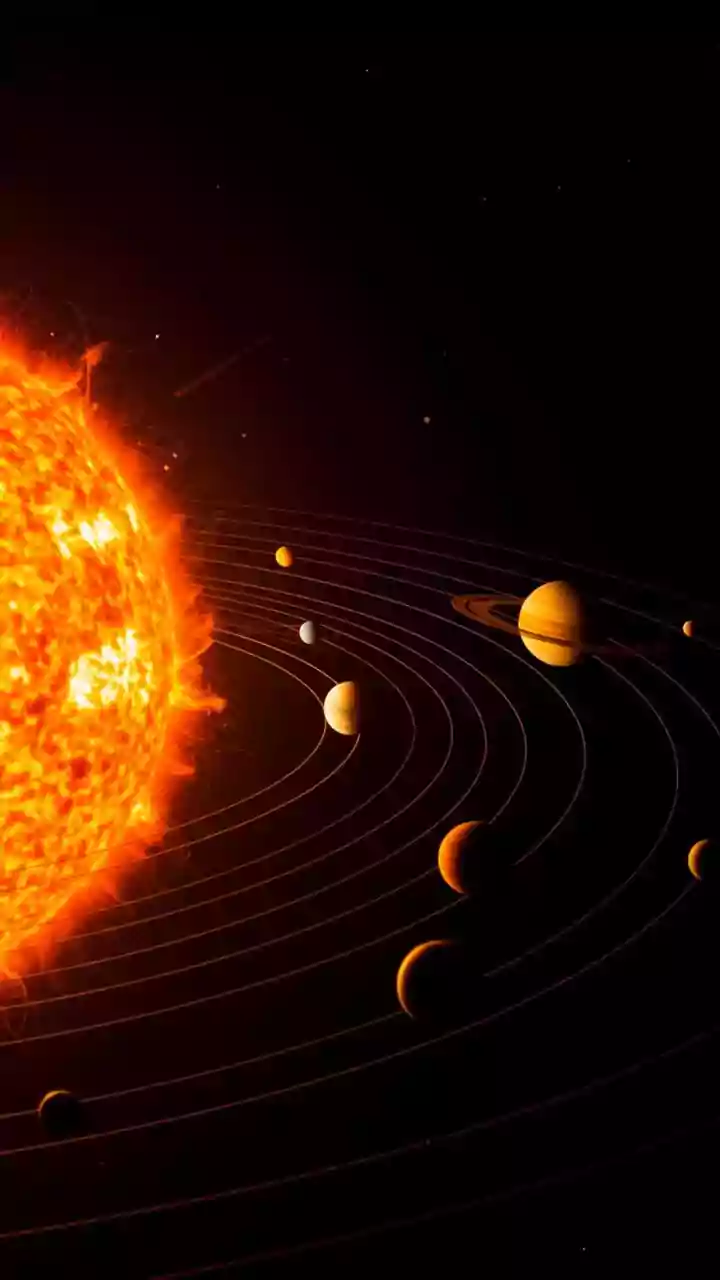
The star sharing the stage with the Moon is no ordinary point of light. Antares, also known as Alpha Scorpii, is the brightest star in the constellation Scorpius. It's a red supergiant, a true behemoth of the cosmos. If you were to place Antares at the centre of our solar system, its outer edge would extend past the orbit of Mars and perhaps even reach Jupiter. Its name, Antares, is derived from ancient Greek and means "rival of Ares" (Ares being the Greek equivalent of the Roman god Mars). This name was given because of its striking, fiery red colour, which often caused ancient sky-gazers to confuse it with the planet Mars. As the glowing 'heart' of the celestial scorpion, it’s one of the most recognizable and storied stars in the night sky.
Your Viewing Guide for Tonight
Seeing this celestial event is simple, and you don’t need any special equipment. The most important things are a clear sky and knowing when and where to look.
When to Look: The best time to view the conjunction will be after dusk, once the sky is dark enough for stars to become clearly visible. The pair will be observable for several hours, making their way across the sky throughout the night.
Where to Look: As the headline suggests, you’ll want to direct your gaze towards the southern sky. The exact position will depend on your location in India and the time of night. Shortly after sunset, look towards the southeast. As the night progresses, the pair will climb higher and move across the southern sky before setting in the southwest in the early morning hours. If you can spot the familiar J-shape of the Scorpius constellation, you'll find Antares right at its heart, with the Moon as its very bright, temporary neighbour.
Tips for the Best Experience
While you can see the conjunction with your naked eyes, a few simple tips can enhance the experience. First, try to get away from bright city lights. The darker your surroundings, the more brilliant Antares's colour will appear and the more stars you'll see. Give your eyes about 15-20 minutes to fully adapt to the darkness; this will make a huge difference. If you have a pair of binoculars, bring them along. While not necessary, they will give you a breathtaking view of the Moon's craters and make Antares's colour pop even more vividly. You can also use a stargazing app on your phone (like Stellarium or SkyView) to help you locate Scorpius and Antares with ease. Just point your phone at the sky, and the app will guide you.