





Reading the Signs of Light Deprivation
Plants that need full sun, typically defined as six or more hours of direct sunlight, use that light as energy for everything from leaf growth to flowering. When they don't get enough, they show visible signs of stress. One of the most common signs is 'legginess,'
where the plant stretches desperately towards the nearest light source, resulting in long, spindly stems with sparse leaves. You might also notice new leaves coming in smaller than usual or foliage turning a pale green or even yellow. For flowering varieties, a lack of blooms is a tell-tale sign that the plant isn't getting the energy it needs to produce them. If you notice these symptoms, your plant is sending a clear signal: it needs more light.
How to Assess Your Balcony's Light
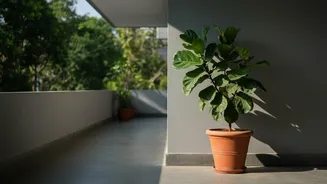
Before making any changes, it is crucial to understand the light your balcony actually receives. A space can feel bright to our eyes but offer very little direct sun for a plant. The best way to measure this is by observation. Track the sun's path across your balcony for a full day. Note the exact time direct sunlight first hits your plants and when it disappears. An object casting a sharp, clear shadow is a good indicator of direct sun. If shadows are soft or absent, you're dealing with indirect light, which isn't enough for sun-worshippers like hibiscus, bougainvillea, or most fruiting vegetables. Balcony orientation is key: a south-facing balcony generally gets the most sun, while a north-facing one will be the shadiest.
First Aid for a Sun-Starved Plant
If you already have a sun-loving plant that's struggling, there are a few immediate steps you can take. First, move it to the brightest, sunniest spot on your balcony, even if it's not the ideal location aesthetically. This might be right up against the railing, which often gets more sun than the area near the apartment wall. Clean your plant’s leaves with a soft, damp cloth to remove any dust that could be blocking light absorption. You can also try to amplify the available light by placing white or reflective surfaces near the plant to bounce more light onto its leaves. While these tricks can help, they are often temporary fixes for a fundamental mismatch between the plant and its environment.
Considering Artificial Light Solutions
For dedicated gardeners unwilling to give up on a specific plant, technology offers a solution: grow lights. Modern LED grow lights are energy-efficient, produce little heat, and can provide the full-spectrum light that plants need for photosynthesis. They are particularly useful for supplementing natural light during winter or on perpetually shaded balconies. Options range from simple clip-on lamps for a single pot to larger panel systems. For best results, look for full-spectrum lights and position them correctly above the plants, running them for several hours a day to mimic a natural light cycle.
Embrace the Shade: The Best Long-Term Solution
The most sustainable and rewarding approach is to choose plants that are naturally suited to your balcony's conditions. Instead of fighting the shade, embrace it. There is a vast world of beautiful and resilient plants that thrive in low-light environments. Working with your balcony's natural light levels, rather than against them, will result in a healthier, lusher, and lower-maintenance garden in the long run. The right plant in the right place is the golden rule of gardening, and a shaded balcony is no exception. It's an opportunity to explore a different, but equally stunning, palette of plants.
Top Plants for a Shaded Indian Balcony
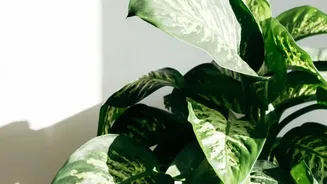
For a north-facing or otherwise shaded balcony in India, foliage is your friend. These plants are celebrated for their beautiful leaves and their ability to thrive without direct sun. Excellent choices include the Money Plant (Pothos), known for its forgiving nature and trailing vines. The Snake Plant is another nearly indestructible option, prized for its upright, architectural leaves and air-purifying qualities. For a touch of lush, tropical texture, consider ferns like the Boston Fern. Other reliable shade-lovers include the Peace Lily, which produces elegant white flowers even in low light, and the vibrant Aglaonema (Chinese Evergreen), which comes in a variety of colourful patterns.