



The Ultimate Insurance Policy
In the high-stakes world of human spaceflight, success isn't just about reaching orbit; it's about ensuring the crew returns safely, no matter what. The Indian Space Research Organisation (ISRO) is tackling this challenge head-on with a series of crucial
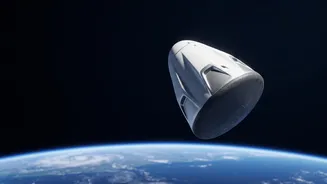
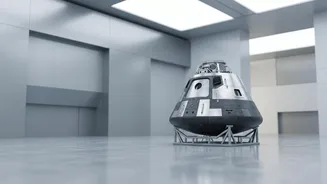
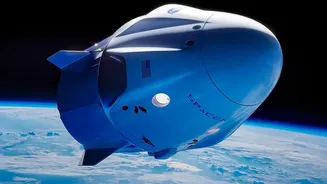
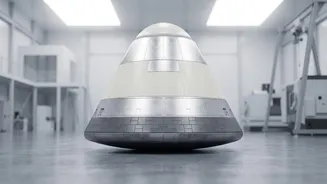
tests for its Gaganyaan programme. At the heart of this safety-first approach is the Crew Escape System (CES), a mechanism designed to act as the ultimate insurance policy for astronauts. In the event of a catastrophic failure on the launchpad or during the intense ascent through the atmosphere, the CES is engineered to pull the Crew Module—the capsule carrying the astronauts—away from the malfunctioning rocket in seconds. These tests are not mere rehearsals; they are fundamental demonstrations of technologies that must work perfectly when it matters most, making them a non-negotiable prerequisite for India's first crewed mission.
Anatomy of a High-Speed Escape
The Crew Escape System is a marvel of engineering, essentially a small, powerful rocket bolted to the top of the main launch vehicle. It's equipped with a set of quick-acting solid motors that burn propellant at an extremely high rate to generate immense thrust almost instantly. This allows it to achieve a far greater acceleration than the main rocket, physically pulling the Crew Module clear of danger. ISRO's design is a 'puller' type system, similar to those used on the historic Soyuz and Saturn V rockets. The system includes high-thrust escape motors for the primary pulling force, along with smaller pitch motors that steer the capsule onto a safe trajectory, away from the path of the failing booster. The entire sequence, from detecting an anomaly to pulling the crew to safety, is designed to be autonomous and blindingly fast.
Testing for Every Scenario
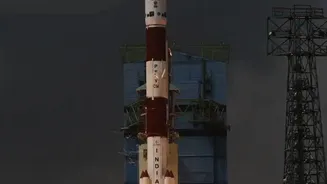
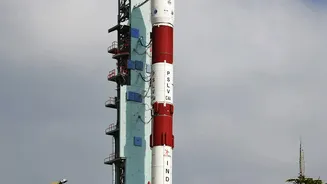
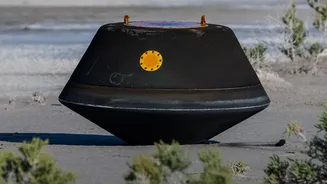
ISRO has meticulously planned a series of abort tests to validate the escape system under different flight conditions. One of the first major trials was the Pad Abort Test (PAT), successfully conducted in 2018. This test simulated an emergency on the launchpad, with the CES firing to lift the crew module from a standstill to an altitude of nearly 2.7 km before it parachuted safely into the Bay of Bengal. Another critical validation is the in-flight abort test, demonstrated with missions like the Test Vehicle Abort Mission-1 (TV-D1). In this scenario, a custom-built test rocket carries the module to a specific altitude, where an abort is deliberately triggered during the transonic phase of flight—when the vehicle experiences maximum aerodynamic stress. The CES then fires, pulling the module away before it begins its parachute-assisted descent and splashdown, with recovery teams from the Indian Navy on standby.
The Path to India's First 'Gaganaut'
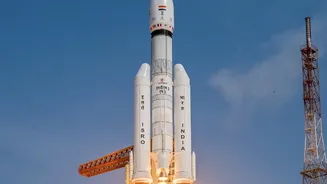
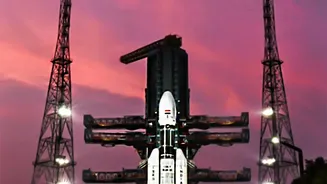
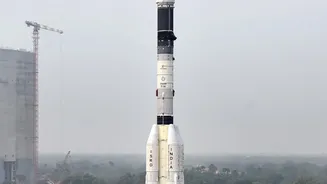
These successful abort tests are significant milestones on the Gaganyaan mission's ambitious timeline. Each validated system brings ISRO closer to the final goal: launching three Indian astronauts into a 400 km low Earth orbit for a three-day mission. The human-rated LVM3 rocket (HLVM3), the vehicle designated for the crewed flight, has undergone extensive ground testing, and critical facilities like the Gaganyaan Control Centre and Crew Training Facility are now established. Before the crewed flight, designated H1 and targeted for 2027, ISRO plans multiple uncrewed missions. The first of these, G1, is slated for late 2026 and will serve as a full dress rehearsal, testing all systems in an orbital flight before being followed by further uncrewed tests. With the designated astronauts already undergoing mission-specific training in Bengaluru, each successful test brings the historic moment of India's first human spaceflight closer to reality.