




The Sun’s Turbulent Temper
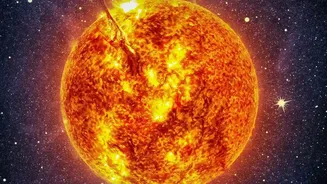
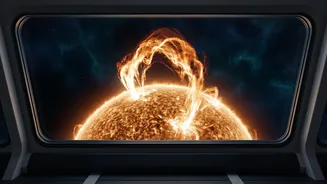
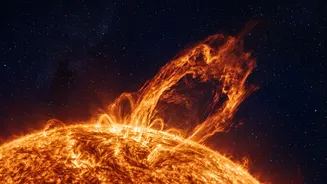
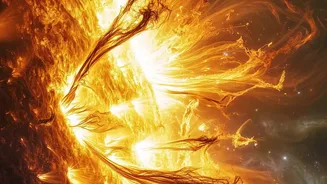
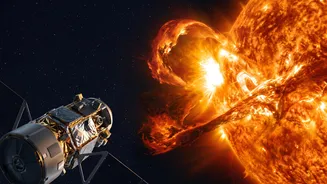
The sun is not a benign, unchanging ball of light. It's an active star with a complex magnetic field, and sometimes it erupts. The two main types of solar tantrums that concern us are solar flares and coronal mass ejections (CMEs). A solar flare is an intense
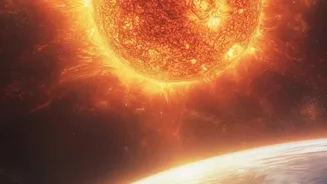
burst of radiation, while a CME is a massive explosion of plasma and magnetic fields from the sun's outer atmosphere, the corona. When these eruptions are aimed at Earth, they can trigger geomagnetic storms—major disturbances in our planet's magnetic field that can have serious consequences. Think of it as space weather; just as a hurricane can wreak havoc on the ground, a solar storm can cause chaos in orbit.
Satellites in the Firing Line
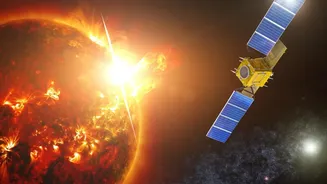
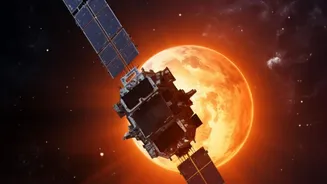
Satellites orbiting outside Earth's protective atmosphere are highly vulnerable to space weather. The threat comes in two primary forms. First, there's increased atmospheric drag. During a geomagnetic storm, energy from the sun heats and expands Earth's upper atmosphere. This increases the density of the air, creating more friction for satellites in Low Earth Orbit (LEO), which is where many communication and imaging constellations operate. This drag can slow a satellite down, causing its orbit to decay and potentially sending it tumbling back to Earth. In February 2022, a moderate geomagnetic storm caused the loss of up to 40 brand-new Starlink satellites by increasing atmospheric drag by as much as 50 percent. The second major threat is radiation. High-energy particles released during a solar event can penetrate a satellite's shielding, damaging sensitive electronics, degrading solar panels, and causing 'single-event upsets'—essentially phantom commands that can disrupt operations. In severe cases, this can lead to permanent hardware failure.
The Domino Effect on Earth
When satellites falter, the impact is felt across the globe. Our reliance on this orbital infrastructure is immense. A disruption to the Global Positioning System (GPS) wouldn't just affect the maps on our phones; it would impact aviation, shipping, and even financial services that use satellite timing for transactions. Communication satellites are the backbone of global television broadcasting, internet services, and phone lines, especially in remote areas. Weather forecasting, which depends heavily on satellite imagery and data, could be severely hampered. In a world increasingly dependent on a seamless web of data, a significant solar storm could trigger a cascade of failures, disrupting economies and daily life in profound ways.
Artificial Intelligence to the Rescue
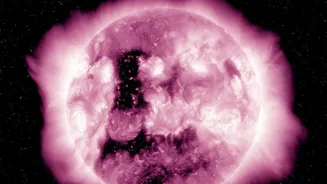
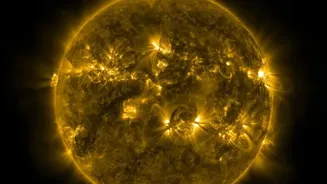
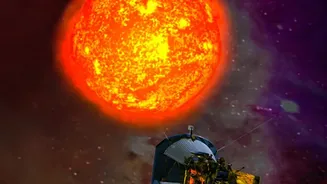
Predicting when and how a solar storm will hit is incredibly complex. Traditional models have limitations, but artificial intelligence is emerging as a powerful new tool in the space weather forecaster's arsenal. AI models, specifically those using machine learning, can be trained on vast amounts of historical data from solar observatories like NASA's Solar Dynamics Observatory. By analysing years of solar imagery and magnetic field data, these AI systems can learn to spot subtle precursor patterns that are often invisible to human analysts. This allows them to predict the emergence of potentially dangerous active regions on the sun hours before they become clearly visible.
From Prediction to Proactive Protection
The key advantage of AI is speed and accuracy, which translates to more lead time. Some research groups are developing AI models that can improve the quality of near-real-time images from space probes, giving forecasters a clearer, faster view of developing CMEs. Other models can analyse the solar wind and predict, with up to 30 minutes of advance warning, where a storm will impact Earth. This crucial warning window allows satellite operators to take protective measures. They can put satellites into a 'safe mode,' shutting down sensitive electronics to protect them from radiation surges. They can also calculate and execute thruster burns to counteract the effects of increased atmospheric drag, preventing the satellite from falling out of its orbit. By automating the analysis of solar data, AI provides a faster, more reliable way to anticipate these events and safeguard our critical orbital assets.