



Understanding the Permit Puzzle
First, let's clear up the biggest point of confusion: the permits. The rules are different depending on your nationality. For Indian citizens, the news is simple: you do not need an Inner Line Permit (ILP) or any special permit to visit the main tourist
areas of Spiti Valley, including Kaza, Tabo, Dhankar, and the surrounding villages. All you need to carry is a valid government-issued photo ID like an Aadhaar card or passport for registration at police checkposts, such as those at Jangi and Sumdo. For foreign nationals, a Protected Area Permit (PAP), often colloquially called an ILP, is mandatory to travel into the designated protected areas of Kinnaur and Spiti, which includes the stretch beyond Jangi towards Kaza. This is due to the region's proximity to the international border. This permit must be obtained before entering the restricted zone. It's important to note that some lower areas in Kinnaur, like Sangla and Kalpa, do not require a permit for foreign visitors.
How and Where to Get Your Permit
If you are a foreign national, you must apply for your Protected Area Permit (PAP) in person at designated government offices; there is currently no functional online system for this specific permit. The most convenient and common places to get the permit are the District Magistrate (DM) or Sub-Divisional Magistrate (SDM) offices. The SDM office in Reckong Peo (Kinnaur's district headquarters) is a highly recommended stop, as it's the last major town before the restricted area begins and is known for efficient processing. You can also obtain the permit in Shimla, Kaza, or Keylong. To apply, you will typically need your original passport with a valid Indian visa, photocopies of both, a couple of passport-sized photographs, and a detailed itinerary of your trip. Official rules often state that permits are issued to groups of two or more, but solo travelers have sometimes been issued permits at the discretion of the officer, particularly in Reckong Peo and Kaza.
Route Safety Bulletin: August 2026
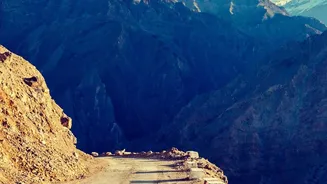
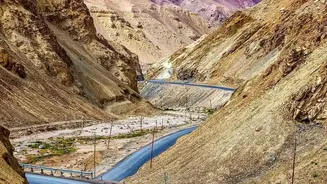
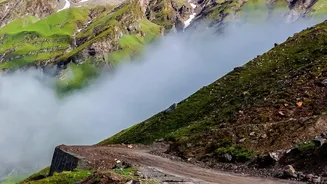
As of early August 2026, travel to Spiti Valley requires extreme caution due to active monsoons. The primary route via Shimla and Kinnaur (NH-5) is open but remains vulnerable to disruptions. Heavy rainfall has caused landslides and temporary road closures along the National Highway, especially in the Kinnaur region. Travelers should expect delays, plan for at least two buffer days in their itinerary, and travel only during daylight hours. The Manali-Kaza route, which involves crossing the high-altitude Kunzum Pass, is significantly more treacherous. While the pass may be technically open, this road features rough patches and numerous water crossings that can become dangerous after noon. This route is best avoided by inexperienced drivers during the monsoon. Always check for real-time road status updates from local authorities or travel groups on the day of your journey, as conditions can change rapidly.
The Safer Route: Shimla vs. Manali
For a trip in August, the Shimla-Kinnaur-Kaza route is widely considered the safer and more reliable option. Though longer, this road offers two critical advantages. First, it provides a much more gradual ascent in altitude, which significantly reduces the risk of Acute Mountain Sickness (AMS). Your body has several days to acclimatize as you stay overnight in towns like Sarahan or Kalpa before reaching the higher altitudes of Spiti. Second, while not immune to monsoon-related landslides, the road quality is generally better and it does not depend on the opening of high-altitude passes like Kunzum. The Manali-Kaza route, in contrast, involves a rapid altitude gain from around 2,050 metres in Manali to over 3,800 metres in Kaza within a day or two, posing a high risk for AMS.
Guarding Against Altitude Sickness
Acute Mountain Sickness (AMS) is a serious risk in Spiti, where you will spend most of your time above 3,000 metres. Its symptoms include persistent headaches, nausea, dizziness, and fatigue. The best prevention is gradual acclimatization, which the Shimla route facilitates. Regardless of your route, listen to your body. Do not over-exert yourself on the first couple of days at a high altitude. Hydration is crucial; aim to drink 3-4 litres of water daily. Avoid alcohol, as it dehydrates you and can worsen symptoms. A common mountaineering principle is to 'climb high, sleep low,' meaning you can take day trips to higher villages like Komic or Hikkim but should return to sleep at a lower altitude like Kaza. For medication like Diamox (Acetazolamide), it is essential to consult your doctor before your trip.