






The UAE's Grand Tour of the Asteroids
The UAE is rapidly cementing its status as a major player in space exploration. Following the success of its Hope Probe to Mars, the nation has set its sights on an even more challenging frontier: the main asteroid belt between Mars and Jupiter. The Emirates
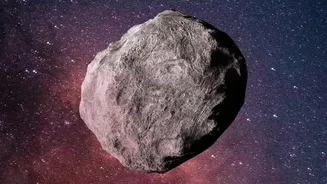
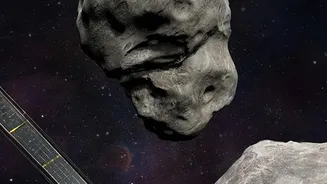
Mission to the Asteroid Belt (EMA) is a multi-year deep-space odyssey. Scheduled for launch in March 2028, the MBR Explorer spacecraft will undertake a remarkable five-billion-kilometre journey. The primary mission involves observing seven different asteroids, culminating in a rendezvous with a particularly intriguing, reddish-coloured asteroid named 269 Justitia. The goal is to gain unprecedented insights into the formation of our solar system, as asteroids are considered pristine remnants from that early period. The mission represents a giant leap for the UAE's space engineering and scientific capabilities.
The Indian Connection: HEX20
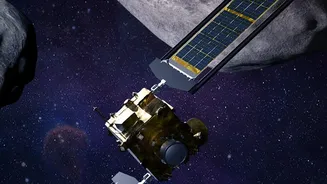
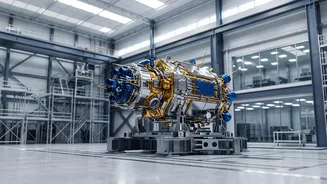
A critical component of the MBR Explorer's mission is a smaller, deployable probe designed to separate from the main craft and make contact with the surface of asteroid Justitia. The development of this sophisticated lander probe features crucial involvement from an Indian space-tech company. HEX20, a startup based in Thiruvananthapuram's Technopark, was selected by the UAE Space Agency and its Technology Innovation Institute (TII) for this vital task. This makes HEX20 the first private Indian company to be chosen for a deep-space mission by the Gulf nation, marking a historic achievement for India's burgeoning private space industry. While the probe was assembled in Abu Dhabi, HEX20's engineering team in India provided essential expertise.
Building the Brains of a Deep-Space Probe
HEX20's role was far from minor; the company was responsible for developing core elements of the lander probe. Their work included engineering the spacecraft bus—the fundamental structure that houses and supports all the critical systems—and the complex software that will serve as its brain. This involved creating the onboard computer and power systems robust enough to withstand the harsh, unforgiving environment of deep space for years. One of the most significant contributions is the software for autonomous operation. Due to the immense distances, the probe cannot be controlled in real-time from Earth. It must navigate its final descent to the asteroid surface on its own, a testament to the sophisticated engineering provided by the Indian startup.
A Watershed Moment for India's Private Space Sector
This collaboration is more than just a single contract; it's a powerful validation of India's private space ecosystem on the world stage. For years, the Indian government has worked to foster private participation in space through reforms and the creation of bodies like the Indian National Space Promotion and Authorisation Centre (IN-SPACe). The success of companies like HEX20, along with others such as Skyroot Aerospace and Pixxel, demonstrates that these policies are bearing fruit. Securing a role in a high-stakes, international deep-space mission proves that Indian startups possess the technical prowess and reliability to compete globally. It sends a clear signal that 'Made in India' engineering is ready for the final frontier, attracting further global interest and investment.
Deepening the India-UAE Space Bridge
The partnership on the MBR Explorer mission is a stellar example of the deepening strategic relationship between India and the UAE. Both nations have identified space as a key area for future growth and collaboration. This project moves beyond theoretical agreements and into practical, hands-on cooperation on a technologically demanding venture. By entrusting a key part of its flagship mission to an Indian company, the UAE has shown immense confidence in Indian capabilities. This paves the way for more integrated projects, from satellite development to joint exploration missions, strengthening a partnership that is quickly becoming a significant axis in the global space economy.