





The Moon Takes Centre Stage
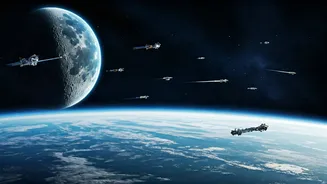
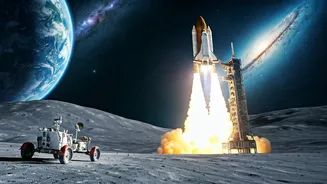
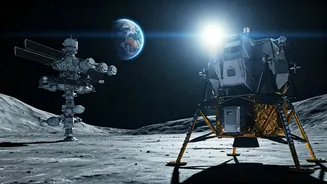
Humanity's return to the vicinity of the Moon is a major theme for 2026. The year saw the successful launch of Artemis II in April, a NASA mission that sent four astronauts on a flyby around the Moon, marking the first time humans have travelled beyond
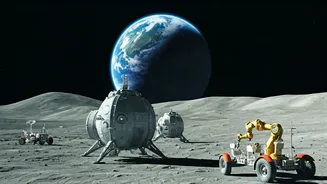
low Earth orbit since 1972. [1, 17] This historic flight is a critical step, paving the way for future landings. But NASA isn't the only one with lunar ambitions. China's Chang'e-7 mission is slated to launch for the lunar south pole in late 2026 to search for water ice. [1, 2] This region is of intense interest for its potential to support future lunar bases. [2] Additionally, several private American companies, including Intuitive Machines and Firefly Aerospace, are planning their own uncrewed landings on the lunar surface. [1]
A Fleet of Robotic Explorers
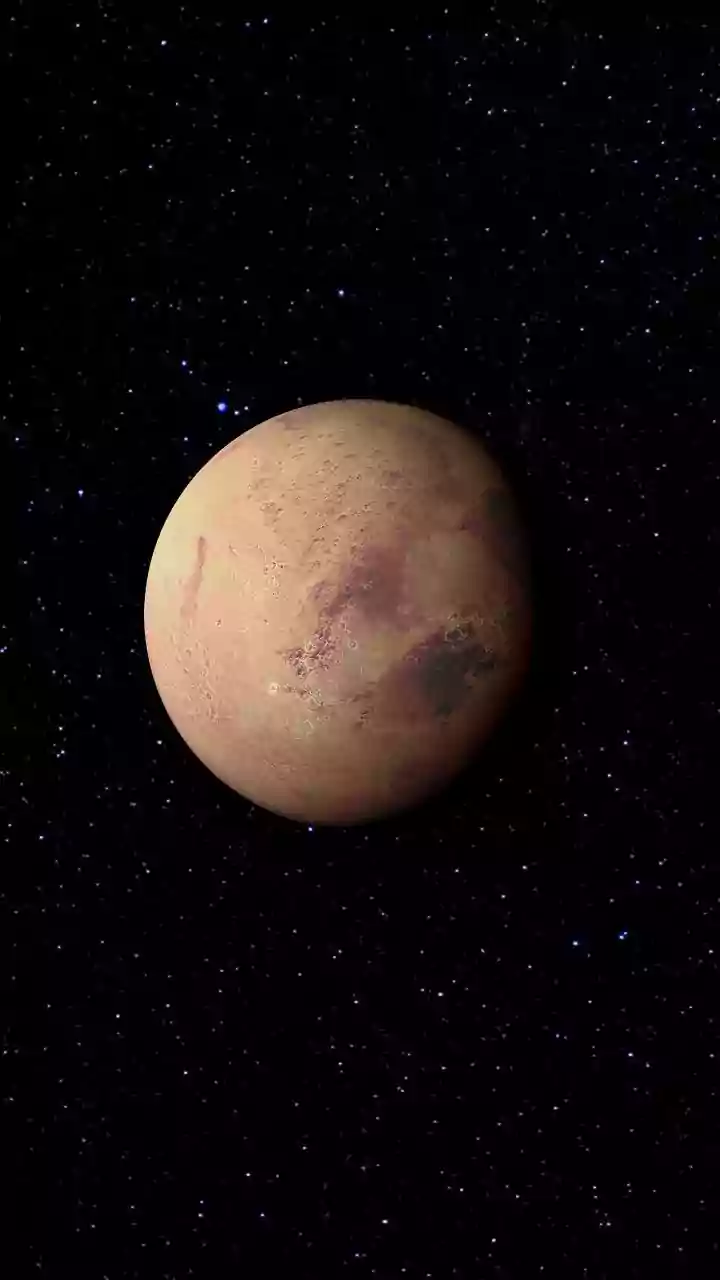
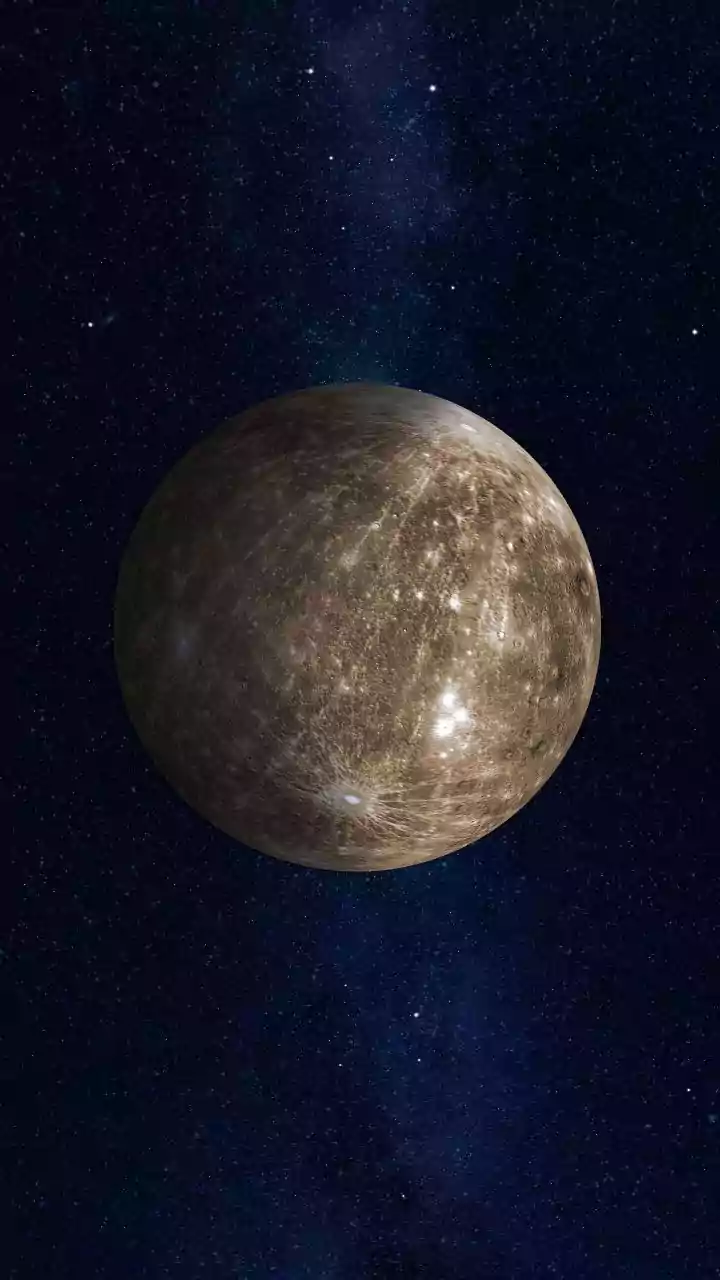
Beyond the Moon, 2026 is packed with exciting robotic missions across the solar system. The joint ESA-JAXA BepiColombo mission is expected to finally enter orbit around Mercury in late 2026 after a long journey. [1, 2] In November, ESA’s Hera spacecraft is scheduled to arrive at the asteroid Didymos to study the aftermath of NASA's DART impact, a key test of planetary defence. [2] Japan's Martian Moons eXploration (MMX) mission plans to launch in late 2026, aiming to study Mars's moons, Phobos and Deimos, and return a sample from Phobos back to Earth. [2, 5] This would be a historic first. NASA is also sending the twin ESCAPADE spacecraft toward Mars to study its atmospheric loss. [1, 5]
New Rockets and the Commercial Rush
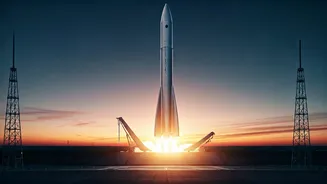
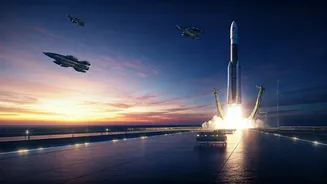
The new space race is increasingly defined by powerful, reusable rockets that are lowering the cost of access to orbit. While SpaceX had previously aimed for an ambitious uncrewed Mars mission with its massive Starship in 2026, those plans have been delayed to focus on lunar missions first. [5, 21] However, development of Starship continues at a rapid pace, with ongoing flight tests aimed at proving its capabilities for orbital refueling and payload deployment, which are crucial for future deep-space missions. [15, 23] Meanwhile, Blue Origin's heavy-lift New Glenn rocket is also scheduled to have its first launches in 2026, carrying payloads for Amazon's Project Kuiper satellite constellation and other customers. [7, 11] The arrival of these next-generation rockets signals a major shift in launch capabilities.
Expanding Humanity's Presence in Orbit
Closer to home, 2026 will see significant developments in human spaceflight in low Earth orbit. India's Gaganyaan program is planning uncrewed test flights as it works towards its first human spaceflight mission. [8, 9] The success of this program would make India only the fourth nation to independently launch humans into space. [9] The year will also see the continued commercialisation of space, with private companies playing a larger role. Vast, an American aerospace company, plans to launch its Haven-1 private space station. [8, 15] These efforts, alongside regular crew rotations to the International Space Station, highlight a growing and diversifying human presence in orbit.
New Eyes on the Cosmos
The astronomical community is eagerly awaiting the launch of several powerful new space telescopes. The flagship is NASA's Nancy Grace Roman Space Telescope, slated for launch in the latter half of the year. [1] With a field of view 100 times larger than Hubble's, Roman is expected to map billions of galaxies and discover thousands of new exoplanets, revolutionising our understanding of dark energy and dark matter. [26] China also plans to launch its own large space telescope, Xuntian, which will co-orbit with the Tiangong space station and conduct wide-field surveys. [1, 25] These observatories will provide unprecedented views of the cosmos, from our planetary neighbours to the most distant galaxies.