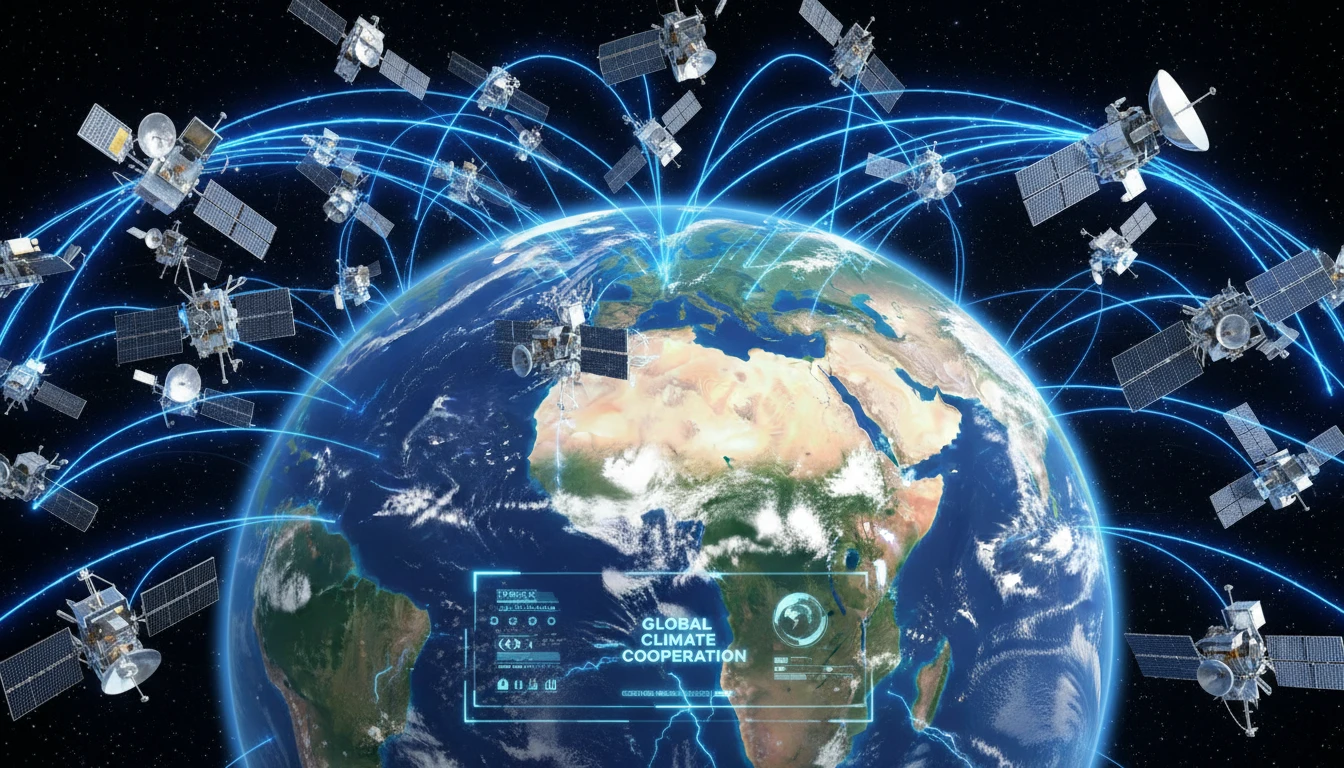

A 'Virtual Constellation' in the Sky
The foundation for this cooperation is the BRICS Remote Sensing Satellite Constellation Agreement, first signed in August 2021 under India's chairship. This is not about building a new, shared fleet of satellites. Instead, it creates a 'virtual constellation'
by pooling data from existing satellites operated by each member nation. The five founding space agencies—Brazil (AEB), Russia (Roscosmos), India (ISRO), China (CNSA), and South Africa (SANSA)—agreed to a framework allowing them to request and receive satellite imagery from each other's spacecraft. The goal is to create a powerful data-sharing mechanism to help tackle shared challenges like climate change, environmental protection, and, most urgently, disaster management. This collaborative spirit leverages existing assets to create a system more powerful than any single country could manage alone.
Why Shared Satellite Data Is a Game-Changer
For countries prone to natural calamities, timely and accurate information is the bedrock of effective response. Satellite data provides a crucial bird's-eye view, allowing authorities to map flood inundation, track the spread of wildfires, assess earthquake damage, and monitor the path of cyclones. By sharing data, BRICS nations can get more frequent satellite passes over an affected area, providing a near-real-time stream of information. If one country's satellite is not in the right position, another's might be. This enhanced coverage can drastically shorten response times, help officials direct rescue teams more effectively, and ultimately save lives. The applications extend beyond immediate disasters to long-term monitoring of drought conditions, deforestation, and agricultural health, supporting sustainable development goals across the bloc.
India's Pivotal Role in the Partnership
India has been a key driver of this initiative. The initial agreement was signed during India's BRICS chairship, and ISRO is a major contributor to the virtual constellation with its advanced Resourcesat-2 and 2A satellites, which are designed for resource monitoring and disaster management support. India's ground station in Shadnagar, Hyderabad, is one of the key hubs for receiving and processing this shared data. More recently, in June 2026, India hosted the BRICS Heads of Space Agencies meeting in Bengaluru. This summit showcased India's leadership and its burgeoning private space ecosystem, which could play a future role in this international collaboration. For India, this cooperation not only enhances its own disaster management capabilities but also solidifies its position as a leading and collaborative space power.
Expanding the Vision and Facing Hurdles
The BRICS bloc has recently expanded, welcoming new members like Egypt, Ethiopia, Iran, and the UAE. A key outcome of the June 2026 meeting in Bengaluru was an agreement to amend the satellite constellation pact to formally include these new nations, broadening the initiative's scope and potential data sources. Discussions are also underway to establish a BRICS Space Council, a move aimed at creating a more permanent institutional framework for long-term policy coordination. However, the path is not without challenges. Geopolitical tensions, particularly between members like India and China, require careful navigation to ensure smooth data sharing. Furthermore, there are technical disparities between the space programs of different members, and building trust around technologies that can have dual civilian and military uses remains a complex but essential task.