


From Government Pride to a Private Boom
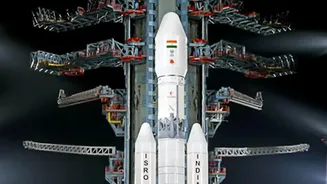
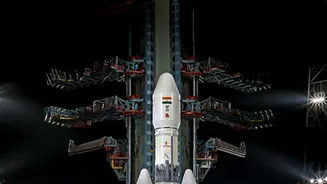
For decades, India's space journey was almost exclusively led by the Indian Space Research Organisation (ISRO). While ISRO remains the backbone of the nation's space program, a major policy shift has opened the doors to private enterprise. The establishment
of IN-SPACe (Indian National Space Promotion and Authorisation Centre) acts as a single-window agency to facilitate and guide private companies. This has ignited a startup explosion, with hundreds of new companies now involved in everything from satellite manufacturing to launch vehicle development. This structural change from a state-led domain to a commercially driven ecosystem is reshaping the job market. The goal is to grow India's share of the global space economy from around 2% to 8% by 2033, a leap projected to create over 200,000 new jobs.
The AI Frontier: Making Sense of the Data
Modern space exploration is as much about data as it is about rockets. Satellites orbiting Earth collect enormous volumes of information, from weather patterns and crop health to urban development and climate change. Making this data useful requires the power of Artificial Intelligence (AI) and Machine Learning (ML). AI specialists are needed to build algorithms that can analyse satellite imagery, predict trends, and provide actionable insights for industries like agriculture, disaster management, and telecommunications. Indian startups are already developing AI-driven geospatial intelligence platforms, converting raw satellite data into decision-making tools. This convergence of space and AI is creating a high-demand niche for data scientists and AI engineers who can build the brains behind the space hardware.
Software: The Unseen Engine of Space Missions
Behind every successful launch and satellite deployment is a mountain of sophisticated software. Software engineers are crucial for a vast range of applications in the space sector. This includes writing the code for ground control stations that manage and track missions, developing the flight software that guides rockets, and creating the embedded systems within satellites themselves. As missions become more complex, involving autonomous navigation and robotic operations like those planned for the Gaganyaan mission, the need for robust, reliable, and secure software becomes paramount. Furthermore, the entire ecosystem relies on software for simulation, testing, and data processing, making software developers an indispensable part of the modern space industry.
Electronics: Building the Hardware of the Heavens
Space is a harsh environment, and every component sent into orbit must be built to exacting standards. This is where electronics and hardware engineers come in. They design, develop, and test the critical systems that allow spacecraft to function, including communication systems, navigation sensors, power units, and scientific instruments. The growth of private satellite manufacturing, including small satellite constellations, is driving significant demand for specialists in avionics, radio-frequency (RF) engineering, and semiconductor design. With a national push towards building a resilient domestic supply chain for space components, careers in electronics manufacturing and hardware engineering are becoming foundational to India's long-term space sovereignty and commercial competitiveness.