



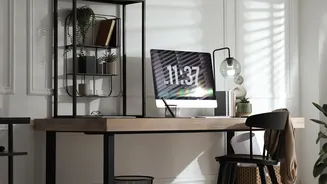

The Monsoon Gloom Effect
When the sky is a blanket of grey for weeks on end, the lack of natural sunlight does more than just make our homes feel dark. It can have a tangible impact on our well-being and productivity. Working in dim or poor-quality light forces the muscles in our eyes
to work harder to focus, leading to physical discomfort like eye strain, headaches, and fatigue. This constant strain can make it difficult to concentrate and may reduce alertness. The perpetually gloomy atmosphere of the monsoon can also affect our mood, making us feel more sluggish and less motivated. Simply turning on a powerful overhead ceiling light often isn't the answer, as this can create harsh shadows and glare, which can be just as problematic.
The Power of Layered Lighting
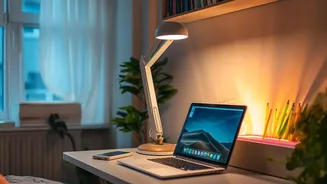
The key to a well-lit and comfortable workspace lies in a strategy called layered lighting. This approach involves using three distinct types of light to create a balanced environment: Ambient, Accent, and Task lighting. Ambient light is the general, overall illumination in a room, usually provided by a ceiling fixture or floor lamps. It sets the base level of brightness. Accent lighting is used to highlight specific features, like a piece of art. But for work, the most crucial layer is task lighting. This is a focused, direct light source aimed specifically at the area where you are performing an activity, such as reading, writing, or working on a computer. By providing concentrated light exactly where it's needed, a task light prevents your eyes from straining and improves clarity, allowing you to work more efficiently and comfortably.
What Makes a Good Task Light?
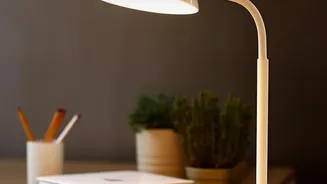
When choosing a lamp for your desk, it's about more than just style. Three key technical specifications will determine its effectiveness. First is Brightness, measured in lumens. For task-oriented activities like reading, a brightness of 400 to 800 lumens is generally recommended to ensure clarity without causing glare. Second is Colour Temperature, measured in Kelvin (K). This describes how 'warm' or 'cool' the light appears. A warm, yellowish light (around 2700K-3000K) is cozy and relaxing, while a cooler, neutral-to-blueish white light (around 4000K-5000K) is better for promoting alertness and focus, making it ideal for a work environment. Lastly, consider adjustability. A good task lamp, like a balanced-arm or gooseneck lamp, should be easily repositionable. This allows you to direct the light precisely onto your work and away from your screen or eyes, eliminating shadows and reducing glare.
Practical Tips for Your Workspace
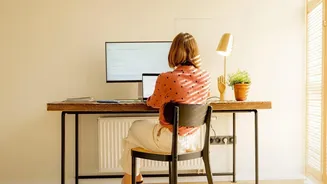
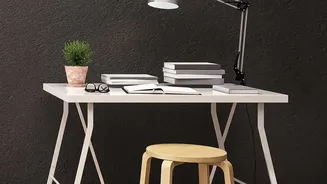
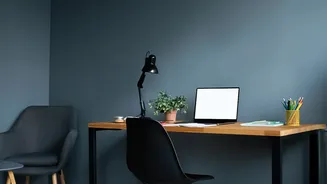
To make the most of your lighting, position your task lamp to the side of your work area, not directly in front or behind, to minimize shadows cast by your hands. If you are right-handed, place the lamp on your left, and vice versa. It's also crucial to manage screen brightness; adjust your monitor so it matches the ambient brightness of the room to prevent your eyes from having to work harder. Even on cloudy days, positioning your desk near a window to capture whatever natural light is available can supplement your artificial lighting. Finally, don't forget to take regular breaks. The 20-20-20 rule is a great habit: every 20 minutes, look at something 20 feet away for 20 seconds. This simple exercise gives your eye muscles a chance to relax, reducing fatigue and helping you stay comfortable throughout the workday.