



The Solar System’s Odd Couple
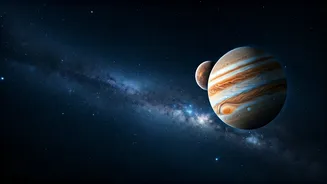
Imagine the unlikeliest of pairs meeting for a brief rendezvous. That’s what’s happening in our sky. On one side, you have Jupiter, the undisputed king of our solar system. It’s a gas giant so massive that all other planets could fit inside it. It’s bright,
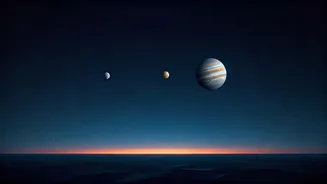
commanding, and easy to spot. On the other, you have Mercury, the tiny, fleet-footed messenger. It’s the smallest planet, rocky and scorched, and notoriously difficult to see as it never strays far from the Sun’s glare. When these two appear side-by-side from our viewpoint on Earth, it’s a striking contrast in scale and character—a cosmic David and Goliath sharing a tiny patch of sky.
What Exactly Is a Conjunction?
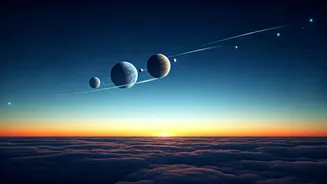
When we say Mercury and Jupiter are “dancing close together,” it’s a beautiful illusion created by perspective. In reality, they remain hundreds of millions of kilometres apart. A conjunction is simply an astronomical event where two or more celestial objects appear close to one another in the sky, as seen from Earth. Think of it like seeing two distant mountains line up perfectly from a specific spot on a road, even though they are miles apart. As planets orbit the Sun at different speeds and on different paths, their alignments from our vantage point constantly change. These fleeting moments of apparent closeness are what sky-watchers and astronomers eagerly wait for.
How to Watch From India
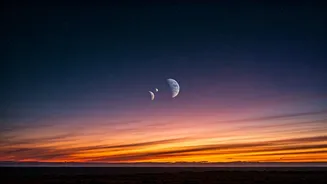
This is a pre-dawn event, so you’ll need to be an early bird. The best time to look is roughly 45 to 60 minutes before sunrise. For most of India, this means you should be looking between 4:45 AM and 5:15 AM IST. You’ll need a clear, unobstructed view of the east-northeastern horizon. The biggest challenge is that the planets will be very low in the sky, shimmering in the growing morning twilight. Jupiter will be the brighter of the two, appearing as a steady, brilliant star. Faint little Mercury will be right next to it. To find them, locate where the sun is about to rise and look slightly to the left. An app like Stellarium or SkyView can be a massive help in pinpointing their exact location.
Gear Up: Telescope or Naked Eye?
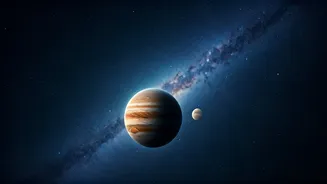
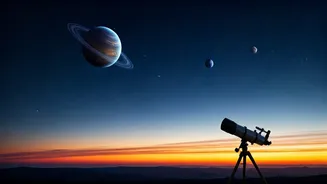
The good news is that you don’t strictly need a telescope to witness this event. Jupiter is one of the brightest objects in the night sky and is easily visible to the naked eye. The challenge is Mercury, which is much fainter and can be washed out by the dawn’s light. If you have a pair of binoculars, now is the time to use them. Scan the area around bright Jupiter, and they will help you pull the faint dot of Mercury out from the glare. A telescope will, of course, offer a much better view. With enough magnification, you might even be able to spot Jupiter’s four largest moons—Io, Europa, Ganymede, and Callisto—lined up like tiny pearls beside the giant planet. But even without gear, the sight of two planets so close is a reward in itself.
A Crowded Morning Sky
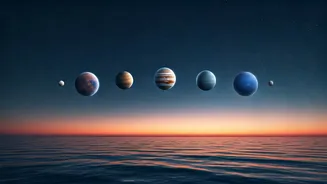
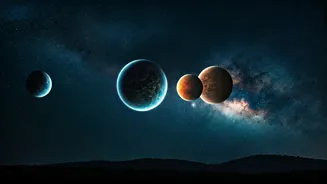
While you’re out looking for this planetary pair, don’t forget to look around. The pre-dawn sky in June is a busy place. Higher up and further to the southeast, you’ll find two other planets: the reddish dot of Mars and the pale yellow glow of Saturn. This creates a beautiful planetary parade stretching across the morning sky. Having four planets visible at once is a treat for any sky-gazer. The challenge of spotting Mercury and Jupiter low on the horizon, followed by the easier task of finding Mars and Saturn, makes for a fulfilling morning of astronomy. Just be mindful of light pollution from cities and the potential for monsoon clouds, which can play spoilsport.