




The Base Price: 24K vs 22K Gold
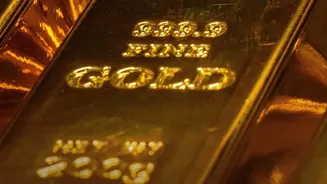
The advertised market price is typically for 24-karat (99.9% pure) gold, which is too soft for most jewellery. Ornaments are usually crafted from 22-karat gold (91.6% pure) or 18-karat gold (75% pure), which are stronger due to being mixed with other
metals. Therefore, the first step in calculating the cost is to find the rate for the specific purity of your chosen piece, which will be lower than the 24K rate. Jewellers' associations in different cities can cause slight variations in this base rate.
Making Charges: The Cost of Craftsmanship
‘Making charges’ or labour fees are what you pay for the skill and effort required to transform raw gold into a beautiful design. This is a significant component of the final price and is not a standard fee. It can be charged as a fixed rate per gram or, more commonly, as a percentage of the gold's value. This percentage can range widely, from as low as 5% for simple, machine-made items to over 25% for intricate, handcrafted designs. Unlike the gold itself, making charges have no resale value when you sell or exchange the jewellery later. Don't hesitate to negotiate these charges with your jeweller, especially on high-value purchases.
Wastage: Accounting for Lost Gold
During the crafting process—melting, cutting, and shaping—a small amount of gold is inevitably lost as dust or shavings. Jewellers levy ‘wastage charges’ to compensate for this loss. This is typically calculated as a percentage of the gold's weight, often ranging from 5% to 7% for simple designs but can be higher for more complex pieces. While modern manufacturing has reduced actual wastage, the charge remains a common practice. Opting for simpler designs can help minimise this cost.
GST: The Mandatory Tax Component
The Goods and Services Tax (GST) is applied to gold jewellery purchases in two parts. A 3% GST is levied on the value of the gold. Additionally, a separate 5% GST is applied to the making charges. This uniform tax structure has replaced various state-level taxes, bringing transparency to the pricing across India. When you sell or exchange old jewellery, GST is not applicable on the value of the old gold, but you will pay it on the new piece you purchase.
Hallmarking: Your Guarantee of Purity
To protect consumers from being sold gold of lower purity than claimed, the Bureau of Indian Standards (BIS) has a mandatory hallmarking system. A hallmarked piece of jewellery carries a mark certifying its purity, which is verified at a licensed lab. This protects you against adulteration and ensures you are paying the correct price for the purity level, be it 22K or 18K. Always look for the BIS hallmark to guarantee the authenticity and quality of your purchase.
Beyond the Bill: Buy-Back Policies
While not part of the initial payment, a jeweller's buy-back or exchange policy is a crucial factor for the long-term value of your purchase. When you decide to sell or exchange your jewellery, the jeweller will typically only pay for the net weight of the gold at the prevailing market rate. Making charges, wastage, and GST are not refunded. Some jewellers may also deduct a small processing fee. Understanding these terms beforehand can help you choose a jeweller who offers a fair and transparent policy, which adds to the overall value proposition beyond the initial market price.