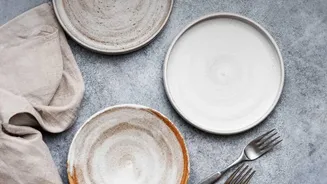







Start at the Bottom
The first step in assessing a piece of handmade pottery is to turn it upside down. The base is often the most honest part of the work, as it's less likely to be perfectly finished, revealing clues about its creation. Look for a 'foot ring' that is smooth
and level, ensuring the piece sits flat without wobbling. On a wheel-thrown item, you might see faint, slightly irregular circular marks left when the potter cut the piece from the wheel with a wire. A perfectly smooth, unmarked bottom could be a red flag for a mass-produced item made in a mould. Also, look for a maker's mark or signature—a stamp or hand-painted initial that shows the artist’s pride in their work.
Feel the Weight and Balance
Don't be afraid to pick up the piece. Quality handmade pottery should feel substantial and grounded, but not overly heavy or clumsy. A well-trained potter can create thin, even walls, resulting in a piece that is surprisingly light for its size. Pay attention to the balance. A mug's handle should feel comfortable and distribute weight evenly, not making the cup feel like it wants to tip forward. A pitcher should be light enough to pour from even when full. This sense of balance and thoughtful weight is a hallmark of an experienced artisan who has refined their form for both beauty and function.
Examine the Glaze Finish
The glaze is not just for colour; it's a protective layer and a key indicator of quality. A well-applied glaze should have a smooth, consistent finish. Look out for common defects like blistering, pinholes, or running, where the glaze has dripped down the side. These can indicate issues with the glaze's thickness or the firing process. Fine cracks in the glaze surface, known as crazing, can sometimes be an intentional decorative effect, but on functional ware it can be a flaw caused by a mismatch between the clay and glaze. A quality glaze enhances the form of the piece without obscuring its details.
Assess the Overall Form and Function
A skilled potter demonstrates control and intention in the shape of their work. While handmade pieces are celebrated for their unique variations, the overall form should feel balanced and purposeful. The rim of a cup or bowl should be symmetrical and smooth to the touch. For functional items, consider their purpose. A mug rim should be comfortable to drink from, not too thick or sharp. The spout on a teapot should pour cleanly without dribbling. Handles should have enough room for your fingers and feel secure. These functional details separate truly great craft from pieces that are merely decorative.
Listen for the Ring of Quality
For high-fired stoneware or terracotta, a gentle tap can tell you a lot about its durability. A high-quality, well-fired piece will often produce a clear, bell-like ringing sound when you flick it with your finger. A dull thud can be a red flag, potentially indicating a crack, an under-fired piece that may be more fragile, or lower-density clay. This sound test is a quick way to gauge the density and integrity of the clay body, which is crucial for the longevity of the piece, especially for items intended for everyday use.
Embrace 'Imperfect' Perfection
Part of the beauty of handmade decor is its inherent uniqueness. No two pieces will ever be exactly identical. You might see subtle throwing rings on the interior of a bowl, slight variations in the glaze colour, or a form that isn't perfectly symmetrical. These are not flaws; they are the fingerprints of the artist, evidence of the human touch that makes each piece special. The key is to distinguish between these charming irregularities and genuine quality issues like cracks, sharp edges, or an unstable base. Learning to appreciate these nuances is part of the joy of collecting handmade art.