







What is a Tax Challan?
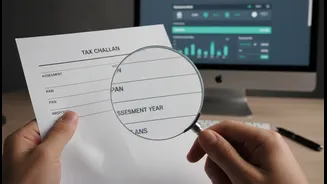
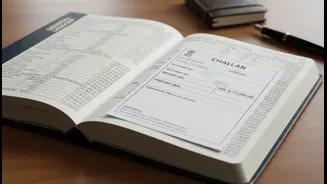
Think of a tax challan as the official receipt for your tax payments. Whether you are paying advance tax, self-assessment tax, or tax on behalf of your business, a challan is generated to record the transaction. Each challan has a unique Challan Identification
Number (CIN) which acts as proof that the tax has been deposited with the government. This number is crucial because the Income Tax Department uses it to track your payments and credit them to your Permanent Account Number (PAN). Without a correct challan, from the department's perspective, the tax was never paid.
The Problem of a Mismatched Challan
A challan mismatch occurs when the details on the payment challan do not align with the information in your income tax return or the records of the tax department. These errors, though often accidental, can have significant consequences. Common mistakes include selecting the wrong Assessment Year (AY), entering an incorrect PAN, choosing the wrong tax category (Major Head), or specifying an incorrect payment type (Minor Head), like confusing Self-Assessment Tax with Advance Tax. Since the tax processing system is automated, even a minor data entry error can cause the system to flag your file, effectively freezing your refund until the discrepancy is resolved.
Why It Halts Your Refund
The link between a clean challan and a timely refund is direct and absolute. The Income Tax Department's Centralized Processing Centre (CPC) automatically cross-verifies the tax you claim to have paid in your return against the data in its system, which is populated by these challans. If the system cannot find a corresponding challan payment that perfectly matches the details you've provided, it assumes the tax has not been paid. This leads to an automatic hold on your refund. In some cases, it can even trigger a tax demand notice for the perceived shortfall, adding further stress and complication.
How to Check Your Challan Records
Proactive checking is the best strategy. The first place to look is your Form 26AS, which is your consolidated annual tax statement. You can access it through the income tax e-filing portal. This form lists all tax payments credited to your PAN, including TDS from your employer, advance tax, and self-assessment tax. Carefully compare the details in Form 26AS with your own payment records. You can also check the status of a specific challan directly through the e-filing portal's 'e-Pay Tax' section, which has replaced the older OLTAS system for viewing payment history. Look for the 'Payment History' to verify that all your paid challans are correctly reflected.
Steps to Correct a Faulty Challan
If you spot an error, don't panic. The Income Tax Department has introduced an online facility to correct challan details for assessment years from 2020-21 onwards. You can log in to the e-filing portal and navigate to 'Services' and then 'Challan Correction'. Here, you can submit a request to change details like the Assessment Year, Major Head, or Minor Head. However, there are conditions. The correction is typically allowed only once per challan, and it must be an 'unconsumed' challan, meaning it hasn't already been used for processing your return. There are also strict time limits: corrections for the Assessment Year must be made within 7 days of payment, while changes to tax heads are allowed within 30 days. If you miss this window, you will have to contact your Jurisdictional Assessing Officer to get it rectified.
Avoiding Errors in the First Place
The easiest way to deal with challan errors is to prevent them. When paying your taxes online, always use the pre-filled challan option available on the income tax portal, which automatically populates your PAN and name. Double-check the Assessment Year you select; this is one of the most common errors. Before making the final payment, review every detail on the screen. Once you have paid, save a digital copy or printout of the challan receipt immediately. Regularly reviewing your Form 26AS throughout the year can also help you catch any discrepancies early, long before it's time to file your return and claim a refund.