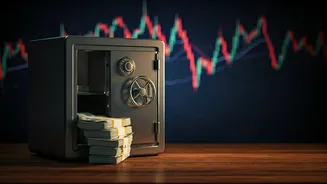









The Two Pillars of Your Financial Life
Think of your financial strategy as having two core pillars: wealth creation and financial security. Your investments—like mutual fund SIPs, stocks, or real estate—are for wealth creation. Their job is to grow over the long term, beating inflation and helping
you reach goals like retirement or buying a home. On the other hand, your emergency savings reserve is for financial security. Its job is not to grow aggressively, but to be a stable, accessible buffer that protects you and your long-term goals from unexpected shocks. Confusing their roles is one of the most common mistakes early investors make. Trying to make your emergency fund grow like a stock portfolio is risky, and expecting your stock portfolio to act like a savings account is unrealistic.
Why the Six-Month Guideline?
The “six-month” figure isn’t arbitrary. It’s a widely accepted benchmark that provides a realistic cushion against major life disruptions. Consider the most common financial emergencies: a sudden job loss, a medical issue not fully covered by insurance, or an urgent family need. In India, finding a new job at a comparable salary can easily take three to six months. During this time, your essential expenses—rent or EMI, utilities, groceries, school fees—don't stop. A six-month reserve ensures you can manage these obligations without descending into panic or debt. It buys you time to make rational decisions, whether that's negotiating a better job offer or focusing on recovery, rather than being forced to accept the first option out of desperation.
Calculating Your Magic Number
To build your reserve, you first need to know your target amount. This is not six months of your total salary. It’s six months of your *essential* living expenses. Start by tracking your monthly spending and categorise it. Your essential list should include: - Housing: Rent or home loan EMI. - Utilities: Electricity, water, internet, phone bills. - Food and Groceries. - Transportation: Fuel, public transport costs. - Insurance Premiums: Health, life, and car insurance. - Essential Loan Repayments (excluding the home loan already counted). Exclude discretionary spending like eating out, shopping for non-essentials, entertainment subscriptions, and travel. Add up your monthly essential costs and multiply by six. That is your target reserve amount.
What 'Liquid' Actually Means
The key to an effective emergency fund is liquidity. This means you can access the money quickly and easily without losing value. Your equity portfolio is not liquid in this sense; you might be forced to sell at a loss. A plot of land is highly illiquid. Even a long-term Fixed Deposit (FD) might have penalties for premature withdrawal. The best places to park your emergency reserve are: 1. **A high-yield savings account:** Keep a portion here for immediate access via debit card or UPI. 2. **Short-term Fixed Deposits:** Create a 'ladder' of FDs (e.g., one maturing every month) to balance accessibility with slightly better returns than a savings account. 3. **Liquid Mutual Funds:** These are debt funds that invest in very short-term instruments. They offer high liquidity (usually money is credited to your account in one business day) and are generally more stable than equity funds, though they carry slightly more risk than a bank deposit.
The Ultimate Shield for Your Investments
Here is where it all comes together. Imagine the market takes a sudden 20% downturn, and at the same time, you face an unexpected expense of ₹2 lakh. Without an emergency fund, your only option might be to sell your investments. You would be forced to sell low, turning a temporary 'paper loss' into a permanent, real financial loss, and derailing your long-term goals. Now, picture the same scenario with a healthy six-month reserve. You can calmly withdraw the ₹2 lakh from your liquid fund or savings account, handle the emergency, and leave your investment portfolio untouched. This gives your investments the time they need to recover and continue growing. Your emergency fund acts as a firewall, absorbing the financial shocks of life and preventing them from setting your wealth-creation engine on fire. It's the single most powerful tool for staying invested through market volatility and ensuring you reap the long-term rewards.