



Two Paths to a Stronger Back
At a glance, both kayaking and stand-up paddleboarding (SUP) look like phenomenal upper-body and core workouts. And they are. Both sports are celebrated for building functional strength, improving cardiovascular health, and getting you outdoors. When
it comes to your back, each activity provides a unique stimulus. The primary difference isn't if they work your back, but how. The secret lies in the distinct mechanics of their paddle strokes: one is a seated, rotational pull, while the other is a standing, vertical pull that challenges your entire body's stability.
The Kayak Stroke: A Rotational Powerhouse
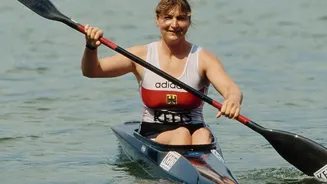
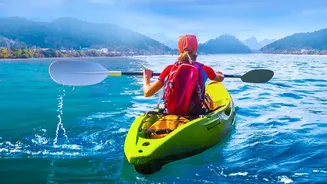
A proper kayaking stroke is a masterclass in rotational power that originates from your core, not your arms. While beginners often make the mistake of pulling with their biceps, efficient paddling involves twisting the torso. This motion heavily engages the latissimus dorsi—the large, V-shaped muscles of your back. Think of your lats as the primary engine of the stroke. As you plant your paddle and rotate your torso, the lat on the pulling side contracts powerfully to draw the blade through the water. Supporting this action are the rhomboids and trapezius muscles, located between and around your shoulder blades. They help stabilize the shoulders and retract the shoulder blades at the end of each stroke, contributing to good posture and efficient power transfer. Because you are seated, your legs and lower back mainly act as a stable base to generate this rotational force.
The Paddleboard Stroke: A Full-Body Pull
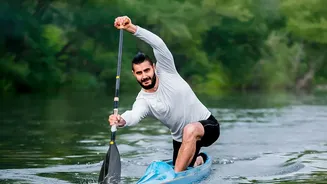
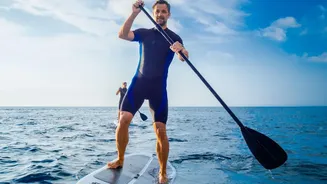
Stand-up paddleboarding transforms the paddling motion into a full-body stability exercise. While the lats are still the primary movers that pull the paddle through the water, the context is entirely different. Instead of sitting, you're balancing on an unstable surface, which forces constant engagement from your core and back to stay upright. The stroke is more of a vertical pull, where you reach forward, plant the paddle, and pull your body past it. This requires significant contribution from the erector spinae, the muscles running along your spine, to maintain a straight, strong posture and prevent your lower back from rounding—a common cause of strain. Essentially, every muscle from your feet to your shoulders is involved in either generating power or maintaining balance, making SUP a comprehensive core and back workout.
Rotation vs. Stabilization: The Core Contrast
The fundamental difference in back muscle engagement boils down to rotation versus stabilization. Kayaking isolates and builds rotational strength, with the upper and mid-back muscles like the lats and rhomboids doing the heavy lifting in a powerful, repetitive motion. It is an excellent choice for developing a wide, strong back and powerful obliques. Paddleboarding, on the other hand, is a test of integrated strength. Your back muscles, particularly the lats and erector spinae, work in constant coordination with your abs, glutes, and leg muscles to perform two jobs at once: propelling you forward and keeping you from falling in the water. This makes it an exceptional workout for building deep stabilizer strength along the entire spine and improving overall balance.
Which Is Right for Your Fitness Goals?
If your goal is to build a powerful, wide back and develop explosive rotational core strength, kayaking offers a more focused approach. The repetitive pulling and twisting motion directly targets the latissimus dorsi in a way few other activities can. However, if you are seeking a holistic, full-body workout that challenges your balance and builds the kind of deep core and spinal stability that supports good posture in all aspects of life, paddleboarding has the edge. Because it constantly engages stabilizer muscles, SUP can be particularly beneficial for strengthening the lower back and improving functional fitness, provided your form is correct to avoid strain. Both are low-impact, making them great long-term options for joint health.