



Beyond Auroras and Solar Flares
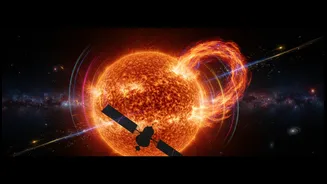
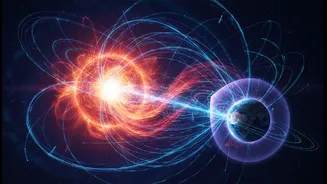
Space weather refers to the changing conditions in space, driven primarily by the sun. This isn't about the temperature in a vacuum; it's about phenomena like solar wind, solar flares, and Coronal Mass Ejections (CMEs). While a gentle solar wind is constant,
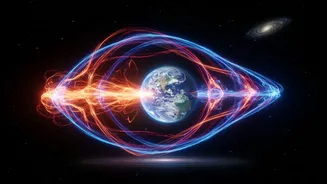
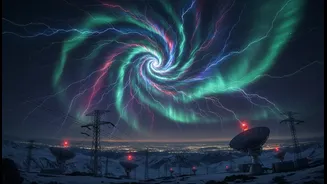
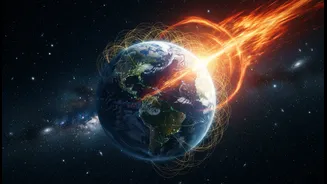
a powerful CME can hurl billions of tonnes of plasma and magnetic fields toward Earth, traveling at immense speeds. These events interact with our planet's magnetic shield, the magnetosphere. While this interaction produces the beautiful northern and southern lights, it's also capable of causing widespread disruption. Understanding these phenomena is not just an academic exercise; it is fundamental to safeguarding our way of life.
A Clear Threat to Our Digital World
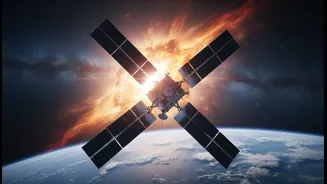
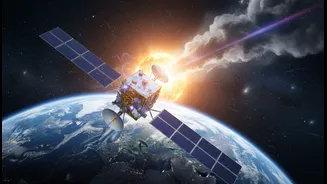
Our dependence on technology makes us increasingly vulnerable to space weather. Severe solar storms can induce powerful electrical currents on the ground, potentially overloading and destroying transformers in our power grids. This could lead to widespread, long-lasting blackouts. Beyond the grid, space weather disrupts high-frequency radio communications used by airlines and can degrade GPS navigation, affecting everything from shipping to financial transactions. Satellites are especially at risk. The radiation can damage their electronics, and changes in the upper atmosphere caused by solar storms can increase drag, causing their orbits to decay. A 1989 solar storm caused a nine-hour blackout in Quebec, a modern preview of what a more powerful event could do.
India’s High-Tech Stake in Understanding the Sun
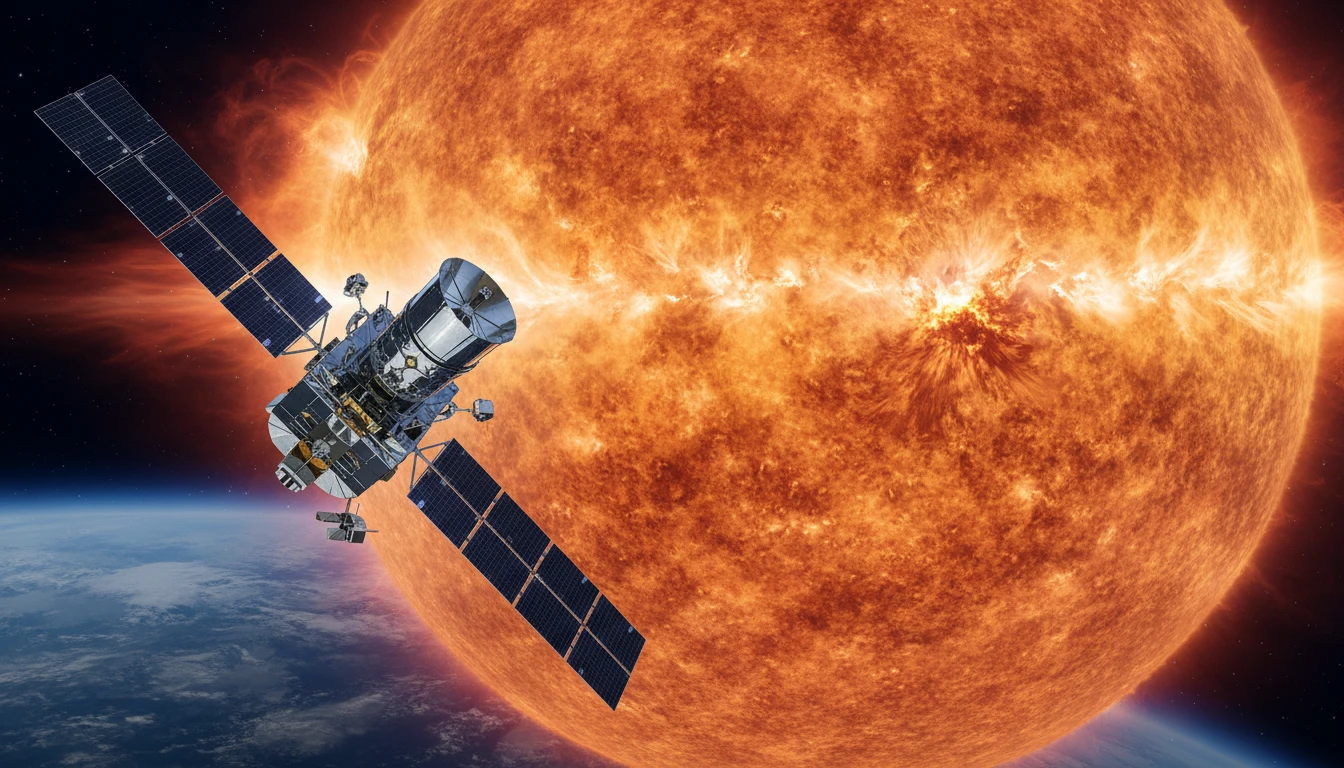
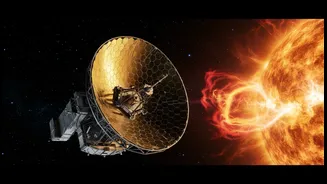
For India, a nation rapidly digitising its economy and expanding its presence in space, the stakes are particularly high. Our reliance on satellite communication, digital payment gateways, and a stable power grid makes the economy susceptible to solar disruptions. Recognising this, the Indian Space Research Organisation (ISRO) launched the Aditya-L1 mission, the country's first dedicated solar observatory. Positioned 1.5 million kilometres from Earth, Aditya-L1 is designed to study the sun's atmosphere and track solar storms, providing crucial data for space weather forecasting. Breakthroughs from this mission are already helping scientists understand the impact of solar events on Earth's magnetic field, highlighting the importance of real-time assessment to protect critical space assets. This investment underscores that for India, space weather is a matter of national and economic security.
The Critical Gap in the Classroom
Despite its real-world importance, space weather is often relegated to a footnote in science classes. Students might learn about sunspots or the lifecycle of a star, but the curriculum often fails to connect these astronomical facts to the tangible risks they pose to modern infrastructure. The subject is presented as 'pure science'—interesting but not urgent. This educational gap is a strategic vulnerability. We are not preparing the next generation to manage a fundamental threat to the technological backbone of our society. The conversation in the classroom needs to shift from simply what space weather is, to why it matters and what we can do about it.
Training the Next Generation of Forecasters
Treating space weather with the seriousness it deserves means building a pipeline of talent. We need a new generation of heliophysicists, space weather analysts, and engineers who can interpret solar data, improve forecasting models, and design more resilient infrastructure. These are careers crucial to national security, aviation, telecommunications, and the energy sector. By reframing space weather education around problem-solving and career opportunities, we can inspire students to enter these vital fields. Internships and educational programs, like those offered by agencies such as NASA, are already trying to bridge this gap, but the effort needs to start earlier and be integrated more broadly into standard science education. It's about showing students that studying the sun is not just about looking at the stars, but about protecting our world.